
ESG Now Forum: B50 Programme Expected to Cut Carbon Emissions by 42 Million Tonnes
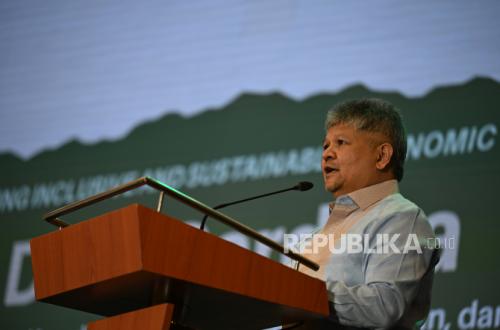
JAKARTA — The government, through the Coordinating Ministry for Economic Affairs, has said that implementing the 50 per cent biodiesel (B50) programme could cut carbon dioxide emissions by as much as 42 million tonnes in 2026. The palm-oil-based programme is one of the government’s measures to accelerate the energy transition while strengthening downstream industries in Indonesia.
Dida Gardera, acting deputy for industry, employment and tourism coordination at the ministry, said the use of biofuels through B50 demonstrated the link between economic development and environmental protection. The government also sees an opportunity to save public funds amid rising global oil prices.
“This is a concrete example of how the palm-oil sector contributes to reducing carbon dioxide emissions, which are expected to fall by around 42 million tonnes this year,” Dida said at the ESG Now Leadership Forum & Awards 2026, organised by Republika.co.id in Jakarta on Monday (19 October 2026).
Dida said President Prabowo Subianto launched the B50 programme on 9 July 2026. The policy forms part of the development of the palm-oil industry to produce higher-value-added energy products.
B50 is expected to absorb around 18 million kilolitres of palm-based biofuel, or fatty acid methyl ester (FAME). Its use could also reduce the burden on the state budget by up to Rp48 trillion.
“The timing is also right, given that fossil fuel and oil prices are now very high. B50, which uses around 18 million kilolitres of palm-based biofuel, or FAME, could save the state budget around Rp48 trillion,” Dida said.
According to Dida, the development of palm-based energy will extend beyond biodiesel. The government also sees potential for further downstream processing to produce sustainable aviation fuel (SAF) and palm-based petrol.
These developments are part of efforts to expand the use of domestic resources to meet national energy needs. At the same time, the government is seeking to ensure that industrial growth takes environmental sustainability into account.
“The next generation of downstream products could, of course, include sustainable aviation fuel and palm-based petrol,” Dida said.
He stressed that strong economic growth must go hand in hand with sustainability and long-term competitiveness. Businesses are being encouraged to incorporate resource efficiency, digital transformation and the development of a green economy into their business and investment strategies.
The government has also updated its emissions-reduction commitment through its Second Nationally Determined Contribution (NDC). This commitment forms part of Indonesia’s efforts to strengthen its contribution to tackling climate change alongside other countries.
Dida added that the energy transition and development of a green economy could create new industries and jobs. The government hopes the policies will deliver benefits not only through lower emissions, but also through increased economic activity and improved public welfare.
Source: jawawa.id (https://jawawa.id/newsitem/esg-now-forum-b50-programme-expected-to-cut-carbon-emissions-by-42-million-tonnes-1792399888)
Originally published by Republika (https://esgnow.republika.co.id/berita/tn5ap5349/esg-now-forum-program-b50-diperkirakan-pangkas-emisi-karbon-42-juta-ton), translated from Indonesian