
ESG and Sustainability Practices: From Tambling to Artha Graha Network’s Operations
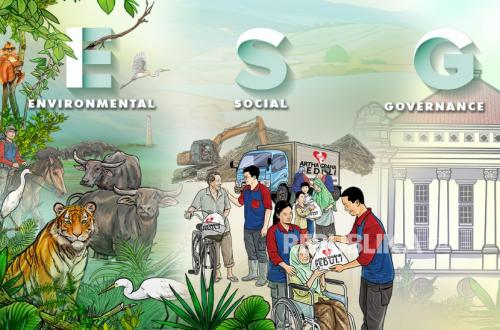
Businesses today are no longer concerned solely with growth, profits and expansion. Companies are also expected to understand how their operations affect the environment and society, and how they can be managed responsibly.
In this context, the concept of Environmental, Social and Governance (ESG) is increasingly relevant. ESG is a set of standards or a framework that companies can use to assess and measure the sustainability and ethical impact of their operations, covering environmental, social and governance issues.
ESG should not be understood merely as a term in corporate reports or as a response to market demands. It is better viewed as a way of thinking about how to run a business: how a company can continue to grow while protecting the environment, benefiting society and conducting its activities under responsible governance.
Understanding the three pillars of ESG
ESG comprises three main pillars: Environmental, Social and Governance. The environmental pillar concerns how a company manages the impact of its business activities on nature. This can include using energy and water efficiently, managing waste, reducing emissions, using resources responsibly, and conserving forests and biodiversity.
For Artha Graha Network, environmental efforts can be seen, among other things, at Tambling Wildlife Nature Conservation (TWNC) in Lampung. The conservation area is one example of how forests, wildlife and ecosystems can be protected sustainably. Artha Graha Peduli has managed the Tambling area since 1996, as part of a long-term commitment to environmental conservation. Environmental sustainability is not only about large conservation areas; these principles should also be reflected in the day-to-day operations of business units.
Not all business units under Artha Graha Network (AGN) have environmental strengths comparable to those of TWNC. Nevertheless, they can still adopt green practices to support the environment. Maintaining gardens and green open spaces, for example, can be a simple but important measure. Saving water is also an important part of environmental management, particularly as water resources are becoming increasingly scarce and need to be protected.
Water use should be managed wisely and efficiently so that it can potentially be reused, for example, to irrigate gardens. This approach means environmental protection is pursued not only through large-scale programmes, but also through effective and efficient resource-management practices in daily operations, as already implemented in the SCBD area.