
ESDM to Revise Ministerial Decree on Low Gas Prices for Industry
The Ministry of Energy and Mineral Resources (ESDM) has announced it will revise the Ministerial Decree concerning the implementation of the Certain Natural Gas Price (HGBT) scheme. This move is intended to ensure the distribution of cheap gas for industry operates more optimally.
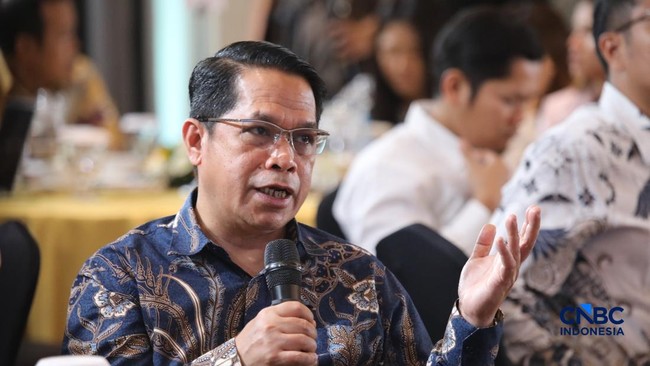
Director General of Oil and Gas at the Ministry of ESDM, Laode Sulaeman, stated that discussions on the HGBT decree revision are being conducted alongside coordination meetings involving PT PGN, SKK Migas, the Ministry of Industry, and industrial HGBT users. He explained that the government wants to ensure there are no more discrepancies between gas supply availability and industrial demand, which have previously led to claims of supply shortages.
“Essentially, we are matching upstream supply with industrial demand so that there are no more differences that could later be claimed as a supply shortage,” Laode said at the Ministry of ESDM on Friday (26/6/2026). He stressed that the evaluation through the decree revision is not due to limited national gas supply. Instead, the revision aims to improve the governance of cheap gas distribution to make it more accurate.
“The Minister previously directed us to discuss with PGN which parts can be adjusted, and also the upstream side, so there is potential to set it lower than before,” he said.
Previously, Minister of Energy and Mineral Resources Bahlil Lahadalia explained that the price increases complained about by some industry players were not caused by a national gas supply shortage. According to him, the increase only occurred in industries using the non-HGBT price scheme. There are two types of gas prices for industry: the HGBT policy tariff and the non-HGBT general price.
“Overall, our gas stocks are not a problem. The issue is a price increase in some non-HGBT industries. HGBT is essentially subsidised by the state, while non-HGBT is the general price,” Bahlil said after the CNBC Indonesia Energy Forum in Jakarta on Thursday (25/6/2026). Bahlil explained that the price increase was triggered by declining production in several gas wells, particularly in West Java. Consequently, demand must be met using liquefied natural gas (LNG) supplies from other regions in Indonesia. “LNG is brought in from Papua, Sulawesi, Kalimantan, and that incurs additional costs,” Bahlil said. The government is therefore seeking solutions to prevent the price increase from overly burdening businesses. Bahlil noted he has held meetings with industry associations and labour unions and is currently conducting technical discussions with PT Pertamina.