
ESDM Steps Up Action to Prevent Fuel Distribution Irregularities
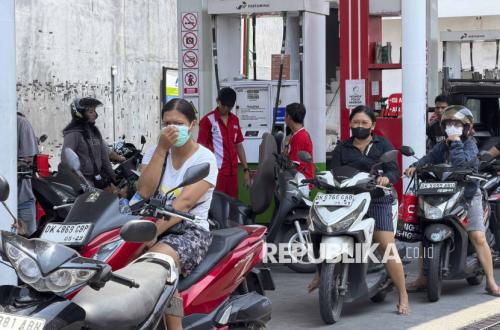
JAKARTA — The Ministry of Energy and Mineral Resources (ESDM) is strengthening oversight and law enforcement to prevent irregularities in the transport and distribution of fuel. The measures are intended to safeguard energy supplies and ensure that fuel reaches the public in accordance with regulations.
On Thursday (22 October 2026), ESDM Director General of Law Enforcement Jeffri Huwae said the government was taking alleged violations in fuel distribution seriously because they could disrupt supplies in several regions. Enforcement is being carried out in line with directives from President Prabowo Subianto and the Energy and Mineral Resources Minister, including an investigation into the suspected illegal transport of B50 diesel aboard the vessel SPOB NURFAIZAH 03 in the waters off Tanjung Emas, Semarang, Central Java.
“If fuel distribution is disrupted, the effects could spread, from potential shortages and queues at petrol stations to disruption of economic activity in Semarang and surrounding areas,” Jeffri said, as quoted on Friday (23 October 2026).
He said oversight of fuel distribution was not only about compliance with the law, but also about protecting the public’s energy needs. Large-scale transport irregularities could affect the smooth distribution of fuel, particularly in areas that require a steady supply.
One case being handled by ESDM’s Directorate General of Law Enforcement concerns the alleged unlawful transport of 406 kilolitres (kl) of B50 diesel aboard SPOB NURFAIZAH 03. The vessel was first inspected by the Indonesian Navy patrol boat KAL Pulau Menjangan II-5-39 on 15 September 2026.
As the investigation progressed, the ministry found a discrepancy between the fuel volumes recorded in the purchase and transport documents. Purchase documents from Pertamina Patra Niaga Pengapon listed only 24 kl, while the delivery order (DO) showed 406 kl — a difference of 382 kl.
Investigators are examining the discrepancy to establish the fuel’s origin, type and legality, as well as the validity of its transport documents. The inquiry is also looking into possible irregularities in the fuel supply chain.
Jeffri said preliminary findings indicated that the vessel had been scheduled to carry an even larger volume of fuel. The government is concerned that this could affect energy distribution in Central Java.
“Preliminary findings indicate that the vessel was scheduled to carry around 1,100 kl of fuel,” Jeffri said.
According to Jeffri, if the entire volume had been loaded, fuel distribution for residents in Semarang and Central Java could have been disrupted. The government is therefore continuing to investigate to ensure that all transport operations comply with regulations.
ESDM’s Directorate General of Law Enforcement is also testing the fuel held as evidence at the Oil and Gas Laboratory (Lemigas). The tests are needed to establish the fuel’s quality and quantity before the investigation proceeds further.
“The laboratory test results will be used to determine the quality and quantity of the evidence more precisely and support the further development of the investigation,” Jeffri said.