
ESDM says receding rivers hinder fuel distribution in Kalimantan
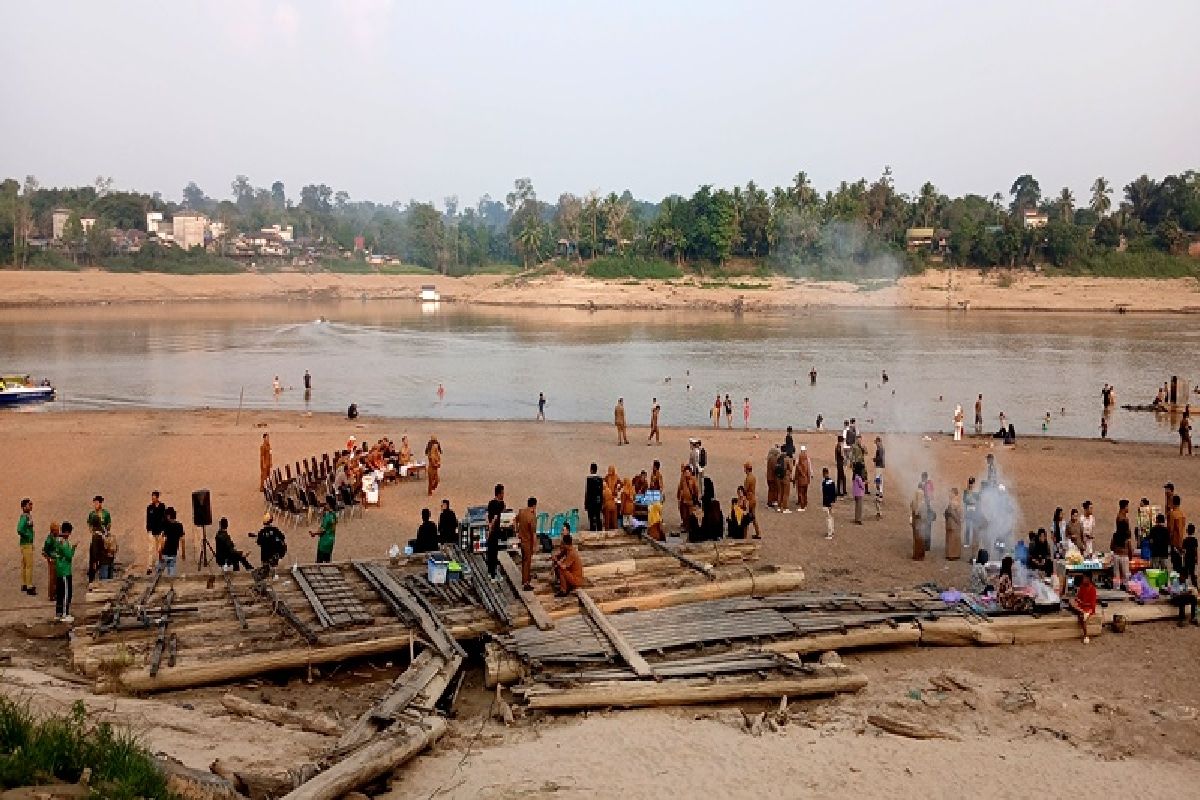
The Ministry of Energy and Mineral Resources (ESDM) has identified the fuel oil (BBM) shortages occurring in Kalimantan as being caused by receding rivers, which have become an obstacle for energy distribution vessels.
“This is happening a lot in Kalimantan. At present, the rivers are experiencing low water levels, so the vessels that usually deliver via river routes are facing constraints in the BBM delivery process,” said Laode Sulaeman, Director General of Oil and Gas at the Ministry of ESDM, during a hearing with Commission XII of the Indonesian House of Representatives, monitored from Badung, Bali, on Wednesday.
Laode said the problem has been mitigated by increasing the number of BBM delivery trucks using land routes. However, the carrying volume of BBM delivery trucks is not as large as that of river transport.
“But the volume is being increased so that it can cover the queuing challenges that occur due to the weather,” Laode said.
In addition to receding rivers, Laode said weather factors have also caused delays in the delivery of BBM and LPG via sea routes.
He explained that energy transport vessels require calm weather to carry out loading and unloading. With calm weather, he said, vessels can only then dock and carry out loading and unloading for distribution to the public.
“If we look at the sea, even when the vessel has already arrived, it cannot carry out loading and unloading because calm weather is required,” Laode said.
Other causes related to BBM and LPG shortages, Laode continued, are panic buying, natural disasters, and misuse.
For BBM and LPG shortages caused by misuse, Laode said the government is currently further reviewing the formulation of policies to ensure that subsidised BBM and LPG are only obtained by those who are entitled to them.
“Once again, we convey that regarding the problem of shortages and queues, we have already identified the causes. We are now in the process of reviewing them so that we can provide solutions in the implementation process,” Laode said.