
ESDM reveals 4 main utilisation sectors for hydrogen development
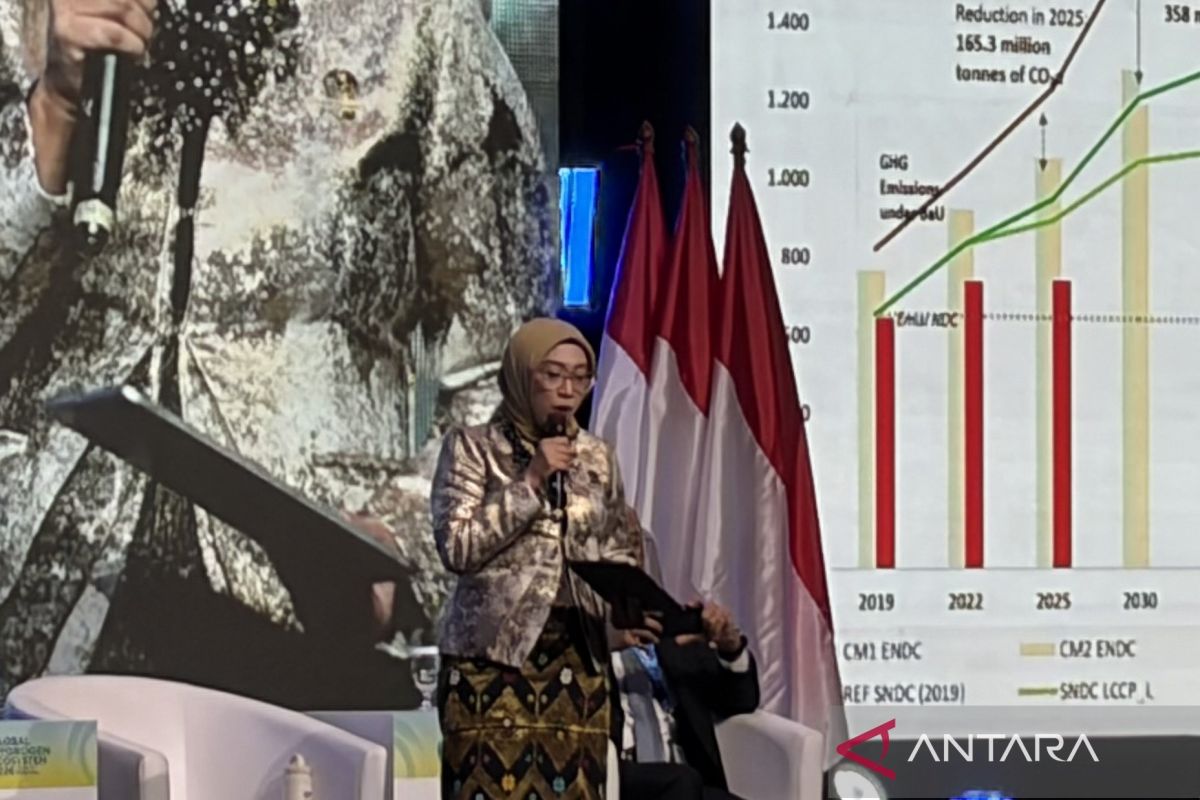
Jakarta (ANTARA) - The Ministry of Energy and Mineral Resources (ESDM) has revealed that there are at least four main utilisation sectors for the development of the national hydrogen energy ecosystem.
Eniya Listiani Dewi, Director General of New, Renewable Energy and Energy Conservation (EBTKE) at the Ministry of ESDM, said that this is set out in the National Hydrogen and Ammonia Roadmap.
“We are also developing a utilisation phase for several sectors here, including industry, the transport sector, power generation, and export commodities,” Eniya said in Jakarta on Tuesday.
She continued that the roadmap governs the implementation system for the development of the hydrogen and ammonia ecosystem in Indonesia in order to achieve long-term goals.
Furthermore, the action plan details concrete steps with measurable targets and milestones, and carries out regular monitoring and evaluation to ensure effective implementation and the achievement of the targets that have been set.
“In the short term, we also want to carry out monitoring and evaluation because our national roadmap has already been issued,” she said.
Eniya said that 2025-2034 constitutes the short-term initiation phase, as well as development and integration.
“So, the first step for the short term is the initiation phase. We are currently in the initiation phase. As we know, hydrogen development has already been carried out widely, and it can not only be converted into electricity, but can also be incorporated into the dual-fuel concept,” she explained.
Meanwhile, 2045-2060 constitutes the acceleration and sustainability phase of the national hydrogen ecosystem, and is therefore aimed at long-term targets.
“For the long term, we are moving and want to become a major player, a global hydrogen economic hub, so that it is located in Indonesia,” said Eniya.
Overall, she said that the development of the hydrogen ecosystem is aimed at realising energy sovereignty by minimising dependence on fossil fuels to improve energy security.
Furthermore, achieving decarbonisation targets through the development of the domestic hydrogen market, as well as expanding exports of hydrogen and hydrogen derivatives to international markets by leveraging Indonesia’s advantages as a maritime nation.