
ESDM: Renewable Energy Mix Exceeds Target at 17.89 Per Cent
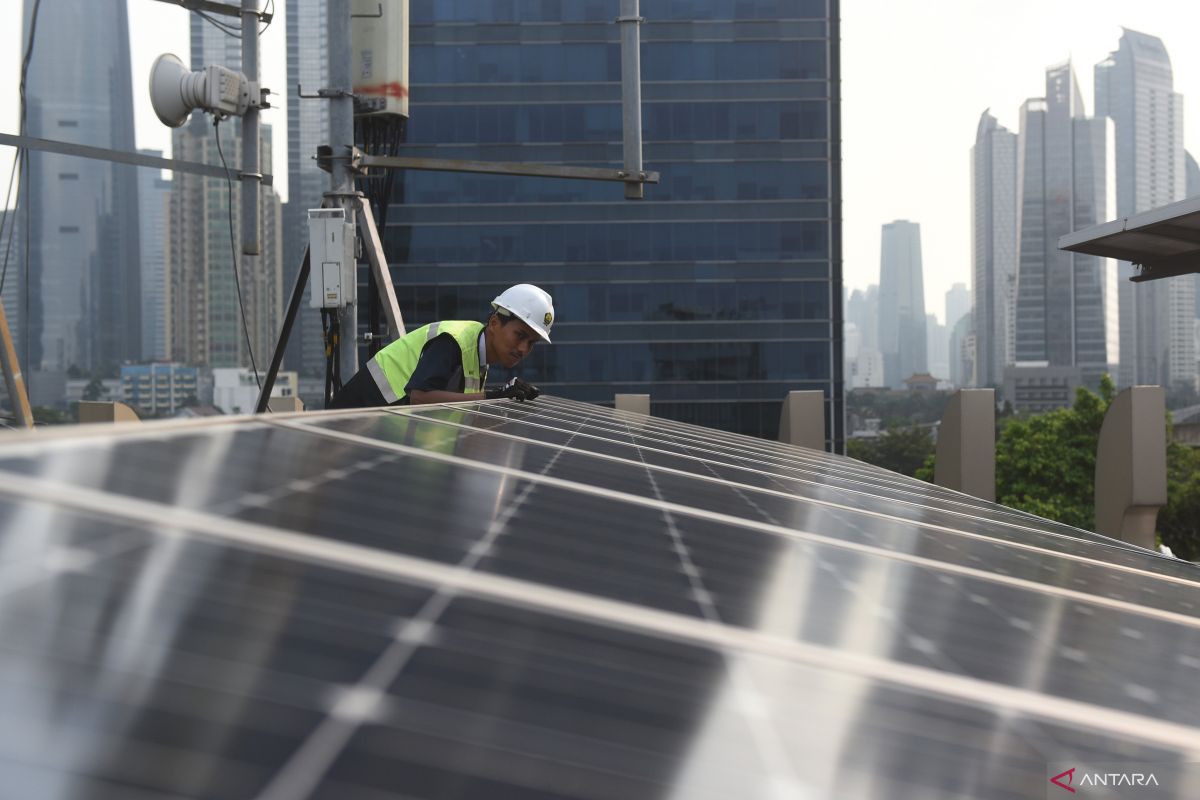
The Ministry of Energy and Mineral Resources (ESDM) has announced that the realisation of the renewable energy (EBT) mix for electricity generation reached 17.89 per cent as of April 202_ [Note: Article contains conflicting years 2026/2027, treated as current reporting], surpassing the established target of 16.46 per cent.
“The renewable energy mix has increased beyond the target, reaching a realisation of 17.89 per cent, which is above the 16.46 per cent target,” stated the Acting Director General of Electricity, Tri Winarno, during a Hearing Meeting (RDP) with Commission XII at the Parliament Complex in Senayan, Jakarta, on Thursday.
Tri assessed the achievement as encouraging, indicating positive performance within the renewable energy sector. “The national energy mix reflects the ongoing efforts of the energy transition,” Tri added.
Overall, national electricity production up to April reached 165.51 terawatt hours (TWh). The composition of this national electricity production consists of 64.87 per cent from coal, 13.86 per cent from gas, 3.38 per cent from fuel oil (BBM), and 17.89 per cent from renewable energy.
The region with the highest renewable energy mix is Sumatra, at 41.76 per cent, with a total electricity production of 32.42 TWh. In that region, coal holds the second position with a mix of 38.40 per cent, followed by gas at 17.79 per cent, and fuel oil at 2.05 per cent.
Electricity production in the Java-Bali region remains dominated by coal. Of the 87.43 TWh produced in the Java-Bali area, 70.99 per cent comes from coal, 16.66 per cent from gas, 10.01 per cent from renewable energy, and 2.34 per cent from fuel oil.
“(Energy transition efforts) still require acceleration to reduce the dominance of fossil fuels within the national power system,” Tri noted.
During the session, the President Director of PLN, Darmawan Prasodju, confirmed the increase in the renewable energy mix. He stated that PLN’s Electricity Supply Business Plan (RUPTL) 2025–2034 shows that 76 per cent of the target for new generation capacity—totaling 69.5 gigawatts (GW)—will come from renewable energy sources such as solar, hydro, wind, and geothermal, supported by energy storage systems (batteries and pumped-storage hydropower).
“In that RUPTL, 76 per cent is based on renewable energy and battery energy storage systems, amounting to 52.8 GW,” said Darmawan.
Since the RUPTL was published one year ago, Darmawan explained that PLN has executed approximately 22.57 GW, or 43 per cent, of renewable-based power plants, including 0.78 GW that is already operational. “So, of the 52.8 GW, 43 per cent of these renewable-based plants are currently in the execution process. We are required to report every two weeks,” Darmawan concluded.