
ESDM pushes solar power access for remote regions
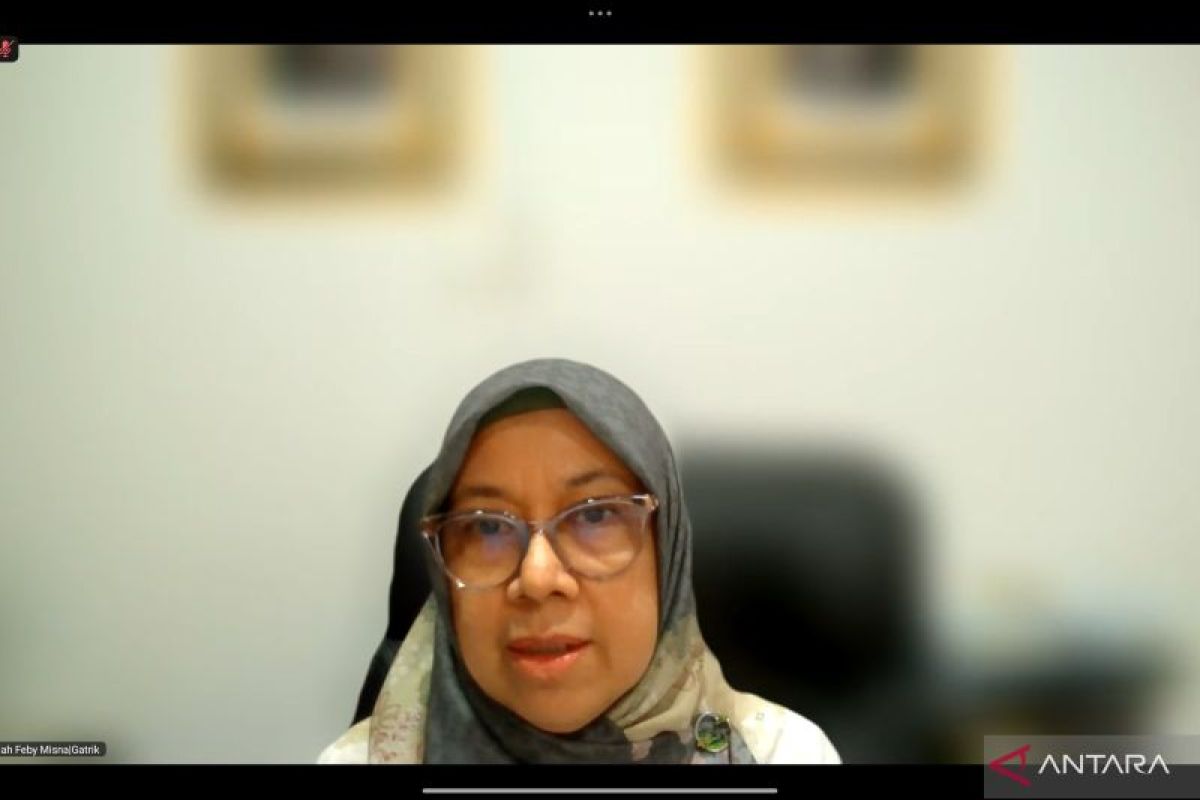
Jakarta (ANTARA) - Andriah Feby Misna, Director of Strategic Electricity Development at the Ministry of Energy and Mineral Resources (ESDM), said the government is encouraging the use of clean solar energy, which holds enormous potential to supply electricity across Indonesia and reach remote regions.
“If we look at its potential, it is very, very large. For solar energy alone, the figure is roughly 3,294 gigawatts if we were to harness it, followed by wind, then sea water, bioenergy, heat and also geothermal,” Andriah said during a media briefing on the Indonesia Solar Summit 2026, attended online in Jakarta on Thursday.
Andriah said Indonesia’s renewable energy potential, particularly solar, is estimated at 3,294 gigawatts. However, by 2026 only around 1.6 gigawatts of solar had been utilised, while the most widely used renewable energy is hydropower at about 7.6 gigawatts.
In the eastern region, South Papua has an electrification ratio through the PLN grid of about 77.16 per cent, whereas the national electrification ratio from systems outside the PLN grid, such as individual solar power installations (PLTS), stands at 99.79 per cent.
“So indeed, in several regions we have programmes to improve energy access for communities in remote areas by building solar power facilities, the easiest option being solar energy because, as I said, its potential is quite abundant,” she said.
Andriah said the government is pursuing several strategies to provide electricity to areas far from the PLN grid, including the development of individual solar power plants (PLTS) equipped with batteries.
She explained that battery-equipped PLTS units ensure electricity remains available at night to power homes after the systems absorb solar energy during the day. In addition, the government is gradually rolling out the New Electricity Connection Assistance Programme (BPBL) for low-income households that still lack electricity.
This also addresses several challenges in developing solar-based electricity supply, including power that is not yet available around the clock, and some areas’ continued dependence on diesel generators.
“So for areas where extending the grid is simply not feasible, we develop communal PLTS. Likewise, from 2027 to 2029 we will gradually work through those 10,068 locations, step by step, so that hopefully all of them can be electrified,” she said.
The government continues its efforts to achieve equitable access to reliable 24-hour electricity services throughout Indonesia by 2029.
According to 2025 data, around 10,068 locations remain without electricity, comprising 5,758 villages and 4,310 hamlets scattered from Aceh to Papua.
For this reason, the Rural Electricity Programme has been designated one of the President’s National Strategic Programmes, implemented by the Ministry of Energy and Mineral Resources to expand electricity access to all Indonesians.