
ESDM Ministry: Converting to PV Solar Power Will Save Up to Rp73.9 Trillion in Electricity Generation Costs
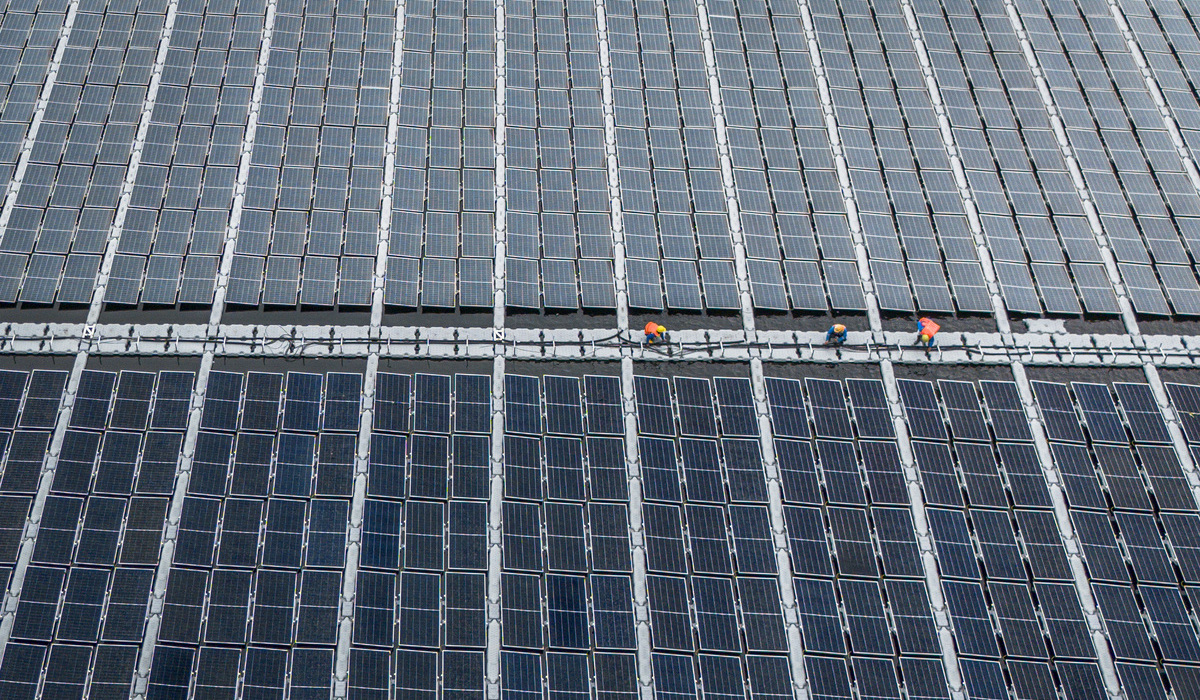
The Ministry of Energy and Mineral Resources (Kementerian ESDM) has announced that the energy transition from fossil-fuelled power plants to solar photovoltaic (PV) power plants (PLTS) is expected to bring substantial economic benefits. This strategic move is projected to reduce national electricity generation costs by up to Rp73.9 trillion per year. Senior Advisor to the ESDM Minister for Strategic Planning, Jisman P. Hutajulu, explained that the major efficiency gains come from replacing gas- and diesel-fired plants (PLTD) with PV systems integrated with Battery Energy Storage Systems (BESS). ‘If the 100 GW PV programme (PLTS 100 GW) is completed, it will replace the very fuel-intensive PLTDs, both in eastern Indonesia and in Java–Bali,’ Jisman said at the HIPMI Power Development Forum 2026 in Jakarta on Wednesday (20 May). The government has set out a roadmap for building PV capacity totalling 100 GW, targeted to be completed during 2026–2028. This massive project is a cornerstone of the national energy transition strategy to achieve energy independence. To realise the target, investment requirements are substantial. Jisman cited a capital requirement of USD 71.3 billion, equivalent to Rp1,140 trillion. In addition to operating cost savings, the development of 100 GW of PV is expected to become a driver of a new economy through job creation, GDP contributions, and reductions in energy imports, with substitution value estimated at USD 14.4 billion to USD 28.9 billion. The government recognises that transmission presents the main challenge. Currently, electricity demand is concentrated on Java, while the largest solar potential lies outside Java. The proposed solution is a 48,000-km supergrid to connect energy sources to demand centres. Under PLN’s 2025–2034 RUPTL, total capacity additions are targeted at 69.5 GW. Of this, Renewables (EBT) are expected to dominate at 61 percent or about 42.6 GW, supported by energy storage capacity of 10.3 GW. The move is expected not only to reduce carbon emissions but also to strengthen the state’s fiscal framework through energy cost savings, which have been affected by fluctuations in global fossil commodity prices. PLN (Persero) launched the Mentari Nusantara I PV project with a capacity of 1.225 GW under the GIGA ONE strategy to accelerate NZE 2060. The investment supports SESNA growth while aligning with Indonesia’s long-term goal of building a competitive and sustainable industry.