
ESDM: Mineral Exchange to Strengthen Indonesia’s Role in Strategic Mineral Trade
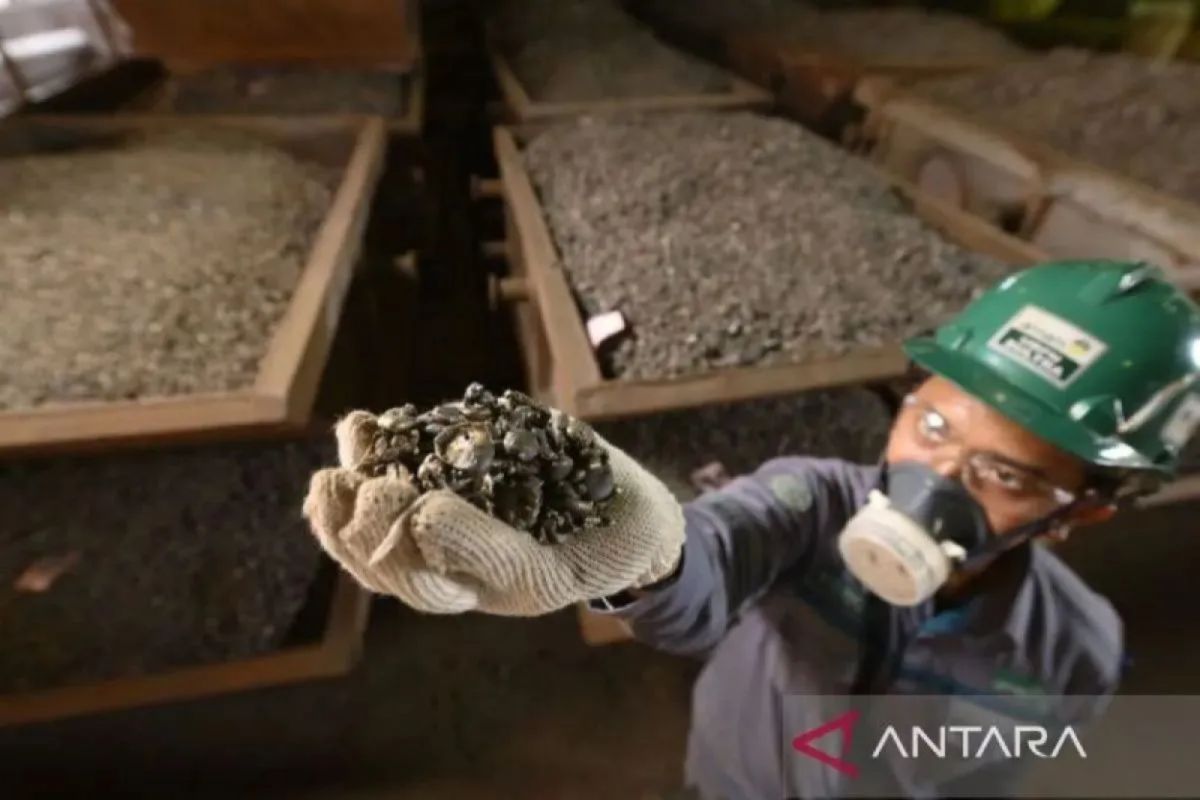
Denpasar, Bali (ANTARA) – The Directorate General of Minerals and Coal at the Ministry of Energy and Mineral Resources said the Mineral and Strategic Commodities Exchange (BMKS) would strengthen Indonesia’s role in trading strategic mineral products.
“Indonesia is laying the groundwork for a national Mineral and Strategic Commodities Exchange. The aim is to improve price transparency and strengthen Indonesia’s role in trading strategic mineral products,” said Yan Abrar, co-ordinator for minerals and coal cooperation and investment at the Directorate General, during the Indonesia–Korea Energy Forum (IKEF) in Sanur, Denpasar, Bali, on Wednesday.
He made the remarks in front of investors from South Korea.
Yan said he understood that investors needed regulatory clarity and certainty. He emphasised that Indonesia’s downstreaming policy had been pursued consistently for more than 15 years.
Law No. 4 of 2009 on Mineral and Coal Mining, he said, mandates domestic processing. The regulations have since developed further to strengthen governance of the mining sector.
He added that annual approval of Work Plans and Budgets (RKAB), benchmark-based pricing and production controls through quota cuts were measures intended to safeguard the sustainability of resources and improve market discipline.
Yan also said the government was expanding digital oversight through Minerba One, which is connected to SIMBARA, the inter-ministerial Mineral and Coal Information System.
“The key message for investors is that Indonesia continues to improve its investment climate while maintaining responsible management of national resources,” Yan said.
At the forum, Eul Roh, a manager on the International Cooperation Team at the Critical Mineral Department of the Korea Mine Rehabilitation and Mineral Resources Corporation (KOMIR), said Indonesia and South Korea had complementary strengths.
Indonesia has abundant resources, mineral processing capacity and a clear goal of creating an electric-vehicle ecosystem.
South Korea, meanwhile, has a battery market and technology, experience in recycling and mine reclamation, and systems that connect information, technology and finance.
“The partnership between South Korea and Indonesia is moving from coal to batteries,” Eul Roh said.
He said he hoped standards for cooperation between Indonesia and South Korea would be raised, including in the use of clean energy; water and waste management; predictable permits and public trust; and access to global battery markets.
“No single company can solve this alone. The two countries must work on it together,” Eul Roh said.