
ESDM Implements New Strategy to Tackle Surge in Illegal Gold Mining
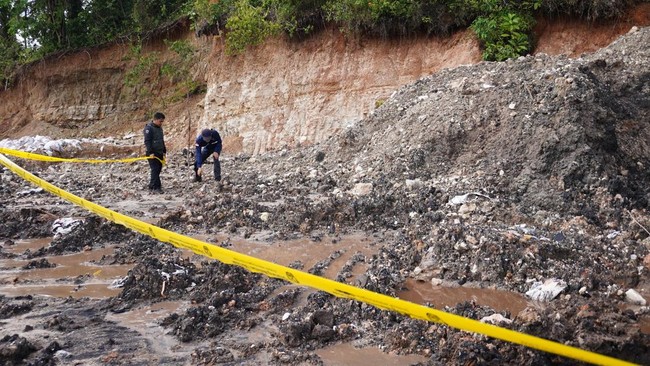
The Directorate General of Law Enforcement (Ditjen Gakkum) of the Ministry of Energy and Mineral Resources (ESDM) has revealed its strategy for handling unauthorised mining activities (PETI) in the South Tapanuli (Tapsel) region of North Sumatra.
ESDM Law Enforcement Director General Rilke Jeffri Huwae stated that the management of illegal mines in Tapsel is being conducted using a different approach. At the very least, the government is not only taking enforcement action against unauthorised mining activities but is also preparing economic alternatives for the communities that have historically relied on such activities for their livelihoods.
“We recently visited Tapsel, and regarding these unauthorised mining activities, our concept is different. It is somewhat different because we are presenting a comprehensive concept,” he said during an interview at TMP Kalibata, as reported on Wednesday (30/09/2026).
Jefri mentioned that the ESDM Law Enforcement Directorate General is also collaborating with several parties to handle illegal mining in the area, including the mining company PT Agincourt Resources and the local government.
According to him, a law enforcement approach that prioritises only punitive action is insufficient to resolve the issue of unauthorised mining. He believes that the state must also provide economic solutions to the communities affected by enforcement measures.
“We are preparing new economic aspects for them. I believe this is more effective than merely conducting conservative enforcement, where people are pursued and so on. The state’s presence should not be like that. The state must provide both enforcement and solutions. That is what we are doing,” he said.
When asked about the number of illegal mines in the area surrounding Agincourt, Jefri stated that unauthorised mining activities in the region are quite numerous. However, he did not provide exact figures regarding the number of illegal mining sites or the production levels resulting from these activities.
“We do not count them. There isn’t just one spot. Nationally, it is said there is 150 tonnes, but that is spread all across Indonesia. It cannot be specifically attributed to Agincourt,” he added.