
ESDM: Hydrogen Corridor a Foundation Connecting to Growth Centres
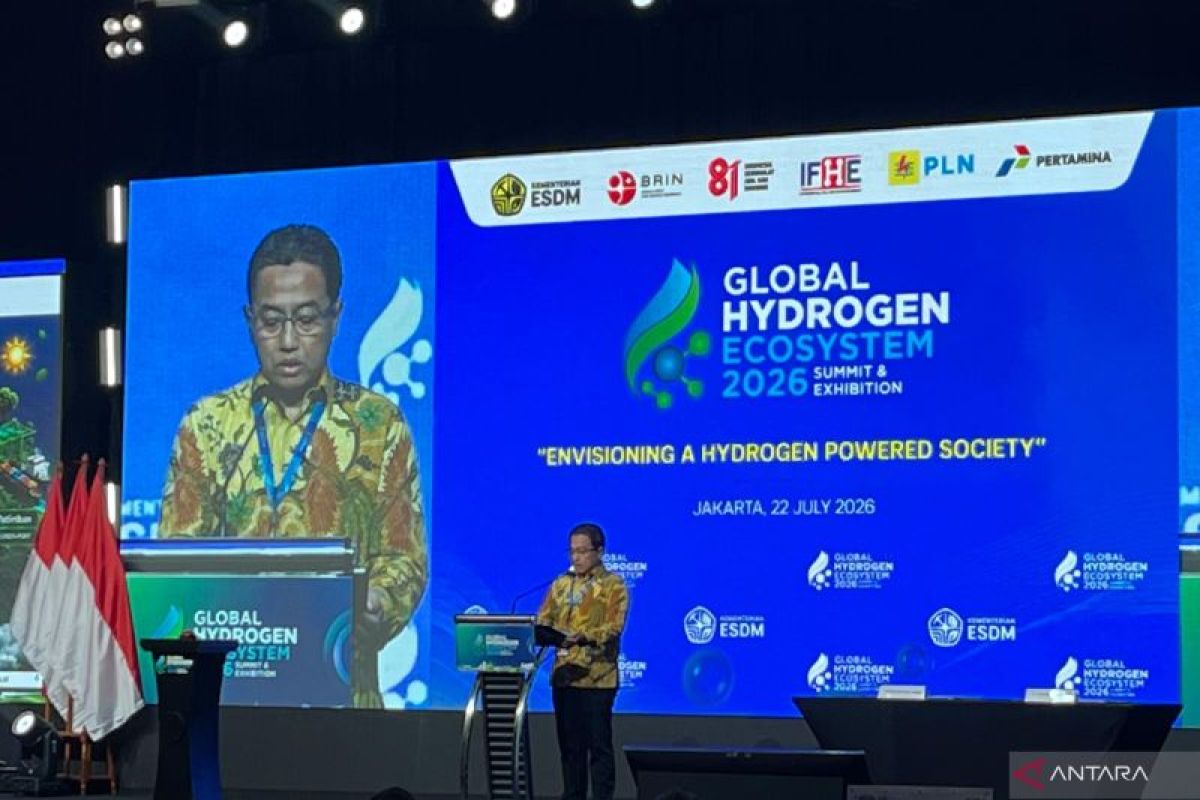
The Ministry of Energy and Mineral Resources (ESDM) assesses that the development of a Green Hydrogen Corridor will serve as the foundation for building a hydrogen ecosystem connecting energy production centres with industrial zones, ports, and Indonesia’s economic growth hubs. Head of the Human Resource Development Agency (BPSDM) at ESDM, Prahoro Nurtjahyo, stated that the success of the hydrogen industry depends not only on production capacity but also on building an integrated supply chain from upstream to downstream. “The Green Hydrogen Corridor is not the end goal. It is the foundation for the formation of a national hydrogen corridor network connecting clean energy production centres with industrial zones, ports, and Indonesia’s economic growth centres,” he said in Jakarta on Wednesday. He explained that the Green Hydrogen Corridor is not merely about building a green hydrogen production network, but about creating a supply chain that integrates Green Hydrogen Plants, Hydrogen Refuelling Stations (HRS), industrial zones, logistics networks, ports, and end-users within a single low-carbon economic corridor. “The government has mapped an initial 194-kilometre corridor connecting Jakarta, Karawang, and Patimban as a pilot corridor for developing Indonesia’s hydrogen ecosystem,” said Prahoro. He noted that the corridor’s designation was carried out through comprehensive spatial, technical, economic, and logistical analysis to produce an optimal network from both technical and economic standpoints. In the initial development phase, the Ministry of ESDM identified 12 potential locations representing various hydrogen supply chains, with development to be carried out in stages. The early implementation phase of the Green Hydrogen Corridor involves the construction of an onsite-concept HRS using a Proton Exchange Membrane (PEM) electrolyser with a production capacity of 100 kilogrammes of hydrogen per day as a model for implementing the national hydrogen ecosystem. He revealed that several corridor nodes have begun to be realised through the construction of Green Hydrogen Plants and HRS by various partners. PLN has developed a Green Hydrogen Plant and HRS facility in Muara Karang, as well as HRS Senayan and HRS Duren Tiga as nodes for the Jakarta corridor area. Meanwhile, Toyota Motor Manufacturing Indonesia (TMMIN) has developed HRS Karawang as part of a hydrogen-based vehicle demonstration. The development of Greenport Patimban is being carried out through collaboration with Toyota Tsusho within the framework of the Eastern GX Corridor. According to Prahoro, this initiative shows that Indonesia has entered the implementation phase of the hydrogen ecosystem, no longer just in the planning stage. “We see that the Eastern GX Corridor and the Green Hydrogen Corridor share the same vision, which is to build a hydrogen ecosystem that integrates industrial zones, transportation, logistics, and ports,” he said. He added that the development of Greenport Patimban is a strategic complement to the government’s Green Hydrogen Corridor development. Previously, the Ministry of Energy and Mineral Resources launched a Hydrogen Diesel Dual Fuel (H2 DDF) Bus as a pilot project and the development of the 194-kilometre Jakarta–Karawang–Patimban Green Hydrogen Corridor. Minister of Energy and Mineral Resources Bahlil Lahadalia stated that both initiatives, introduced at the Global Hydrogen Ecosystem Summit (GHES) 2026, are part of developing a hydrogen ecosystem to strengthen the energy transition, independence, self-sufficiency, downstreaming, and national industrialisation. “Hydrogen development is aligned with President Prabowo Subianto’s Asta Cita directives. Hydrogen is a very important alternative energy amidst uncertain global geopolitical conditions, such as the conflict in the Middle East which creates uncertainty,” said Bahlil.