
ESDM Geological Agency Warns of Liquefaction Potential from NTT Earthquake, Here Are the Signs
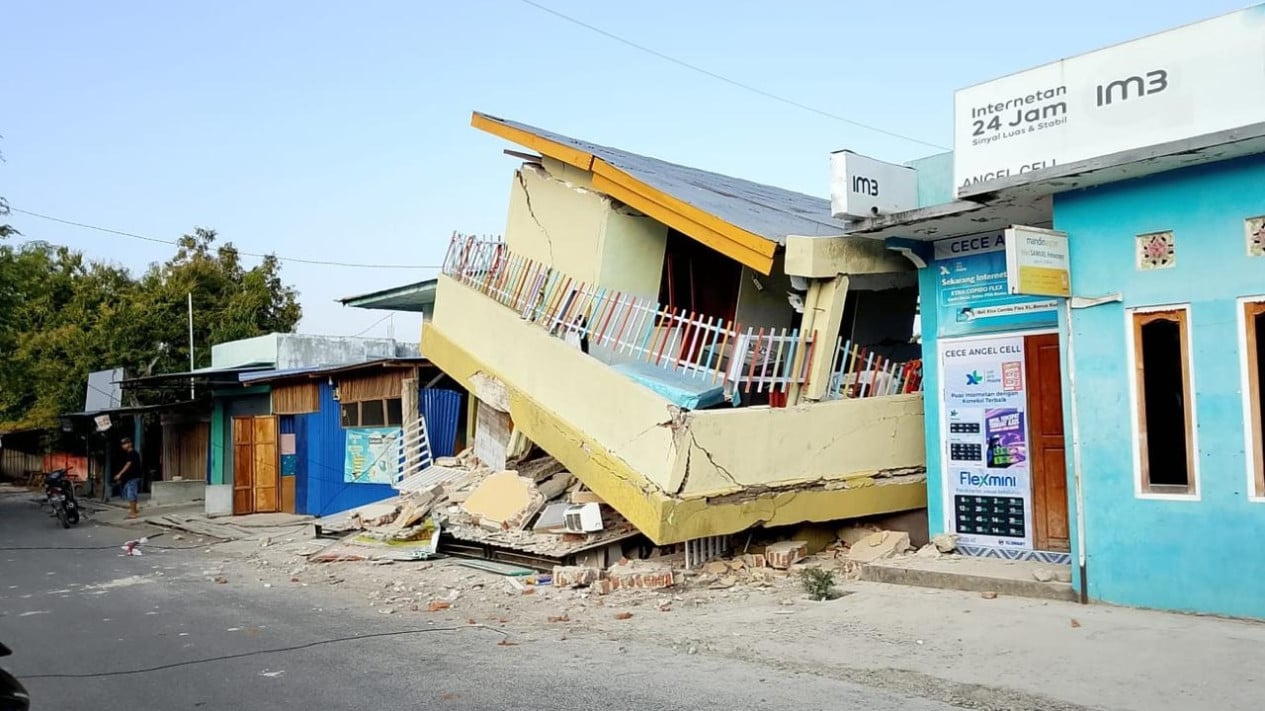
The Geological Agency of the Ministry of Energy and Mineral Resources has identified that the magnitude 7.7 earthquake at a depth of 15 kilometres in East Nusa Tenggara has produced secondary hazards that need to be watched for, ranging from ground movement to liquefaction.
Head of the Geological Agency of the Ministry of Energy and Mineral Resources, Lana Saria, explained that this indication is based on photographic documentation from the field, which shows the impact of the shaking on the ground. The documentation reveals wall cracks, damage to building components, partial structural collapse, as well as reports of water emerging from the ground.
“In addition to the direct impact of shaking, we have also identified several secondary hazards, including tsunami, ground movement, ground cracks, and indications of liquefaction,” said Lana on Saturday, 15 August 2026.
In Waekokak–Mbay, Lana said, water was reported to have emerged from the ground after the earthquake. Meanwhile in Bonea, Selayar, a small tsunami was observed.
Following these reports, the Geological Agency conducted a rapid analysis of the possibility of liquefaction occurring. The initial results indicate a likelihood of liquefaction, based on the relationship between the distance from the earthquake source and the strength of the earthquake.
The impact is estimated to be more significant in areas closer to the source, particularly in alluvial plain areas such as parts of Nagekeo.
“I need to emphasise that this analysis is a rapid analysis and serves as a basis for determining locations that need to be prioritised for field verification,” said Lana.
In particular, Lana highlighted the report of water emerging from the ground shortly after the earthquake in Waekokak–Mbay. Initially, this phenomenon was thought to be related to liquefaction in the form of sand boils, or sandy and muddy water eruptions.
From initial indications, the impact on foundation soil is estimated to be at a low to moderate level and does not display characteristics like the Palu-type liquefaction event, which can travel long distances.
“However, the final conclusion still requires direct identification and examination in the field,” she said.
As a follow-up, Lana said, the Geological Agency of the Ministry of Energy and Mineral Resources will dispatch an Earthquake Disaster Emergency Response Investigation Team to the affected locations. The team will conduct a rapid assessment to verify field conditions, deepen the analysis, and formulate technical mitigation recommendations.
Source: jawawa.id (https://jawawa.id/newsitem/esdm-geological-agency-warns-of-liquefaction-potential-from-ntt-earthquake-here-are-the-signs-1786812667)
Originally published by VIVA.co.id (https://www.viva.co.id/berita/nasional/1921725-badan-geologi-esdm-waspadai-potensi-likuefaksi-dari-gempa-ntt-ini-pertandanya), translated from Indonesian