
ESDM Geological Agency Explains Causes of Repeated Anak Krakatau Eruptions
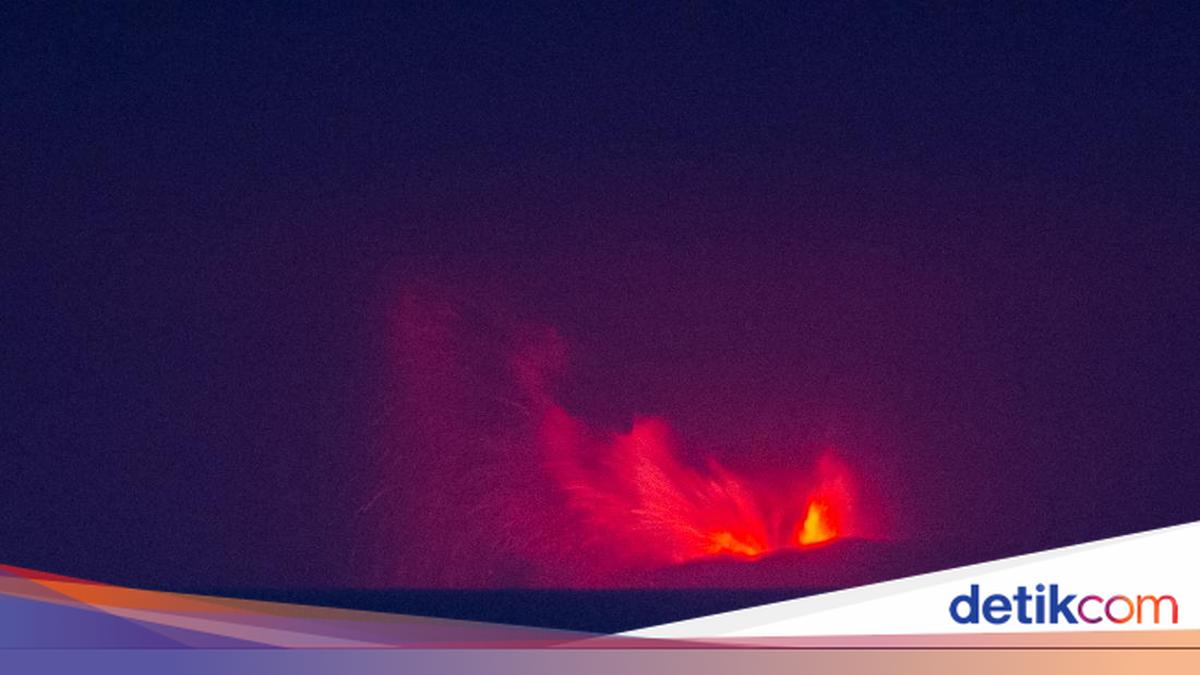
The Head of the Geological Agency of the Ministry of Energy and Mineral Resources (ESDM), Lana Saria, has provided an update on the monitoring of Anak Krakatau’s eruptions. Lana Saria explained the causes behind the repeated eruptions of the volcano.
“We are currently experiencing eruptions from Mount Anak Krakatau, which actually began showing activity in July 202lag and reached its highest activity yesterday, 5 September 2026. There are certainly concerns regarding the activity of Mount Krakatau, as current activity has indeed increased compared to previous periods, marked by repeated and continuous eruptions,” Lana stated during an online press conference on Sunday (6/9/2026).
Lana noted that the ESDM Geological Agency is continuously monitoring the activity of Anak Krakatau. This monitoring is not solely based on the number or height of the eruption columns.
“These conditions indicate an ongoing supply of magma and gas within the body of the volcano. However, frequent eruptions do not automatically mean that a larger eruption will occur; the Geological Agency will continue to evaluate activity developments based on all monitoring data, not just the number or height of the eruption columns,” she said.
Lana stated that the primary dangers the public should be wary of are the projection of incandescent material and volcanic ash. She mentioned that the projection of incandescent material is capable of damaging equipment located within the centre of activity zone.
“The most significant dangers to watch for currently are the projection of incandescent material, volcanic rocks, volcanic ash, high-concentration volcanic gases, and the potential for eruption material flows around the crater and the body of Anak Krakatau. These projections can damage equipment near the centre of activity and endanger anyone entering the restricted zone,” she added.
She noted that the activity of Anak Krakatau has the potential to increase, as low-frequency earthquakes are still being recorded. Nevertheless, the timing of the next eruption cannot be precisely determined, necessitating continuous evaluation.
“Activity has the potential to fluctuate and increase because low-frequency, hybrid, harmonic, and tremor earthquakes are still being recorded. These types of seismicity indicate the movement or release of volcanic fluids within the volcanic system,” said Lana.
“Nonetheless, the timing, magnitude, and form of the next eruption cannot be precisely predicted. Therefore, evaluations are conducted continuously based on changes in all monitoring parameters,” she concluded.