
ESDM: B50 policy to save up to Rp157 trillion in foreign exchange
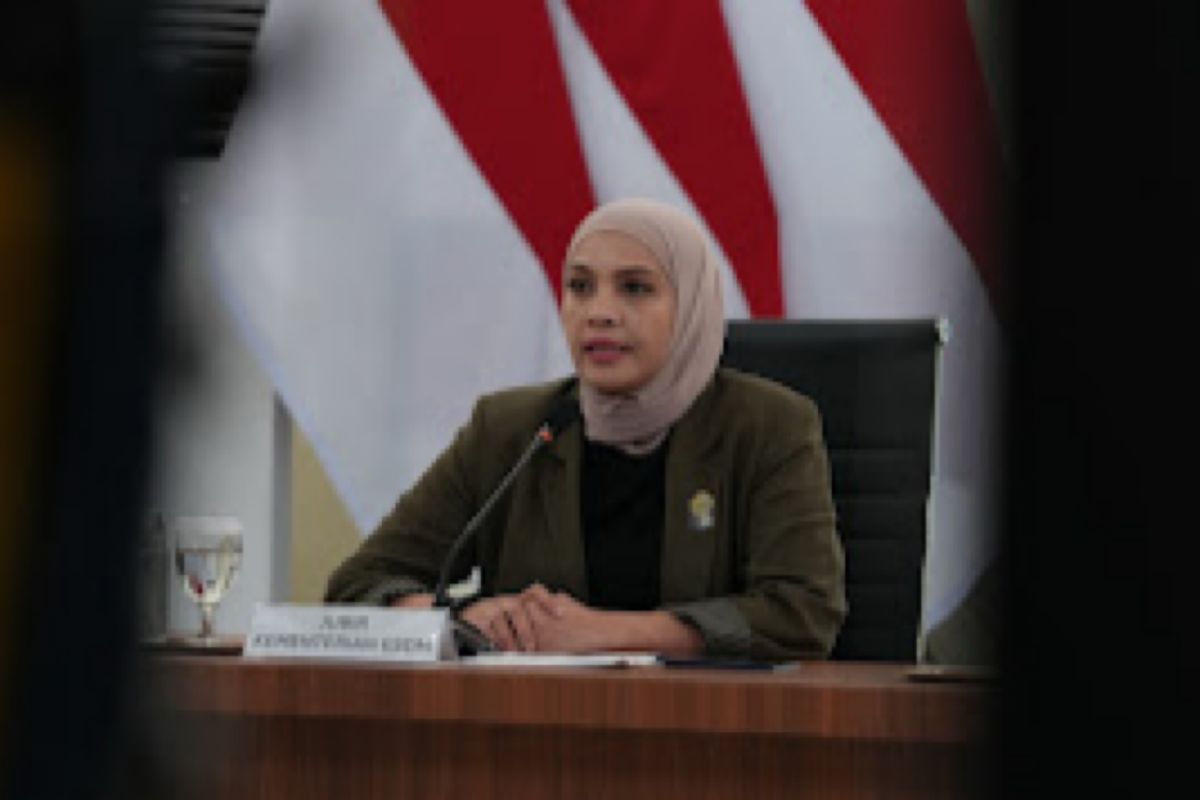
The Ministry of Energy and Mineral Resources (ESDM) has stated that the implementation of the B50 policy, set to begin on 1 July, has the potential to save the country up to Rp157.28 trillion in foreign exchange this year. ESDM spokesperson Dwi Anggia said the B50 policy will reduce Indonesia’s need for diesel fuel, thereby cutting imports and contributing to foreign exchange savings. “In 2026, with the implementation of B50, we expect to save Rp157.28 trillion in foreign exchange,” Anggia said during a press conference on accelerating strategic government programmes at the Government Communication Auditorium in Jakarta on Wednesday. Anggia added that the use of B50 will allow Indonesia to gradually reduce imports. The projected savings mark a significant increase compared to last year, when the government was still implementing the mandatory B40 programme. With foreign exchange savings of Rp133.3 trillion recorded last year, the savings from reduced diesel imports through the B50 policy this year are expected to rise by approximately 17.9 percent. The B50 programme also has the potential to create Rp24.73 trillion in added value for crude palm oil (CPO), absorb 2.21 million workers, and reduce greenhouse gas emissions by up to 46.72 million tonnes. As such, the implementation of B50 will not only positively impact the trade balance but also drive economic growth. “Why does it support economic growth? Because the implementation of B50 will also increase the added value of our palm oil. Thus, the economic benefits will be felt more by our palm oil farmers,” she explained. She added that the B50 policy is highly relevant to current conditions, as global oil prices fluctuate in response to geopolitical developments and affect energy prices in Indonesia. Amid these conditions, Anggia said the government has a strong commitment to reducing dependence on fuel imports by utilising domestic resources, while simultaneously accelerating the transition towards more sustainable energy. To support the policy’s implementation, Anggia noted that the government has been conducting a series of B50 trials since last year. She explained that technical testing of B50 for the automotive sector began on 2 December 2025 and is targeted for completion by June 2026. The government is also conducting technical tests on agricultural equipment and machinery, as well as mining equipment, which are expected to be completed in the second half of 2026. Testing for the railway and power generation sectors is also underway, though not yet fully complete. “Although technical testing in some sectors is still ongoing, we are ensuring that the implementation will be carried out simultaneously,” Anggia added.