
Erroneous AI Information Nearly Triggered US Attack on Chinese Ship in the Middle East
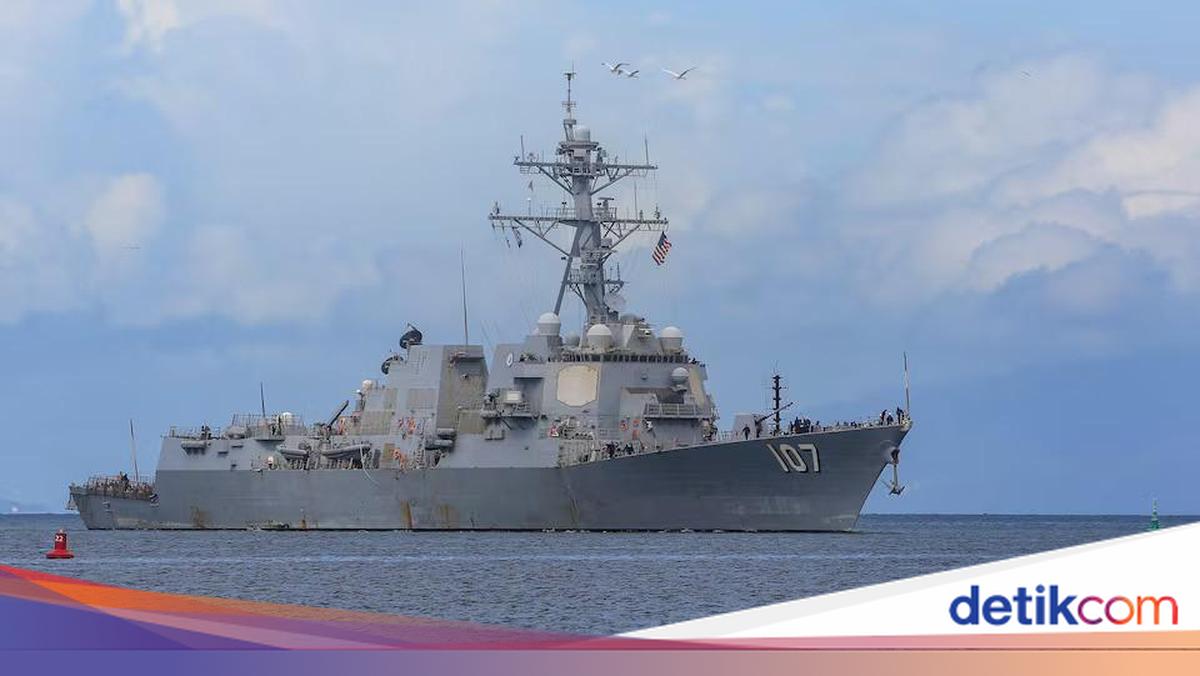
Intelligence reports circulating within the United States military, amidst the ongoing conflict with Iran, nearly triggered another war with China. The intelligence report, which was later discovered to have been prepared with the assistance of artificial intelligence (AI), provided erroneous information.
According to four sources familiar with the situation, as reported by CNN on Monday (2nd September 2026), the intelligence report circulating within the US military last spring claimed that a Chinese ship in the Middle East was allegedly transporting components for a nuclear weapons programme. The report immediately triggered high alert, with the US military promptly drafting plans to intercept the vessel in question.
Two sources speaking to CNN mentioned that fully armed US military personnel were prepared to board the ship. US military aircraft were also reported to have been airborne. However, just before the military operation was launched, US officials conducted a deeper review of the intelligence report prepared by a special operations command analyst.
It was revealed that the report was compiled with the help of AI, and that the chatbot used by the analyst had incorrectly identified the cargo carried by the Chinese ship. CNN was unable to ascertain the exact nature of the misidentified cargo. According to one source, the intelligence report that had caused such concern within the US military was declared “entirely incorrect.”
Sources cited by CNN stated that the report “almost triggered a war.” Any US military operation against a Chinese vessel carries the risk of sparking an armed conflict between the two nations.
Why does the US military use AI in its operations?
Across the US military and intelligence community, officials are striving to integrate AI into almost every aspect of their work. This ranges from analysing vast amounts of raw intelligence data collected by the US and selecting attack targets, to more routine applications such as budget management, logistics, and supply chain management.
However, this incident highlights the significant risks of using sophisticated new technologies that are not yet fully understood for target identification during wartime. Analysts have long feared that AI could trigger fatal miscalculations if nations rely on poor or invalid data. A miscalculation triggered by inaccurate information nearly led the US to attack a Chinese ship.
In this specific case, an analyst requested information from a chatbot regarding intelligence reports related to a ship’s manifest originating from the US Pacific Special Operations Command, based in Hawaii. It remains unclear whether the chatbot was a commercially available product or a US government product.
The chatbot combined open-source intelligence with classified government signals intelligence, then drew crucial conclusions regarding the cargo carried by the vessel. The analyst then used AI to compile these findings into a standard intelligence report—the type of report trusted by military officials—and disseminated it.
The reason behind the rapid adoption of AI is its ability to assist the military in making battlefield decisions, such as determining which targets to strike or where to move military assets, more quickly. Officials stated that the US must not fall behind in AI integration, given the possibility of facing China or other adversaries who could potentially gain a step ahead.
The US Pacific Special Operations Command and the Pentagon have not yet commented on the report.