
Erdogan Honoured by Trump and Putin, Why Is Netanyahu Afraid?
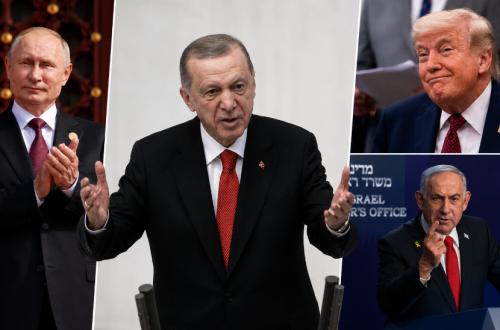
JAKARTA — Recep Tayyip Erdogan now stands at the most sensitive point on the map of global power. In Ankara, US President Donald Trump has rolled out the political red carpet for Turkey. In Moscow, Vladimir Putin still regards Erdogan as a trustworthy leader despite their frequent disagreements. In Jerusalem, however, Benjamin Netanyahu sees Erdogan as a new strategic threat.
The tension erupted around the NATO summit in Ankara. Reuters reported on Tuesday, 7 July 2026 that Trump said he would lift sanctions imposed on Turkey over its purchase of the Russian S-400 missile system. Trump also opened the door to selling F-35 stealth fighter jets to Ankara. “We don’t want to sanction a friend,” Trump said, adding that he had no concerns about Turkey and describing Washington-Ankara relations as possibly at their best point.
At the same venue, Erdogan responded in personal terms. According to Reuters in the same report, Erdogan said Turkey had once been promised five F-35 jets by the United States. “I know Mr Trump always keeps his promises,” Erdogan said. The remark matters because it illustrates that the Erdogan-Trump relationship is not merely one between two NATO states, but a personal bond between two leaders who understand each other’s language of power, transactions and political loyalty.
For Netanyahu, however, the prospect of F-35s returning to Turkey is no ordinary matter. Reuters reported on Wednesday, 8 July 2026 that US Defence Secretary Pete Hegseth cancelled a meeting scheduled with Netanyahu to discuss the possible sale of F-35s to Turkey. In an interview with CNN the previous Tuesday, Netanyahu said he opposed the sale and had already conveyed his objections to Trump. “It would destroy the balance of power in the Middle East because Turkey has aggressive aspirations,” Netanyahu said, as reported by Reuters.
This is the context in which Netanyahu’s “fear” must be read. It is not merely personal dislike of Erdogan, but Israel’s strategic anxiety over a shift in the aerial, military and diplomatic balance in the Middle East. For decades, Israel has relied heavily on its military superiority in the region. If Turkey, a NATO member with a very large military, regains access to the F-35, Ankara’s position in the conflicts over Syria, Gaza, Lebanon, Iran, the Eastern Mediterranean and the Black Sea would rise sharply.
Axios, the American news outlet, reported on Monday, 6 July 2026 that Netanyahu had asked Trump to “rein in” Erdogan ahead of the NATO summit in Ankara. Axios wrote that Netanyahu also asked Trump not to sell weapons systems that could help Turkey modernise its air force. In that report, Axios said the Washington-Ankara agenda included a possible 700 million US dollar jet engine deal and the prospect of Turkey rejoining the F-35 programme.
Netanyahu’s request to Trump shows one thing: Israel has begun to see Erdogan not merely as a harsh critic, but as a geopolitical rival drawing ever closer to the White House. Axios wrote that Netanyahu’s influence in Washington is being questioned, as Trump maintains close ties with both Netanyahu and Erdogan. At the same time, the financial gains from US arms sales to Turkey are a factor that cannot be ignored.