
Eramet: Indonesia Now Emerges as the Global Nickel Market Kingmaker
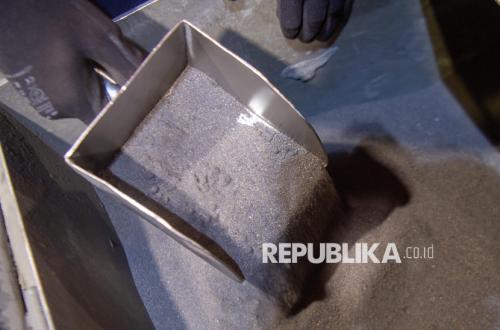
The Indonesian nickel industry is expected to enter a new phase in 2026 after five years of global oversupply that weighed on prices and led to mine closures in various countries. Eramet Indonesia CEO Jerome Baudelet sees government policy restricting production volumes through RKAB (Rencana Kerja dan Anggaran Belanja) and raising the Mineral Reference Price (HPM) as key factors that could alter the balance of the global market.
‘The nickel market from 2020 to 2025 has been in oversupply. There were too many products entering the market, so prices remained pressured and inventories rose,’ Baudelet said in his briefing on the 2026 nickel industry outlook, on Wednesday (20 May 2026).
He said the conditions began to change in 2026 as Indonesia, the world
dominant producer, started to control production and improve the governance of raw material pricing. ‘The good news is that in 2026 the situation starts to be different. And that is again because of Indonesia,’ he added.
Baudelet highlighted a major transformation in Indonesia over the past decade. In 2014, Indonesia accounted for only about 8 percent of global nickel production. By 2025 that share had jumped to around 65 percent and is expected to continue rising to 75–80 percent in the coming years as new capacity comes on line.
‘Indonesia has now become the centre of global nickel production power. What happens in Indonesia will influence the entire global nickel market,’ he said.
He explained that global nickel industry growth remains driven by two main sectors: stainless steel and electric vehicle batteries. Nickel consumption for batteries is projected to reach around 1.8 million tonnes over the next decade.
Although the growth rate is not as high as initially anticipated when electric vehicles began to take off due to the advent of lithium iron phosphate (LFP) batteries that do not use nickel, demand has still risen significantly.
‘We still see about a 200 percent rise over the next ten years. By 2035, batteries will account for around 30 percent of world nickel demand,’ he said.
However, Baudelet noted that the stainless steel market remains the backbone of global nickel consumption. This sector currently absorbs around 65–70 percent of world nickel demand with growth of about 5 percent per year.
‘Sometimes people focus too much on electric vehicles and forget that stainless steel remains the main nickel market,’ he said.
Baudelet also highlighted changes in the downstream structure of Indonesia’s nickel industry. In the early stages of industrialisation, much domestic production consisted of Nickel Pig Iron (NPI) used for the stainless steel industry.
But in the last three years, Indonesia has begun developing High-Pressure Acid Leaching (HPAL) technology to produce refined nickel and battery chemicals.
‘Indonesia began with NPI and pyrometallurgy, then moved into the second phase via HPAL,’ he said.
These changes are reflected in Indonesia’s export pattern. If exports were previously dominated by NPI, now battery materials such as Mixed Hydroxide Precipitate (MHP), matte, and nickel metal are taking a larger share.
‘Combined, MHP, matte, and metal now account for almost 30 percent of Indonesia’s nickel export profile. This is a major shift compared with five years ago,’ Baudelet said.
He considered the government’s new policy on the HPM a positive step because it provides a fairer value for the mineral content in nickel ore. The latest HPM formula includes additional elements such as iron, cobalt, and chromium alongside nickel content and moisture.
Baudelet said the approach reflects the real value added by processing industries. In NPI production, for instance, there are iron and chromium contents that also have economic value for the stainless steel industry. The same applies to HPAL, which can extract nickel, cobalt, iron, and some chromium.
‘The momentum is good because companies buy ore and derive value from all the elements contained in it,’ he noted.
Nevertheless, he acknowledged that adjusting the HPM presents challenges for some HPAL companies in Indonesia. So far, limonite ore used as HPAL feedstock has been priced too low and did not reflect international prices.
The HPM increase brings limonite prices closer to global standards, but at the same time companies face a surge in sulfur costs.
‘The combination of the new HPM and higher sulfur costs is quite difficult for HPAL companies to absorb at the moment, but we believe the policy will ultimately hold,’ he said.
Baudelet said price pressures over the past five years have caused many nickel producers outside Indonesia to suspend operations due to losses. Therefore, Eramet supports the Indonesian government’s efforts to control production to avoid prolonged oversupply.
‘We support a market that does not encourage overproduction and uses resources responsibly to safeguard the future,’ he said.