
Envisioning the Establishment of a "Food Bank" within the MBG Ecosystem
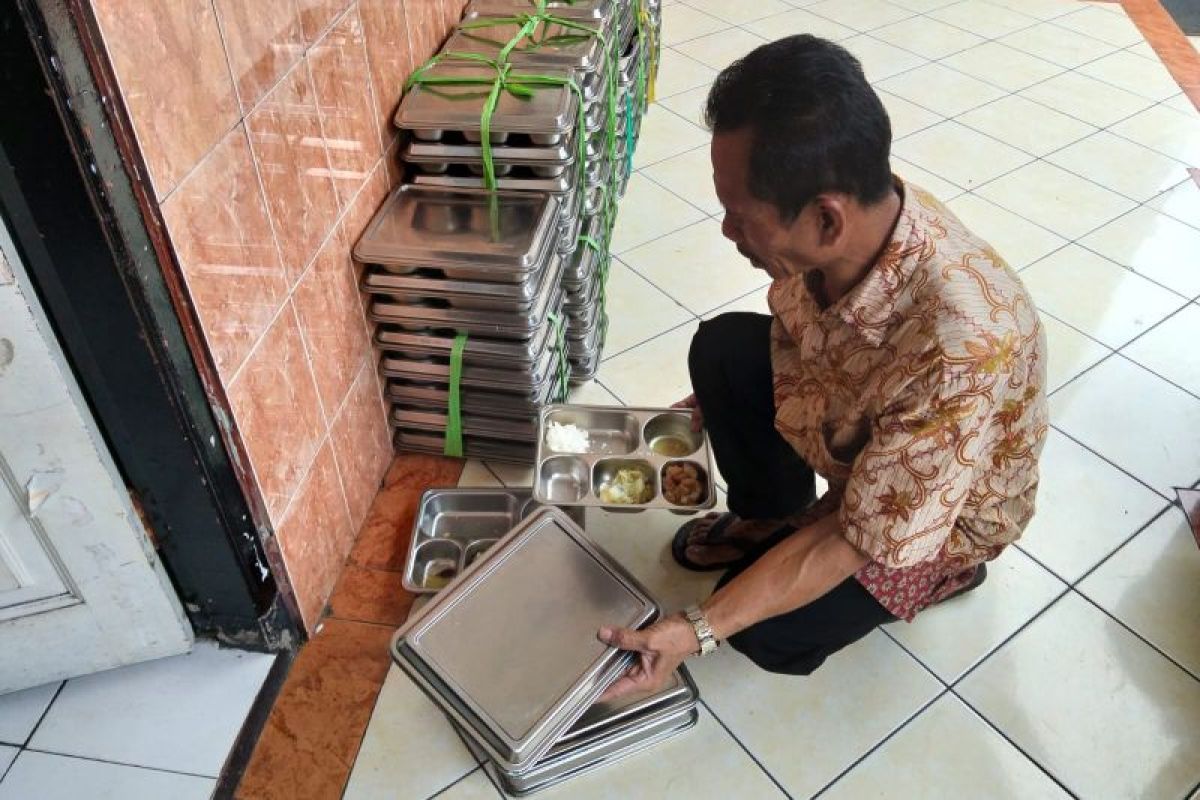
It is time for Indonesia to consider establishing a food bank as an official part of the MBG ecosystem. Jakarta (ANTARA) - The Free Nutritious Meals (MBG) programme has become one of the state’s most strategic efforts in building the quality of Indonesia’s human resources through more equitable, measurable, and organised nutritional fulfilment. Within its governance framework, MBG is implemented through Nutrition Fulfilment Service Units (SPPG) that not only function to cook and distribute meals but are also positioned as centres for the circular economy, nutrition education, and nodes in the local food supply chain. However, behind this highly progressive grand design, one issue that has not yet received an adequate institutional response emerges: how the state handles food waste and overstock that is almost certain to arise in MBG kitchens. In large-scale operations, from the process of procuring raw materials, storage, portioning, organoleptic testing, meal sampling, to daily distribution, excess raw food ingredients and processed meals to a certain extent are not anomalies but managerial inevitabilities. The MBG guidelines acknowledge the importance of recording returned food remnants to SPPG as material for menu evaluation and encourage further steps in the form of food circular economy. It is at this point that the idea of establishing a national food bank or partner food banks within the MBG ecosystem becomes relevant, even urgent. A food bank should not be understood merely as a place to store leftover food, but as an official institution that manages food surpluses and excess supplies legally, hygienically, documented, and responsibly so that food that is still fit for consumption does not turn into waste. Normatively, raw materials and meals that have been purchased through state financing schemes in the MBG programme can no longer be viewed solely as private property of the kitchen managers. MBG operational funds come from the state budget (APBN) through the National Food Agency (BGN), their use must be documented, accountable, and every raw material purchase and operational transaction is bound by state governance mechanisms. Therefore, when there is a food surplus, excess supply of vegetables, eggs, fruits, or ready-to-eat meals that are still fit for consumption but not channelled to the main beneficiaries, the need arises for an official receiving institution that is legally valid and operationally professional. The problem is that to date, no institution within the official MBG architecture has been given a specific mandate to receive, verify, store, and distribute excess raw materials or ready-to-eat meals. Yet MBG is run on a very large scale, with a target reach of tens of millions of beneficiaries through thousands of SPPG across Indonesia. In a system as large as that, small surpluses in each kitchen will turn into significant volumes when accumulated nationally.