
Envisioning a New Civilisation Amidst the Whirlwind of the Times
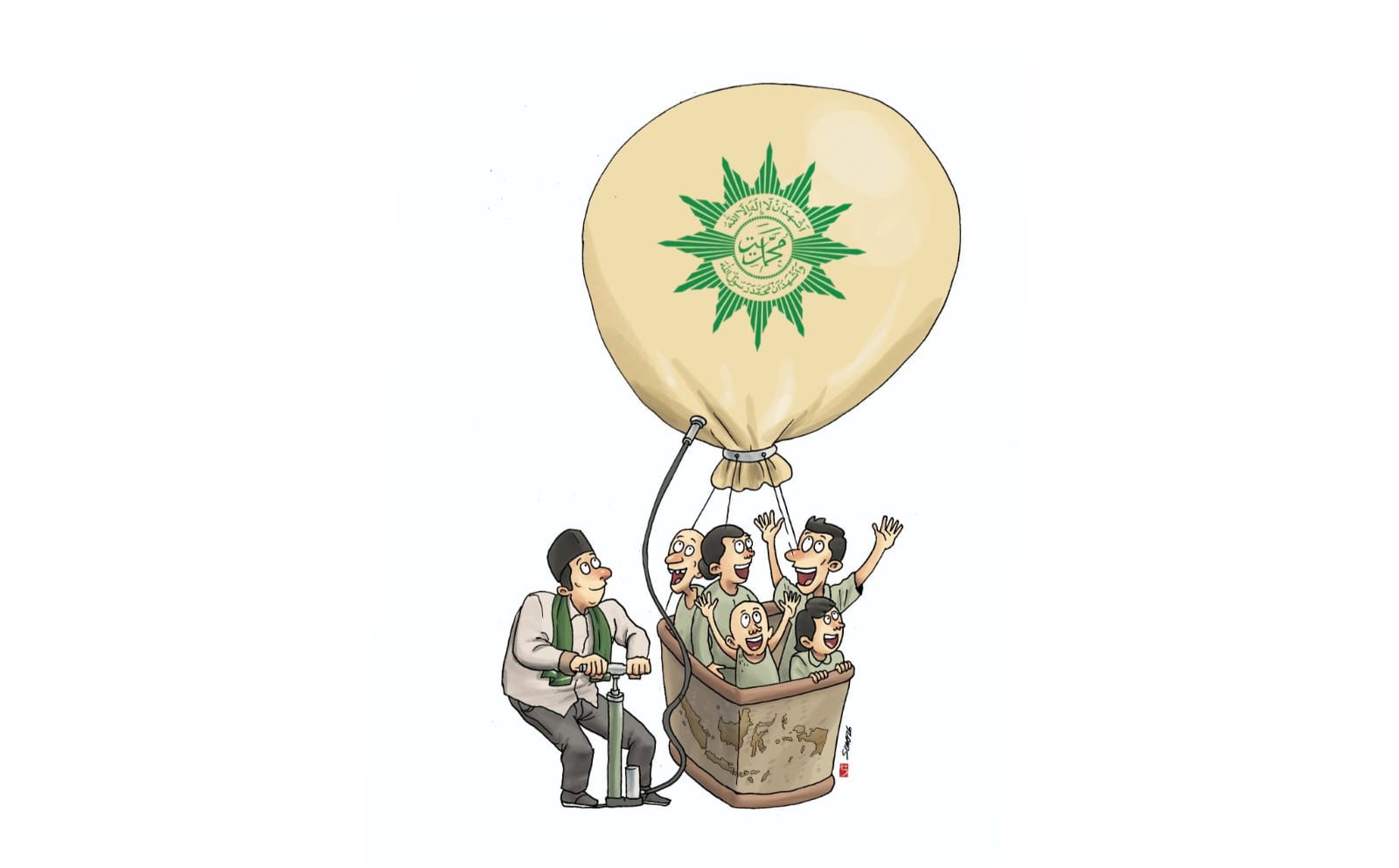
The year 2026 will be a historic milestone for Indonesian Muslims. The Indonesian Ulema Council (MUI) is preparing to hold the eighth Indonesian Muslim Congress (KUII VIII) on 24-26 July 2026 in Jakarta, with the theme ‘United Ummah, Sovereign Nation, Strong Country’. This congress is not merely a quinquennial ceremonial forum, but a stage where the future of the community and the nation is at stake. Amidst a fast-moving world full of disruption and uncertainty, KUII VIII serves as an oasis and a laboratory of thought, a space for scholars, intellectuals, community leaders, and public figures to sit together and formulate a roadmap for the struggle of Indonesian Muslims in facing national and global challenges. This momentum is crucial because the situation faced by the community today is far more complex than five years ago. Wars in various parts of the world, prolonged economic crises, the threat of social disintegration, and the digital revolution have fundamentally altered the landscape of civilisation.
KUII VIII is designed to respond to and seek solutions for various problems and challenges facing the Muslim community. The first is poverty and inequality. One of the most fundamental problems that continues to haunt Indonesian Muslims is the high rate of poverty. According to February 2026 data from the Central Statistics Agency (BPS), the poverty rate stands at 8.25 percent, or 23.36 million people. Meanwhile, the World Bank, which classifies Indonesia as an upper-middle-income country, estimates that 68.3 percent of the population is poor based on the standard poverty line for such nations. Furthermore, the distribution of wealth remains highly unequal, with the richest 10 percent enjoying nearly half of the national income. This inequality is depicted as an inverted pyramid, where a small minority controls the majority of the wealth, while the vast majority of the population shares only a small fraction. Therefore, KUII VIII must formulate affirmative policies and measures to overcome poverty and inequality. This includes strengthening the economic capacity of the community as a foundation for collective independence and welfare, enhancing entrepreneurial skills, providing sustainable assistance for MSMEs to boost product competitiveness, and utilising digital technology to expand market reach. Expanding access to capital and inclusive financial literacy is also essential. A robust, just, and equitable economy will ultimately strengthen social resilience and national dignity.
Secondly, the congress must address the high level of corruption. News of corruption and abuse of power appears almost daily, to the point where it seems to have become part of the culture. In reality, corruption is an extraordinary crime that clearly harms the nation and state, with the amounts involved being staggering. Thirdly, the forum must navigate geopolitical turmoil. At the global level, Muslims face major threats, including conflicts in Palestine, the Middle East, and other regions that trigger global economic uncertainty. As the country with the world’s largest Muslim population, Indonesia must play a leading role in providing solutions to resolve these conflicts. The rise of Islamophobia in various parts of the world also presents a distinct challenge requiring a swift and measured diplomatic response.
Fourthly, the congress must address digital disruption and the gap in religious literacy. The exponential development of information technology presents new, unresolved problems. The digital economy, crypto assets, artificial intelligence (AI), and various financial technology innovations are grey areas that require comprehensive religious guidance. The fact that Indonesia has 21.37 million crypto users demonstrates the community’s significant need for sharia legal certainty in digital transactions. On the other hand, the low awareness of professional zakat, which stands at only 1 percent, indicates a gap between the community’s economic potential and the realisation of socio-religious obligations. The issue of digital and religious literacy is a challenge requiring structural and cultural solutions. Fifthly, the congress must focus on education and the protection of santri. The world of Islamic education, particularly pesantren as the oldest educational institutions in Indonesia, faces serious challenges. Islamic Religious Education (PAI) teachers still face obstacles in workload recognition and unbalanced lecturer ratios. Many Islamic educational institutions receive no government funding support and struggle to finance themselves, despite their vital role in supporting the government’s efforts to educate the nation. The prevalence of violence cases within pesantren has also tarnished the image of institutions that should be the nation’s moral fortress. Issues of child-unfriendly pesantren and the low welfare of teachers and caregivers are urgent problems that need solutions. The congress is expected to produce strong recommendations to protect and advance the world of Islamic education.
KUII VIII is not an end goal, but a starting point for a long struggle. The outcomes of the congress must be implemented concretely at the grassroots level. The resulting recommendations must not become mere stacks of documents on a table, but must transform into a collective movement involving all elements of the community. Synergy between the government, MUI, Islamic mass organisations, and all components of the nation is the key to realising the ideals of a just, prosperous, and dignified Indonesia.
Source: jawawa.id (https://jawawa.id/newsitem/envisioning-a-new-civilisation-amidst-the-whirlwind-of-the-times-1784760625)
Originally published by Media Indonesia (https://mediaindonesia.com/opini/913753/menggagas-peradaban-baru--di-tengah-pusaran-zaman), translated from Indonesian