
Environmentally Friendly Education
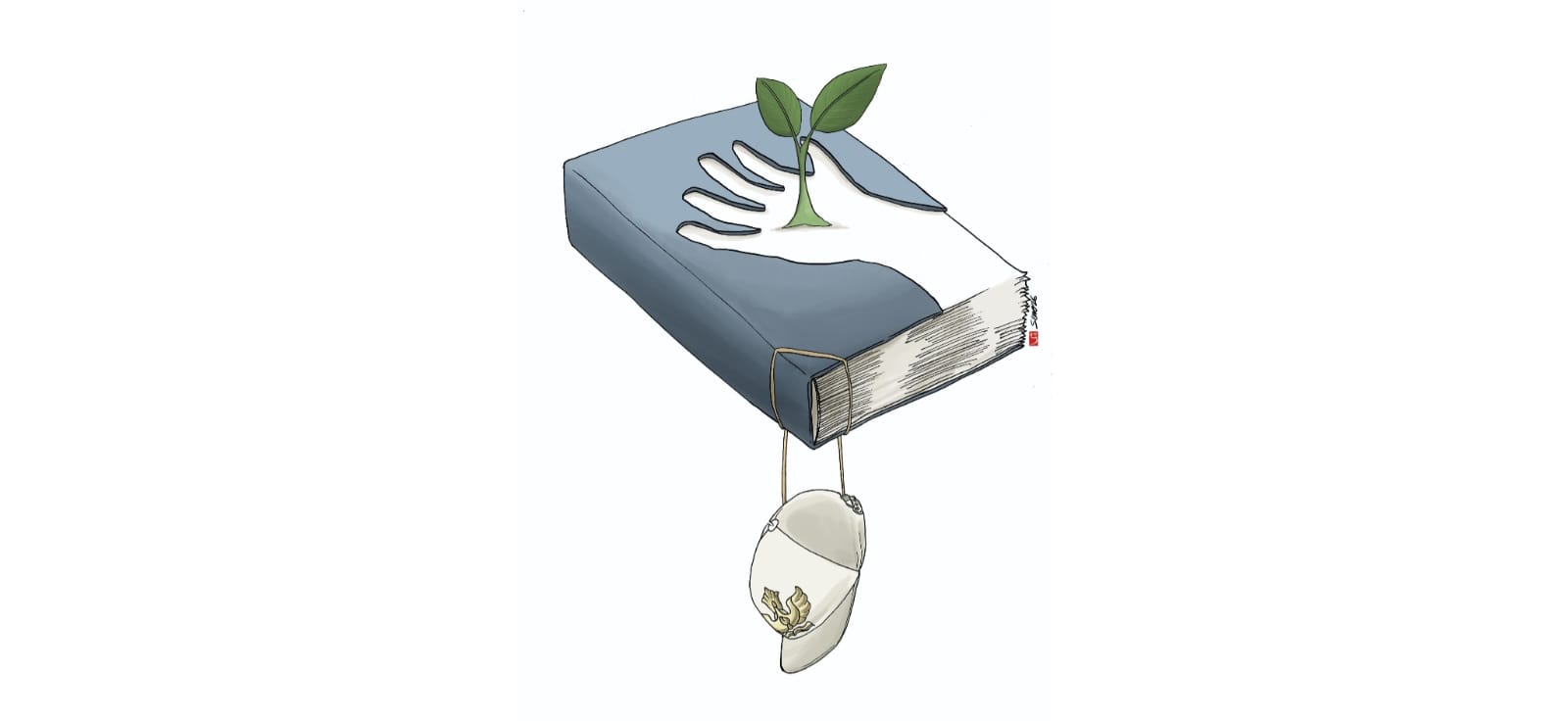
In several instances accompanying Minister of Primary and Secondary Education Abdul Mu’ti while receiving guests from government and private institutions, I sensed there are so many hopes pinned on the world of education. Those who came expect educational institutions, particularly at the primary and secondary levels, to produce graduates who are not only intellectually smart but also have character, noble morals, love their homeland, are anti-corruption fighters, disciplined in traffic, free from drugs, and have a culture of clean and healthy living. They did not only come with hopes but also brought supplementary books or learning modules containing various materials. Among the interesting supplementary books is one about creating a clean and healthy living environment in schools. This material aligns with the Ministry of Primary and Secondary Education’s programme to make schools a safe and comfortable ‘second home’. In fact, to support this programme, Minister of Primary and Secondary Education Regulation Number 6 of 2026 concerning a Safe and Comfortable School Culture has been enacted.
As part of a safe and comfortable school culture ecosystem, it is important for education units at every level to develop clean, green, and hygiene (CGH) material. CGH material is relevant for instilling awareness among the school community about the importance of caring for the environment. By making the environment clean, green, and healthy, educational institutions are helping to address the problem of global warming. Global warming occurs due to an increase in the average temperature of the atmosphere, earth, and oceans as a result of human activities that trigger the greenhouse effect. The impact is climate change and disruption to the global ecosystem, threatening human health.
The problem is that schools generally do not have sufficient land. Children also find it difficult to find open spaces to socialise and play. As a result, they feel bored if they stay at school for too long, especially if the school environment is not clean and healthy. That is why CGH education is absolutely necessary. Making schools environmentally conscious can be achieved in simple ways. One is by placing plants on the front terrace of the classroom. Although it seems simple, many schools have not done this, even though it can make the air feel fresh and the environment green.
CGH education does not have to be understood as an independent subject. This is because the material structure in the national curriculum is already bloated. The alternative is that CGH material can be inserted into relevant subjects. What is needed is a CGH supplementary book or learning module. CGH material can also be taught authentically, such as a teacher bringing in bins labelled for dry and wet waste or organic and inorganic waste. The teacher simply explains the types of waste briefly. Subsequently, the children are invited to hunt for rubbish and put it in the correct bin according to its type.
Through authentic learning, environmentally conscious education material does not have to be taught in the classroom. Children can be taken on a walk to observe environmental problems occurring in and around the school. According to Jean Piaget and Lev Vygotsky, this learning model is called a constructivist paradigm. Through this method, children gain real experience, namely observing the environment, discovering the problems faced, and actively participating in formulating solutions. Children will find alternative answers from collaborating with their friends.
One of the important pillars of the deep learning approach is joyful learning. Learning CGH material by taking children on a rubbish hunt is one practice of joyful learning. There will certainly be many interesting incidents discovered during the CGH learning process. If a cigarette butt is found, for instance, the school community will ask each other why there is still a smoking culture in an educational area, even though schools are zones that must be free from cigarettes. Similarly, when scattered rubbish is found, the school community can remind each other. If CGH material learning is carried out correctly and joyfully, it can certainly build a culture of clean, green, and healthy living. CGH material learning can also be done through extracurricular activities, such as skills in using waste as a base material. As a facilitator, the teacher can explain that dry waste types like plastic and paper are difficult to decompose. One way to deal with this is to use plastic and paper as materials for various types of crafts. For wet waste, children can learn to make compost that is beneficial for plants. Minister Abdul Mu’ti stated that through a deep learning approach, for example regarding waste utilisation, every teacher can teach students to overcome the waste problem with reduce, reuse, recycle, and reproduce.
Extracurricular activities in health can also be used as a medium for learning CGH material through a handwashing with soap movement. The culture of handwashing with soap is important to instil from an early age. Children need to be convinced that washing hands alone is not enough, and that they must use soap to be cleaner. Through this learning, children gain experience on the correct way and the important times to wash hands with soap. The important times to wash hands with soap are before eating, after defecating, before holding a baby, before wiping a child, and before preparing food. The culture of handwashing with soap may seem trivial, but it has many benefits. One of them is that it can prevent the threat of diarrhoeal diseases, according to data from health agencies.