
Environmental Theology: Seeking a New Paradigm
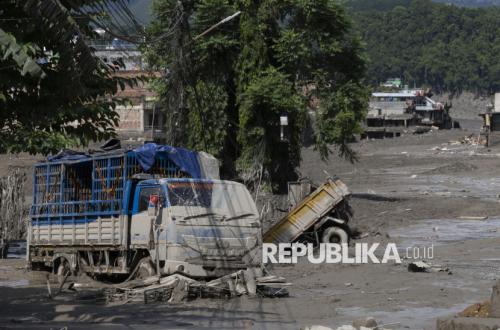
From January to September 2026, nature has repeatedly signalled its distress. However, humans often choose to ignore these signs.
On 26 August 2026, a glacier collapse in the Himalayan region triggered massive flooding in the Trishuli River valley, Nepal. The disaster claimed at least 1,300 lives and left more than 5,300 people reported missing across Nepal and Tibet. Critical infrastructure was impacted, including hydroelectric power plants, roads, bridges, and residential areas. This event demonstrated the extreme fragility of mountainous regions when climate change intersects with geographical vulnerability.
In several other parts of Asia, monsoon floods struck China, Bangladesh, and Pakistan. Tropical storms also repeatedly hit the Asian region throughout the year, causing significant damage across various territories.
In Madagascar, Cyclone Gezani in February 2026 killed at least 59 people. The disaster also caused more than 16,000 people to be displaced and affected over 423,000 residents.
In Europe, prolonged heatwaves recorded much higher casualties. At least 35,000 excess deaths were recorded during the 2026 summer heatwave series, based on data collected from various parts of Europe.
Extreme temperatures have once again shown that climate change is no longer a future threat. The crisis is present today as a matter of public health, economy, and humanity.
Indonesia faces an equally serious situation. Throughout 2026, the National Disaster Management Authority (BNPB) has continued to report thousands of disaster incidents, including floods, forest and land fires, droughts, extreme weather, landslides, earthquakes, and volcanic eruptions.
One of the largest disasters occurred in East Nusa Tenggara (NTT). A magnitude 7.7 earthquake struck the NTT region on 15 August 2026, causing widespread damage. As of 22 August, the BNPB recorded 87 deaths. A few days prior, the number of displaced persons had reached over 82,000.
Forest and land fires also remain a serious threat during the dry season. The Ministry of Environment noted that approximately 85,000 hectares of corporate concession areas in Sumatra and Kalimantan were burned. The government also noted that around 335 companies holding concessions were indicated to have hotspots within their territories. While this data does not automatically prove that all companies engaged in burning, it is sufficient to demonstrate the seriousness of environmental oversight issues.
Disasters no longer seem to arrive one by one; they appear in rapid succession, like a procession knocking at humanity’s door.
It is as if nature is bearing witness to what humans have done to the earth they inhabit. In religious language, this situation should be read not merely as natural events, but as a call to correct the way humans treat the environment.
The Qur’an warns, “Corruption has appeared throughout the land and sea because of what the hands of people have earned, so that He may let them taste part of what they have done, in order that they may return [to righteousness].” This warning is found in Surah Ar-Rum, verse 41.