
Environmental Protection Budget to Rise Sharply in 2027, What Is It For?
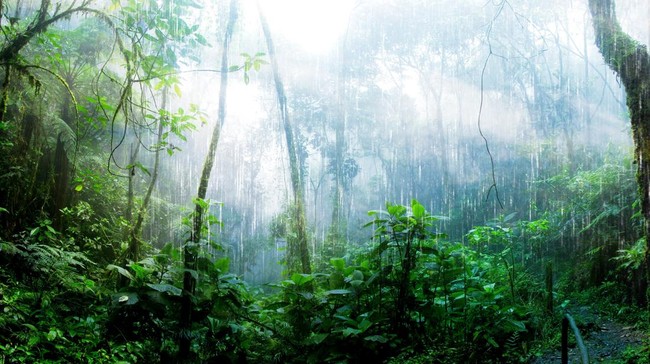
The government is increasing the budget for the Environmental Protection Function in the 2027 Draft State Budget (RAPBN) to Rp15.69 trillion, growing 23.5% compared with the 2026 outlook of Rp12.71 trillion.
The increase is one of the highest in recent years after the environmental function budget fell sharply in 2025.
The budget will be used for various agendas ranging from pollution control, waste management, climate change mitigation and adaptation, biodiversity conservation, to forest and mangrove rehabilitation.
The government is also raising the Environmental Quality Index (IKLH) target to 76.84 in 2027, from the target of 76.67 in the 2026 state budget. The IKLH is one of the development indicators used by the government to measure environmental quality nationally.
Government spending on the environmental protection function has been quite volatile in recent years. From Rp12.8 trillion in 2022, the budget increased to Rp14.5 trillion in 2024 before falling sharply to Rp8.2 trillion in 2025. In 2026, spending is estimated to be realised at Rp12.71 trillion, while the 2027 RAPBN allocates Rp15.69 trillion, or growth of 23.5% compared with the previous year’s outlook.
Implementation of the environmental protection function is not solely the responsibility of the Ministry of Environment. In the 2027 RAPBN, the function’s budget is also implemented by the Ministry of Forestry, the Ministry of Agrarian Affairs and Spatial Planning/National Land Agency, the Ministry of Marine Affairs and Fisheries, and the Geospatial Information Agency.
Its main targets include providing 33.1 million quality seedlings, vegetative forest rehabilitation on 15,000 hectares of watersheds, an IKLH of around 76.8 points, a waste management performance index of 64 points, and a national biodiversity management index of 0.5 points.
In addition to spending, the environmental agenda in the 2027 RAPBN is also reflected in natural resource management policy. The government continues to encourage state revenue from the forestry, marine and fisheries, and geothermal sectors, while strengthening governance and environmental sustainability aspects.
In the forestry sector, revenue is targeted to reach Rp6.39 trillion in 2027. Optimisation of Non-Tax State Revenue (PNBP) will be carried out through resolving unlicensed oil palm plantations in forest areas, strengthening multi-business forestry, and utilising environmental services. The government is also encouraging revenue through carbon trading and nature tourism, while strengthening supervision of forest area utilisation.
Natural resource revenue from marine and fisheries is targeted to reach Rp2.47 trillion in 2027, up 33.1% from the 2026 outlook of Rp1.86 trillion. Revenue optimisation is carried out through improved governance, vessel registration, and strengthening fisheries monitoring systems and surveillance technology, while still paying attention to environmental sustainability.
Meanwhile, geothermal natural resource revenue is projected at Rp2.56 trillion in 2027, down slightly by 0.6% from the 2026 outlook. The government continues to encourage geothermal utilisation to increase the share of new and renewable energy while strengthening governance through digitalisation of the Geothermal Energy Information System (Genesis), improving cost efficiency, and strengthening health, occupational safety, and environmental (K3LL) aspects.