
Environmental Disaster on Semau Island: Six Tonnes of Oil Contaminate Eight Villages
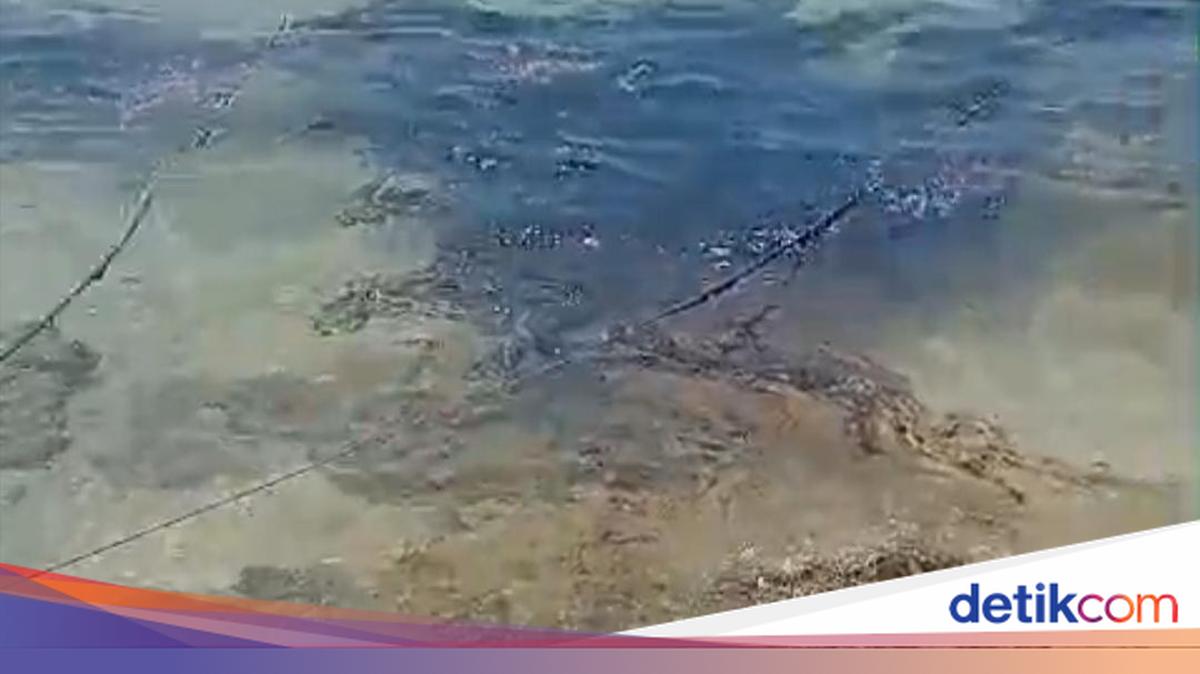
An environmental disaster has struck Semau Island, Kupang Regency, East Nusa Tenggara (NTT). Approximately six tonnes of oil have contaminated the waters and coastline of eight villages on the island, namely Huilelot, Onansila, Letbaun, Uiasa, Hansisi, Uitiuh Ana, Akle, and Naikean.
“To date, around five to six tonnes of spilled oil have been successfully secured from the affected area,” said the Director of Water and Air Police (Polairud) of the NTT Regional Police, Commissioner Irwan Deffi Nasution, on Sunday (2/8/2026).
Irwan explained that the six-tonne oil spill was discovered after police and seaweed farmers cleaned the affected coastal areas over the past few days. The cleanup covered the Hansisi area, Semau Ferry Port, Semau People’s Port, Hansisi Oesemuk, Lalendo, and Kambing Island.
According to Irwan, the NTT Police Polairud Directorate is currently coordinating with the Semau District Government, the National Marine Conservation Area Agency (BKKPN), the Harbourmaster and Port Authority (KSOP), and other relevant agencies to ensure optimal handling measures. Additionally, sea and land patrols continue to monitor the potential spread of oil to other coastal areas.
“We, together with relevant agencies, will continue to supervise and monitor the field. Further patrols will be conducted at coastal points potentially affected to ensure the cleaning process runs effectively,” Irwan stated.
Irwan noted that the contractor is currently conducting a technical investigation to determine the exact source of the Marine Fuel Oil (MFO) leak, while continuing mitigation and cleanup efforts to minimise the environmental impact. In handling the shipwreck, PT Nusantara Salvage Indonesia, the party involved in the wreck removal work, has increased its handling fleet from two to four boat units. Furthermore, oil booms have been deployed, oil absorbent pads used, oil dispersant sprayed, and oil trapped around the incident site suctioned.
“I will ensure that I continue to oversee the handling process of this incident until the water conditions return to normal and are safe for the community and the marine ecosystem in the Semau area,” Irwan stressed. The NTT Police Polairud Director also urged coastal communities to remain calm and immediately report to officers if they find residual oil spills in coastal areas or surrounding waters.
The NTT Police Polairud Directorate revealed that the oil spill contaminating Semau Island’s waters originated from the wreck of the KM Kuala Emas. Police have gathered preliminary information regarding the impact of the pollution. “It came from the process of lifting the wreck of the KM Kuala Emas,” Irwan said.
Irwan stated that the oil spill affected several coastal areas in Semau District, including the villages of Hansisi, Uiasa, Huilelot, Onansila, Uitiuh Ana, Akle, Naikean, Letbaun, and Batuinan. “Upon receiving information regarding the alleged marine pollution, Polairud personnel immediately conducted checks and coordinated with all parties to ascertain the source of the incident, the resulting impact, and the handling steps that must be taken immediately,” Irwan explained.
According to Irwan, the spill began during the process of lifting the KM Kuala Emas wreck, which was carried out by a consortium of underwater work contractors using the Crane Barge Hong Bang 6. He mentioned that the cutting of several parts of the ship showed no indication of a leak. However, when cutting was performed on the left hull of the ship in the area between Hold 2 and Hold 3, a leak occurred, resulting in the release of oil suspected to be MFO. This happened on Wednesday (29/7/2026).
“According to the contractor’s explanation, the leak location was outside technical expectations because the cut area was previously estimated to be the ship’s ballast tank, which is not traversed by fuel lines,” Irwan said. “The current top priority is to control and clean the oil spill so that it does not have a further impact on the marine environment, the activities of coastal communities, or the existing ecosystem in the Semau area,” he added.
The oil spill contaminating Semau’s waters has put seaweed farmers from eight local villages at risk of harvest failure. “We are threatened with harvest failure because the oil spill has contaminated the sea where we cultivate seaweed,” said one seaweed farmer. The farmer explained that the oil spill was found at Katabak Beach, Buatuan Beach, and Batu Hopong Beach. The eight affected villages include Huilelot, Onansila, Letbaun, Uiasa, Hansisi, Uitiuh Ana, Akle, and Naikean.
“Clumps of oil are floating on the water surface and even sticking to the seaweed plants. We are very worried about a large-scale harvest failure,” the farmer said. The farmer stated that the pollution has been felt by the community since this week. The oil pollution has also caused the seawater to turn blackish at several points and emit a pungent odour carried by the wind to residential areas. This condition has made farmers increasingly anxious because the previously thriving seaweed plants are beginning to yellow and show signs of damage. The coastal community of Semau relies on seaweed cultivation as their main source of income. “So the current pollution poses a serious threat to our community’s economic sustainability,” said the man from Huilelot Village. He revealed that some farmers are currently entering the harvest period while others have just finished planting.