
Environmental Crime Trial: Bali Official Explains Leachate and Mangroves
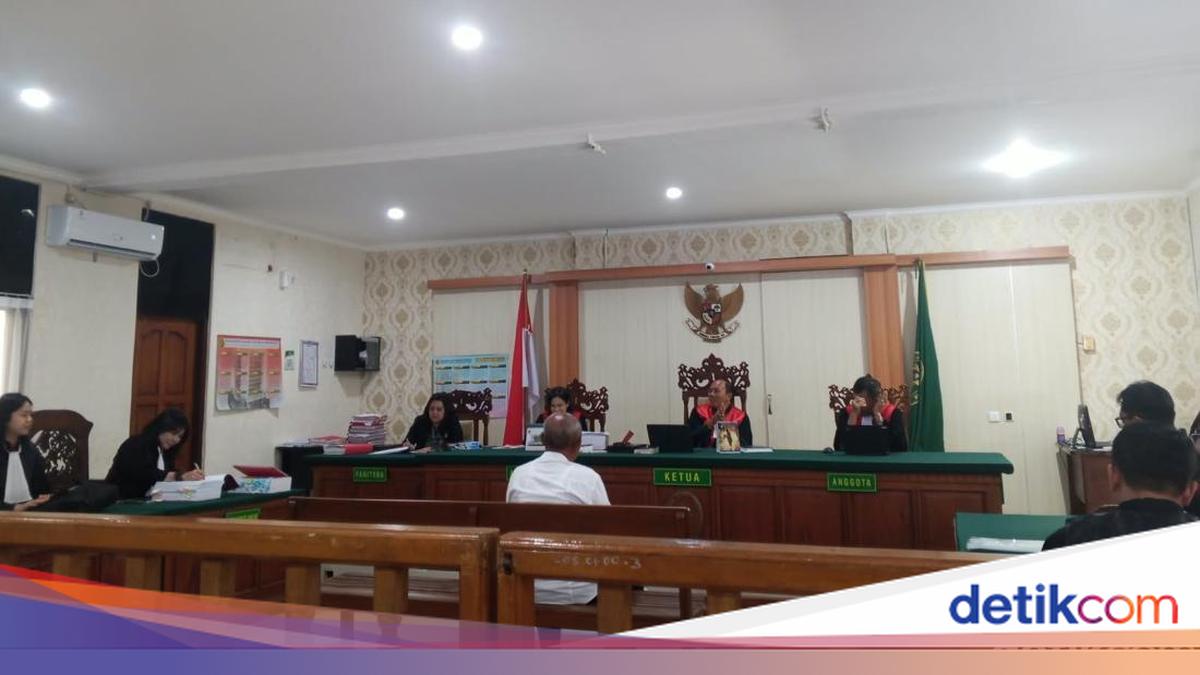
Bali’s Forestry and Environment Agency chief, I Made Dwi Arbani, outlined a number of problems in the management of the Sarbagita Regional Waste Disposal Site, including high volumes of waste, limited treatment facilities and leachate management.
Arbani gave the testimony on Thursday (12 November 2026) at Denpasar District Court during the trial of former Bali Forestry and Environment Agency head I Made Teja, who is accused of environmental crimes related to the management of the Suwung landfill.
Before the panel of judges, Arbani said the Sarbagita site receives an average of 1,100 tonnes of waste each day. This presents a challenge for its managers, particularly in ensuring that both accumulated and newly arriving waste are handled properly.
He acknowledged that the available treatment facilities needed improvement. Arbani said he was not entirely confident that current processing capacity could keep pace with the daily volume of incoming waste.
He said additional land was also needed at the site, which currently covers about 30 hectares.
Arbani also highlighted the management of leachate. The liquid produced as waste decomposes contains considerably higher levels of pollutants than domestic wastewater.
“Leachate pollutant levels reach around 8,000 milligrams per litre, while the pollutant level in domestic wastewater is around 450 milligrams per litre,” he said.
“The most effective way to reduce leachate is to reduce the amount of waste sent to the landfill. That is the answer,” he added.
Arbani explained that the Sarbagita site was originally designed to use a controlled landfill system. Unlike a sanitary landfill, which requires waste to be compacted and covered with soil every day, a controlled landfill is covered periodically according to a schedule.
He also said that in 2019 the Waste and Hazardous and Toxic Materials Management Division (PSLB3) and the Environmental Quality Control Division (PPKLH), which had previously been under his responsibility, did not directly manage Sarbagita’s operations. Technical management was handled by a separate technical implementation unit (UPT).
According to Arbani, his understanding of the site’s management developed further after the Ministry of Environment and Forestry imposed administrative sanctions. Guidance was subsequently provided on aspects of landfill management that needed improvement.
In his testimony, Arbani also discussed the condition of the mangrove ecosystem around Benoa Bay, from Tanjung Benoa to Benoa. He said the mangroves faced pressure from several sources.
Rivers flowing into the area carry waste. Activities at Benoa Port, including oil pollution, are another factor requiring attention.
Arbani said that in 2019 about 18 hectares of mangroves had died. The condition was linked to reclamation in the Benoa area.
The government later undertook restoration by replanting mangroves. Arbani said the planted trees were growing well, and that rehabilitation had been extended to about 14 hectares.
He added that more than a dozen rivers flow towards the mangrove area, two of them fairly large. The government has also improved water treatment facilities so that flows previously discharged directly into the mangroves and the sea can be treated first.
Meanwhile, I Made Teja’s lawyer, I Gusti Agung Dian Hendrawan, said the evidence regarding the extent of mangrove damage in the case needed further clarification.
Dian said no precise measurement had yet been established for the damaged area cited in the indictment. He argued that expert testimony was needed to confirm the measurement method.
“We have not found a definitive figure that matches the indictment on the extent of the damage. So we cannot yet determine how the area was measured. That may need to be established through expert evidence,” Dian said.
Dian also drew attention to Arbani’s testimony that waste management requires the involvement of many parties. The problem, he said, could not be assigned to a single agency, as it required action from upstream to downstream, including community participation.
On the mangrove damage, Dian did not deny that damaged and dead trees had been found. However, he said rehabilitation had been under way for some time, including during I Made Teja’s tenure.
“When discussing the downstream area, there is no denying that damaged mangrove trees have been found. But rehabilitation efforts have been carried out for a long time, and Mr Made Teja made efforts of that kind,” he said.
Dian argued that the existence of mangrove damage did not automatically mean that the officials responsible at the time had neglected their duties. He said Teja had taken steps to conserve the area, including working with third parties and local communities to plant mangroves.
Dian added that the defence would call further witnesses and experts at the next hearing to strengthen its case.
Source: jawawa.id (https://jawawa.id/newsitem/environmental-crime-trial-bali-official-explains-leachate-and-mangroves-1794495052)
Originally published by detikBali (https://www.detik.com/bali/hukum-dan-kriminal/d-8750628/sidang-pidana-lh-kadis-jelaskan-soal-air-lindi-hingga-mangrove), translated from Indonesian