
Environmental Conservation Professor Introduces Bacteria and Fungi Innovation to Degrade Polyethylene Plastic Waste
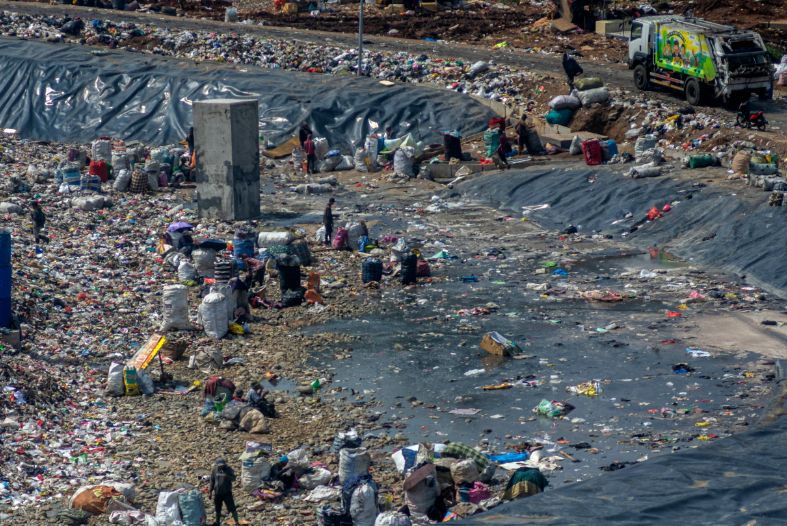
The Alumni Association of the Faculty of Biology at Universitas Nasional (IKA FABIONA), together with the Biology Study Programme of Universitas Nasional, held a Bio Coffee Talk webinar on Saturday (11/7) in Jakarta. The webinar served as a platform for scientific discussion on the various environmental challenges facing Indonesia, whilst strengthening the role of higher education in disseminating research results to the public. During the webinar, Professor of Environmental Conservation Prof. Dr. Melati Ferianita Fachrul, M.S. presented the theme “Synergy of Science and Community Participation for Indonesia’s Sustainable Environmental Conservation”. In her presentation, Prof. Melati explained that Indonesia still faces complex environmental issues, ranging from national waste generation reaching approximately 69.2 million tonnes per year and pollution in various rivers, to increasing pressure on ecosystems due to human activity and climate change. “Environmental management is essentially the management of human behaviour, so the success of conservation cannot rely solely on technology or government regulations, but also requires close collaboration between science, policy, and active community participation through the principle of think globally, act locally,” she said. As a form of tangible contribution from the academic world, Prof. Melati presented various innovations based on Nature-based Solutions (NbS) designed according to the characteristics of Indonesia’s tropical ecosystems. One such innovation is the use of a consortium of the bacteria Pseudomonas aeruginosa and Bacillus subtilis, along with the fungi Aspergillus niger, as biological agents to accelerate the degradation of polyethylene plastic waste, which is difficult to decompose naturally. In addition, she also introduced a solar-powered Floating Treatment Wetland (FTW) technology that has been tested at Nagara Lake, Trisakti University. This technology utilises aquatic plants and microorganisms to improve water quality, with test results showing a significant reduction in various pollution parameters, including Total Suspended Solid (TSS) by more than 70 percent. “These innovations show that research does not just stop in the laboratory, but can be applied as practical solutions to environmental problems in the community,” she continued. Prof. Melati emphasised that the future of environmental conservation in Indonesia depends heavily on the ability to build collaboration between academics, government, the business sector, communities, and the public through a citizen science approach. The public must be encouraged to become the main subject in protecting the environment, while higher education institutions have the responsibility to translate research results into simple, easily adoptable technologies that provide real benefits to the public. Through such synergy, it is hoped that balanced environmental governance covering ecological, social, and economic aspects can be achieved, whilst accelerating the achievement of the Sustainable Development Goals (SDGs) and strengthening Indonesia’s resilience in facing the impacts of climate change. The Bio Coffee Talk webinar also reflected IKA FABIONA’s commitment to building a culture of knowledge sharing and strengthening collaboration between alumni, academics, students, and the community to encourage the emergence of innovative solutions for sustainable development.