
Environmental Concern: The Marginalised Example of the Prophet Muhammad
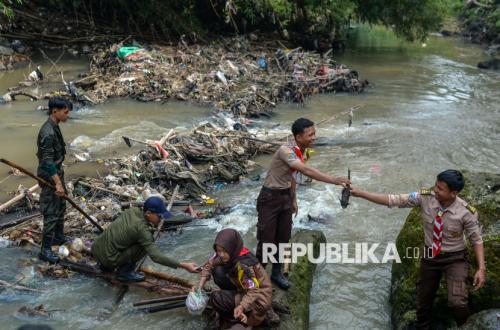
This August, besides being preoccupied with celebrating Indonesia’s Independence Day, we will also be busy with the celebration of the Mawlid of the Prophet Muhammad SAW. In mid-August 2026, we will have entered the month of Rabiul Awal, or the month of Mawlid, which is the birth month of the Prophet Muhammad SAW. Usually, Mawlid celebrations take place throughout the month of Rabiul Awal, with the peak observed on the 12th of Rabiul Awal. However, the series of events or religious gatherings in the community often continue until the end of that month, or even for up to three months.
In this year’s Mawlid celebration, we are faced with a global and Indonesian situation that is increasingly severe and far from well. The world, including Indonesia, is confronting three simultaneous crises (the triple planetary crises): climate change, pollution, and biodiversity loss. These crises have touched every aspect of human life, from natural disasters and health problems to extreme weather, food crises, and the loss of habitats that threaten the survival of living beings on this earth.
Efforts and movements for environmental awareness aimed at preventing more severe environmental damage have been carried out in various forms. Systematic global movements began to develop in the late 19th century (1870s–1890s). These late 19th-century movements took the form of early conservation efforts as a reaction to pollution caused by industrialisation and urban growth, particularly in Britain and the United States. The environmental movement exploded and is considered to have truly emerged in the 1960s.
As a culmination, on 5 June 1972, the United Nations General Assembly designated World Environment Day, taken from the date of the Stockholm Conference in Sweden. Following the establishment of World Environment Day, the global environmental movement has continued to grow as a platform to raise awareness of the problems facing our environment, such as air pollution, plastic waste, rising sea levels, and food security.
When discussing environmental concern, for Muslims it is impossible to separate it from the figure of the Prophet Muhammad SAW. He is a perfect individual, and the Qur’an explicitly obliges Muslims to make him an uswatun hasanah (the best example).
Emulating him in all aspects of life—whether in worship, muamalah (social transactions), akhlak (morals), or concern for the environment—is a fundamental teaching of Islam. As Allah SWT says in QS. Al-Ahzab: 21, which means: ‘Indeed, in the Messenger of Allah you have an excellent example for whoever has hope in Allah and the Last Day, and remembers Allah often.’
Regarding environmental concern, the Prophet Muhammad is an ideal example and a role model. The most substantial thing taught by the Prophet Muhammad SAW is to protect nature as part of faith in Allah SWT and as a spiritual responsibility, not merely an ecological and social issue.