
Environment Ministry Urges Inclusion of Green Financial Crime in Asset Forfeiture Bill
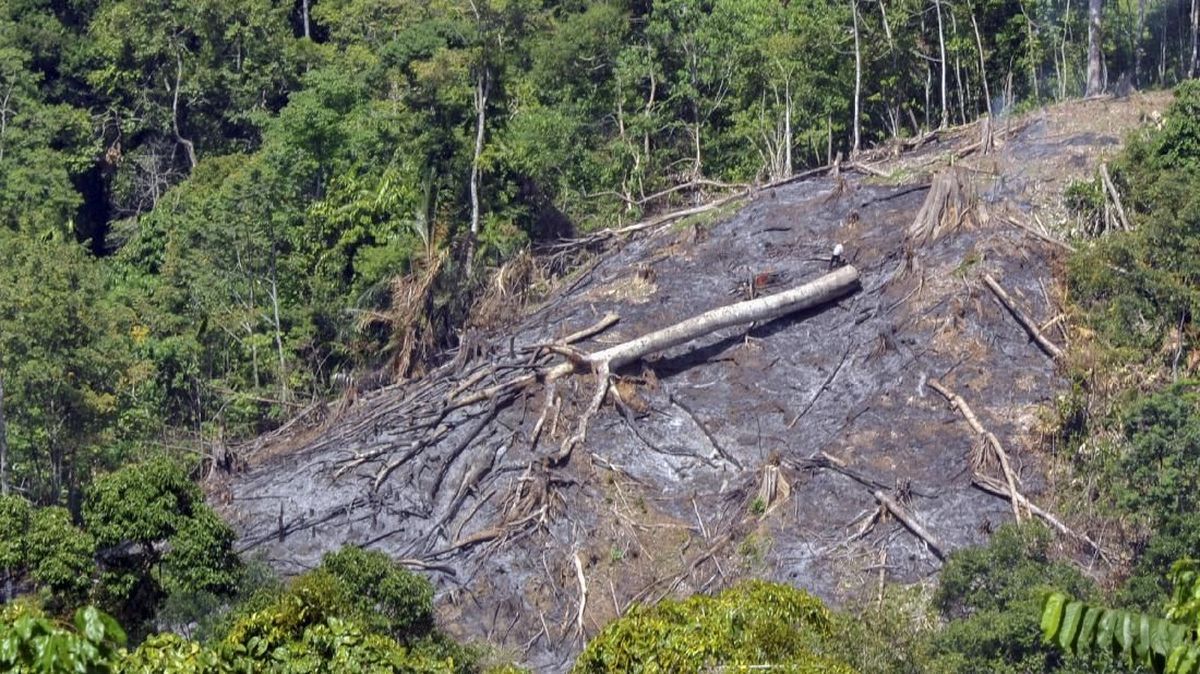
A report by the Financial Transaction Reports and Analysis Centre (PPATK) recorded that the circulation of proceeds from environmental crimes, known as green financial crime, has reached Rp1,700 trillion.
On that basis, the Ministry of Environment (LH) believes an umbrella law is needed to strengthen enforcement in such cases, including through its inclusion in the Asset Forfeiture Law.
“The Ministry of Environment proposes that green financial crime be included in the deliberations of the Asset Forfeiture Bill so that it becomes part of the Asset Forfeiture Law,” said Yudi Syamhudi Suyuti, Expert Staff to the Minister for Advocacy and Strengthening Public Participation, to CNNIndonesia.com on Tuesday (4/8).
“Once it is incorporated into the Asset Forfeiture Law, the government will be able to execute law enforcement actions related to environmental financial crimes more easily,” he added.
In addition, the Ministry of Environment hopes that through the Asset Forfeiture Law, the government can designate the main enforcement instrument or executor for green financial crime cases.
According to Yudi, given its capacity, the executor in this case would be the Ministry of Environment/Environmental Control Agency.
Yudi added that the Ministry of Environment is currently forming a Special Task Force for Environmental Rescue (Satgassus SPLH) tasked with handling the prevention, enforcement and restoration of the environment.
Yudi said that although the SPLH can currently be established independently under existing regulations, it would be stronger if it were included in the Asset Forfeiture Law.
“The state will find it easier to recover hundreds to thousands of trillion rupiah embezzled by criminals who destroy the environment or kill life on Earth,” said Yudi.
Yudi reminded that environmental financial crime is regarded as a super extraordinary crime. Environmental crime ranks as the fifth major international crime, after crimes against humanity, war crimes, crimes of aggression and genocide.
Environmental crime is currently referred to as ecocide. Ecocide is likened to the act of killing the Earth as the home of life for living creatures.
It is worth noting that since 2023, Indonesia has been a permanent member of the FATF (Financial Action Task Force) and is an important FATF partner in the special programme for Handling Green Financial Crime, with facilities under International-Global Jurisdiction across 200 countries.
Previously, PPATK revealed that the circulation of money in the environmental crime sector, or green financial crime (GFC), had reached Rp1,700 trillion. PPATK Chairman Ivan Yustiavandana said the figure covers the five-year period from 2020 to 2025.
“We have been conducting research on green financial crime since 2020. Our data shows that the circulation of GFC since 2020 is not Rp925 trillion, but Rp1,700 trillion,” Ivan said in a meeting with Commission III of the House of Representatives on Tuesday (3/2).
Ivan said he holds the results of research on environmental crime in Indonesia, including its distribution across several regions such as Sumatra and Aceh. However, on that occasion he did not disclose the details.
Source: jawawa.id (https://jawawa.id/newsitem/environment-ministry-urges-inclusion-of-green-financial-crime-in-asset-forfeiture-bill-1785862346)
Originally published by CNN Indonesia (https://www.cnnindonesia.com/nasional/20260804180911-12-1388581/kementerian-lh-minta-green-financial-crime-masuk-ruu-perampasan-aset), translated from Indonesian