
Environment Ministry to Expand Producers’ Responsibility for Plastic Waste
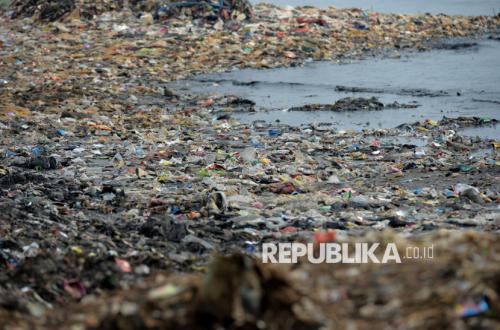
JAKARTA — The Ministry of Environment/Environmental Control Agency (KLH/BPLH) is preparing new rules to expand producers’ responsibility for managing plastic waste. Under the policy, producers will be encouraged to take back product packaging after consumers have used it, reducing waste that could pollute rivers, lakes and seas.
Deputy Minister of Environment and Deputy Head of BPLH Diaz Hendropriyono said plastic waste must be controlled at its source on land. The government is preparing to strengthen its extended producer responsibility (EPR) policy to prevent packaging waste from ending up in aquatic ecosystems.
“We are also preventing plastic from reaching our rivers, lakes and seas. That is why Indonesia is preparing new regulations on extended producer responsibility so that producers take back their product packaging,” Diaz said, according to a statement from the ministry on Sunday (25 October 2026). He was speaking at the closing of the 11th International Waters Conference, organised by the Global Environment Facility (GEF) in Bali on Thursday (22 October 2026).
The policy is one of the government’s measures to address water pollution caused by activities on land. Packaging waste that is not properly managed can be carried by water flows, adding to pollution in rivers, lakes and seas.
Alongside preparing producer-responsibility rules, KLH/BPLH is also working to reactivate waste-management facilities that have been out of operation. The measure is intended to increase waste-treatment capacity before rubbish enters waterways.
“At the same time, we are also reactivating thousands of waste-management facilities that have been inactive,” Diaz said.
Diaz said preventing water pollution was inseparable from protecting terrestrial ecosystems. Environmental management must be integrated from upstream to downstream, he said, because the condition of land around water sources also affects the health and sustainability of aquatic ecosystems.
“Experience has taught us one of the most important lessons: we cannot protect water without protecting the land around it. Indonesia already has good practices in this area,” Diaz said.
For example, the government runs the Peatland-Caring Independent Village (DMPG) and Mangrove-Caring Independent Village (DMPM) programmes, which involve communities in protecting and restoring ecosystems. Both programmes combine conservation activities with efforts to safeguard local livelihoods.
Through DMPG, communities are involved in keeping peatlands wet to reduce the risk of fires. Residents are also encouraged to earn income from the use of restored land.
DMPM, meanwhile, involves coastal communities in protecting and restoring mangrove areas. The programme is expected to preserve the ecological functions of coastal areas while supporting local economic activity.
At the conference, Indonesia also highlighted the importance of protecting karst ecosystems, which play a role in storing and channelling groundwater. The government believes karst protection should receive greater attention in international environmental discussions.
Indonesia previously proposed a resolution on karst ecosystems at the United Nations Environment Assembly (UNEA) in December 2025. Although it did not reach consensus, the government plans to raise the issue again at international forums.
“We are seeking to raise global awareness of karst ecosystems, which currently receive far too little international attention. Indonesia proposed a resolution on karst ecosystems for the sake of water, but it did not reach consensus. We will continue working to bring the issue of karst back to the table,” Diaz said.
By strengthening producer responsibility and managing waste on land, the government aims to reduce pollution pressures on aquatic ecosystems. The policy complements environmental protection efforts involving peatland restoration, mangrove conservation and the protection of karst areas.