
Environment Ministry promotes 'ecological repentance' through mangrove rehabilitation
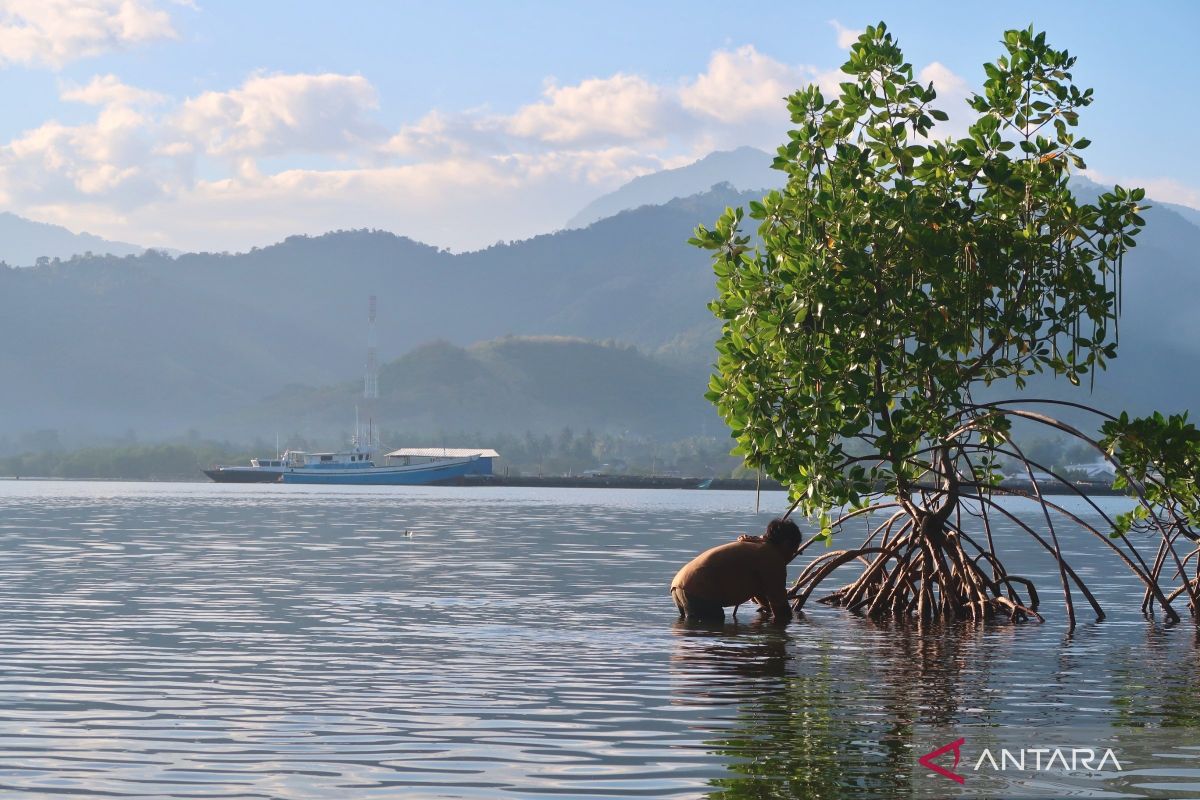
The Ministry of Environment is promoting a national ecological repentance movement through mangrove rehabilitation actions as an effort to restore environmental damage while strengthening the resilience of coastal areas. “Everyone needs to repent, not only the government and corporations, but also the community,” said Minister of Environment Mohammad Jumhur Hidayat after a mangrove seedling planting activity in Sumbawa, West Nusa Tenggara, on Tuesday. Through the strategic vision of the ecological repentance movement planned for the 2026 to 2028 period, all elements of the nation are invited to place the carrying capacity and environmental capacity as the foundation of every national development policy. The Ministry of Environment stressed that the acceleration of economic growth must no longer sacrifice environmental sustainability, but rather proceed in harmony and balance with the protection of environmental functions so that the benefits of economic development can be felt inclusively and sustainably by the community. He stated that 30 percent, or around 700,000 hectares, of the total 3.4 million hectares of mangrove forests in Indonesia are currently damaged due to various factors. According to him, restoring the condition of mangrove forests not only serves to rehabilitate the environment but also contributes significantly to climate change control. “The carbon emission absorption capacity of mangroves can be about four to five times that of ordinary trees. Rehabilitation actions are very necessary to ensure the sustainability of mangroves,” said Jumhur. The movement to restore coastal ecosystems serves as an important long-term investment for the safety of the community’s living space. Mangrove forests act as green infrastructure and a reliable natural protection fortress in safeguarding coastal areas from the threats of abrasion, high waves, and seawater intrusion. A healthy mangrove ecosystem also automatically provides a productive habitat for various marine biota of high economic value, which directly supports the daily livelihoods of traditional fishermen and local communities. The Ministry of Environment encourages all stakeholders to expand mangrove rehabilitation activities in various regions. He appreciated the commitment of Freeport Indonesia, which is targeting the rehabilitation of around 12,000 hectares of mangroves in various parts of Indonesia, with details of 10,000 hectares in Papua and 2,000 hectares outside Papua. “The government welcomes any activity that aims to restore the environment,” he said.