
Environment Ministry prepares regulation requiring producers to fund plastic waste management
Tangerang (ANTARA) - The Ministry of Environment (KLH) is preparing a Ministerial Regulation on Extended Producer Responsibility (EPR) that will require producers to take greater responsibility for managing the plastic packaging waste they generate.
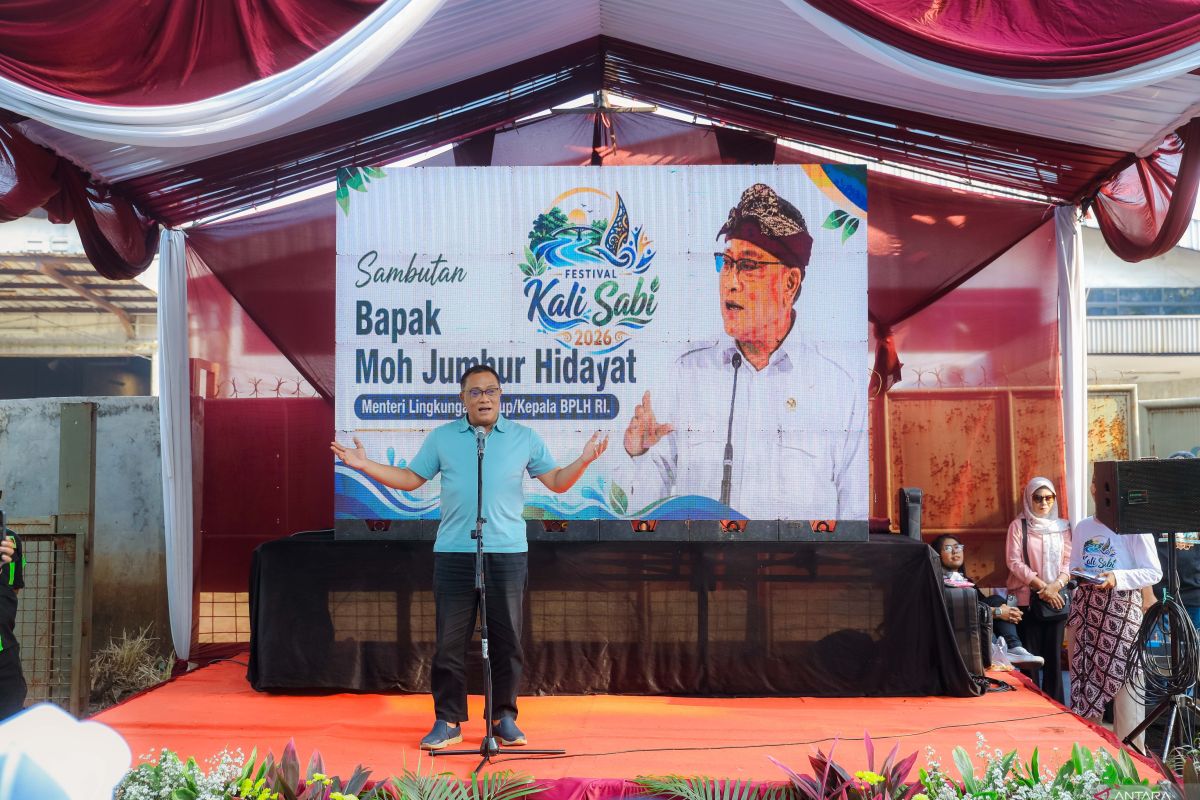
Environment Minister Muhammad Jumhur Hidayat, speaking at the Sabi River Festival in Tangerang City on Sunday, said the policy will be implemented through the establishment of Packaging Recovery Organisations (PROs) as collaborative waste management institutions.
The regulation is a strategic step to ensure plastic waste management is carried out sustainably with funding from the industrial sector, rather than from the State Budget (APBN).
According to him, nearly 10,000 large factories in Indonesia will participate in the scheme by allocating a portion of their budgets to manage the packaging waste of their products. These funds will be managed through PROs, which may be established by foundations, communities, or civil society organisations working in the environmental field.
“Organisations such as environmental foundations could later become PROs. There will be budgets involved, and the amounts are considerable. This will also create green jobs in various regions,” he said.
He explained that the PRO funding mechanism is sustainable, as it comes from producers’ contributions for as long as their companies remain in operation. The government will act only as a regulator setting out the governance and implementation mechanisms, while the funds will be managed by industry players in accordance with the provisions set out in the regulation.
“This is not a proposal-based system where activities stop if a proposal is rejected. As long as the factories operate, funding for waste management will continue to flow, so the managing organisations will have certainty in running their programmes,” he said.
Jumhur added that PRO funds could later be used for a variety of waste reduction activities, ranging from door-to-door public education and the provision of waste sorting facilities to behavioural change campaigns discouraging people from dumping rubbish into rivers.
He believes the success of waste management depends heavily on raising public awareness. Therefore, educational approaches must go hand in hand with the provision of adequate facilities.
As an example, he cited the success of a community in Bali that managed to transform a river area into a clean and productive space by educating residents to treat the river as part of the face of their neighbourhood, rather than a back-of-house area. That collective awareness subsequently spurred economic activity along the river area.
“We want that approach to spread to various regions. When people care about their rivers, the environment becomes clean and ultimately delivers economic benefits to residents,” he said.
Source: jawawa.id (https://jawawa.id/newsitem/environment-ministry-prepares-regulation-requiring-producers-to-fund-plastic-waste-management-1783842751)
Originally published by Antara (Indonesian) (https://www.antaranews.com/berita/5646157/klh-siapkan-aturan-produsen-wajib-biayai-pengelolaan-sampah-plastik), translated from Indonesian