
Environment Ministry: Carbon Deals Prove Indonesia’s Emissions Cuts Are Real
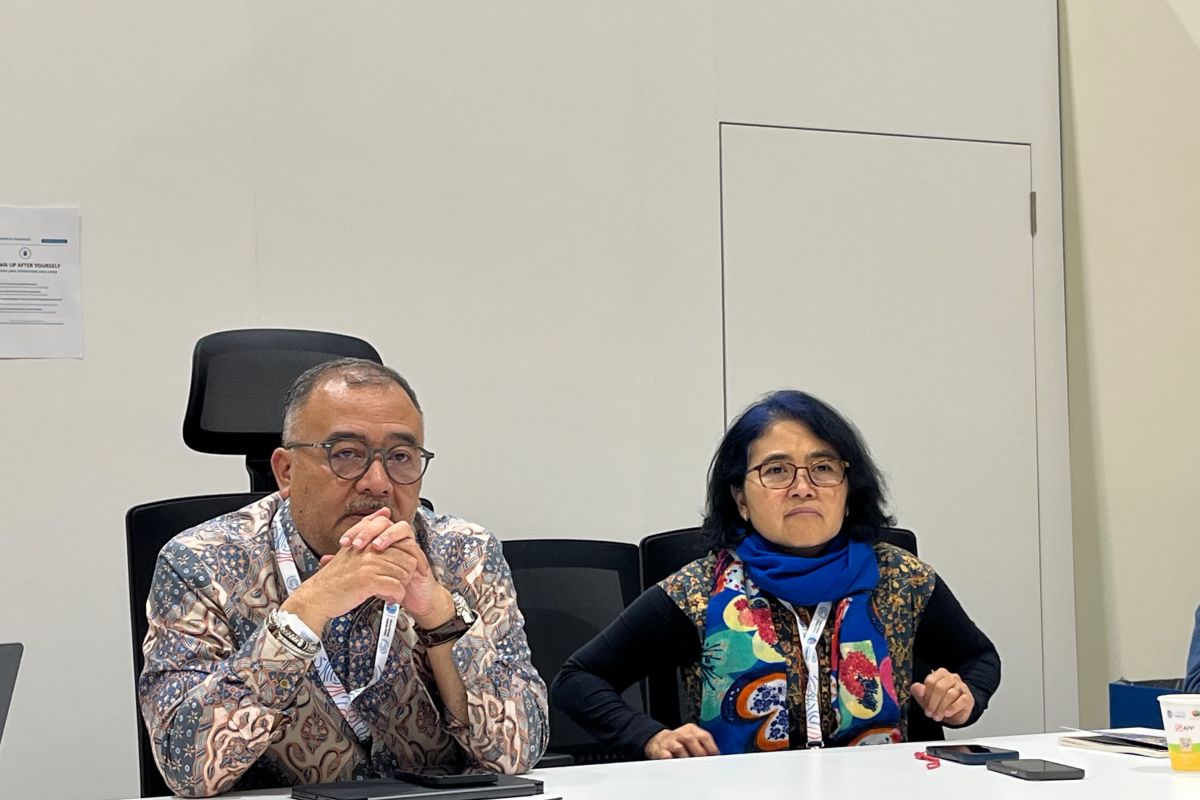
Antalya, Türkiye (ANTARA) — The Ministry of Environment (KLH) said successful transactions in carbon trading show that Indonesia’s efforts to reduce greenhouse-gas emissions have genuinely succeeded.
Ary Sudijanto, deputy for climate change control and carbon economic value governance at KLH, said carbon trading does more than generate economic value from emissions reductions: it shows that another party has recognised a country’s emissions-cutting achievements.
“If we look at our reports, for example our SRM, they refer to emissions reductions — verified emissions reductions that can then be sold. These take the form of carbon units,” Ary said at a media briefing on the sidelines of the UN Climate Change Conference, COP31, in Antalya, Türkiye, on Saturday (14 November).
He said carbon trading has strict requirements. The methodology used to calculate emissions reductions must be validated by an independent body, and the reductions themselves must also be verified to ensure they are real.
According to Ary, this mechanism gives carbon buyers assurance that the units they purchase genuinely represent emissions reductions.
Ary said that if Indonesia can sell carbon units on international markets, this would not only provide revenue for domestic emissions-reduction projects but also serve as recognition of the success of efforts by Indonesian green-project owners.
“If Indonesia can sell carbon, it is not just a matter of the money — and this is a new economy,” he said.
However, Ary stressed that the main purpose of carbon trading is not simply to create a new source of economic activity. Rather, it is intended primarily to support the financing of climate action.
He cited mangrove rehabilitation, which requires funding for everything from supplying seedlings and planting them to maintaining the restored areas.
Such work could also benefit the local economy, as healthier mangrove ecosystems can support larger populations of fish and other aquatic life.
More broadly, he said the benefits of carbon trading should be judged by its contribution to sustaining climate action, while economic impacts are an added value.
Ary likened carbon trading to a test of a country’s claims that it has successfully carried out emissions-reduction measures. A country cannot simply say it has cut emissions; its achievements need to be recognised and substantiated by others.
“Climate action is like an examination. If we say, ‘I’m excellent’, then it is only us saying we’re excellent. But if someone has bought [our carbon units] and acknowledged that we really are excellent, that is what people should take note of,” he said.
Source: jawawa.id (https://jawawa.id/newsitem/environment-ministry-carbon-deals-prove-indonesias-emissions-cuts-are-real-1794732685)
Originally published by Antara (Indonesian) (https://www.antaranews.com/berita/5855495/klh-transaksi-karbon-bukti-penurunan-emisi-ri-benar-benar-berhasil), translated from Indonesian