
Environment Minister Pushes for Indonesia Asri Movement to Become Weekly Routine
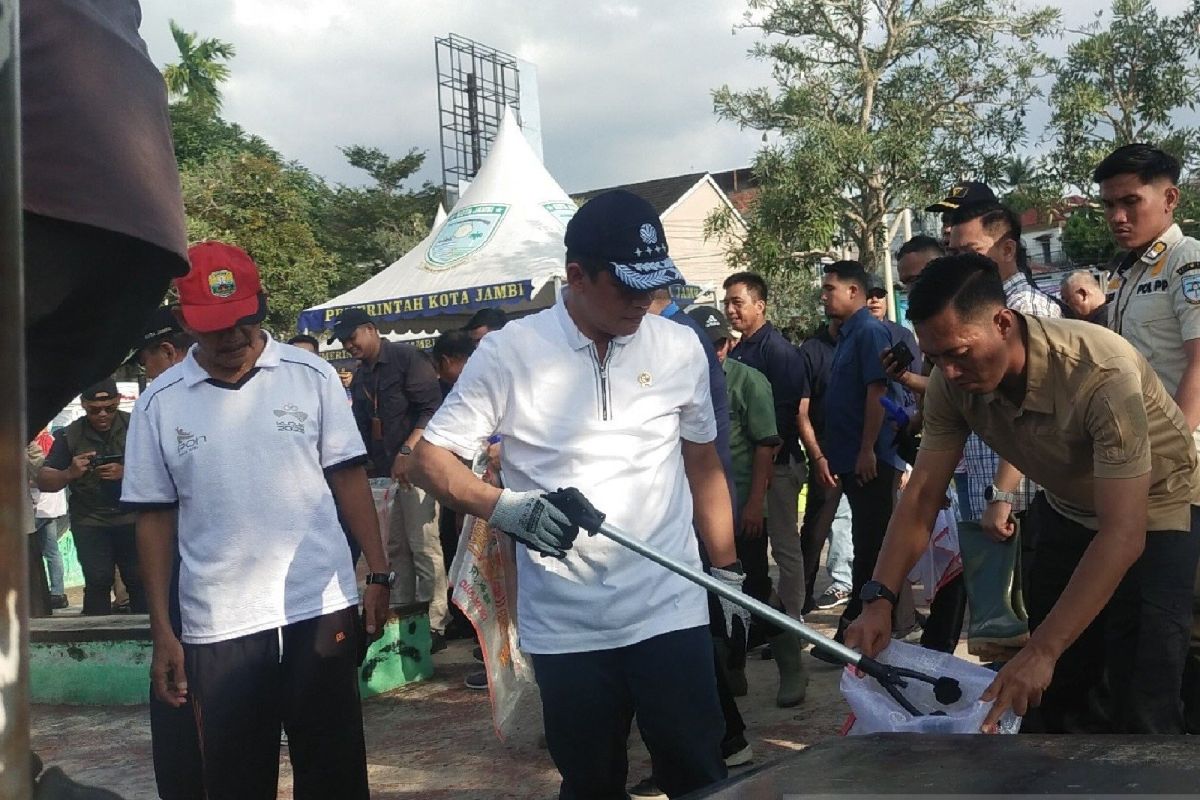
Jambi City (ANTARA) - Environment Minister Hanif Faisol Nurofiq is encouraging the Indonesia ASRI (Safe, Healthy, Clean, and Beautiful) Movement to become a routine activity carried out every week across all regions. “This movement must not be merely ceremonial but must be realised through concrete and sustainable actions, with routine environmental cleaning activities conducted at least once a week in every region,” he said after leading a roll call and communal work in a cleaning action at the Sipin Lake area, Telanaipura, Jambi City, on Saturday. The Indonesia Asri Movement is a follow-up to the instructions of Indonesian President Prabowo Subianto, who emphasises building collective public awareness of environmental cleanliness, with active community involvement as the main key to the programme’s success. According to him, waste issues in Indonesia remain a serious challenge that requires integrated handling, thus necessitating concrete steps from all stakeholders to effectively reduce and manage the volume of waste reaching hundreds of thousands of tonnes per day. “National waste management remains a serious challenge, so the government is targeting around 40,000 tonnes out of a total of 141,000 tonnes of waste per day in Indonesia to be processed through the Waste-to-Energy programme (PSEL) or Waste to Energy (WTE) in accordance with Presidential Regulation No. 109 of 2025,” he said. The government is also continuing to promote the implementation of waste management technology, such as WTE, to reduce the burden on final disposal sites while producing environmentally friendly alternative energy. “We appreciate the six districts/cities in Jambi Province that have stopped open dumping practices, while encouraging the other five regions to immediately transform towards a more environmentally friendly waste management system,” Hanif said. Meanwhile, Jambi Governor Al Haris has committed the provincial government to supporting this national policy, including accelerating the construction of waste-to-energy processing facilities.