
Environment Minister Prepares Regulation Requiring Producers to Manage Packaging Waste
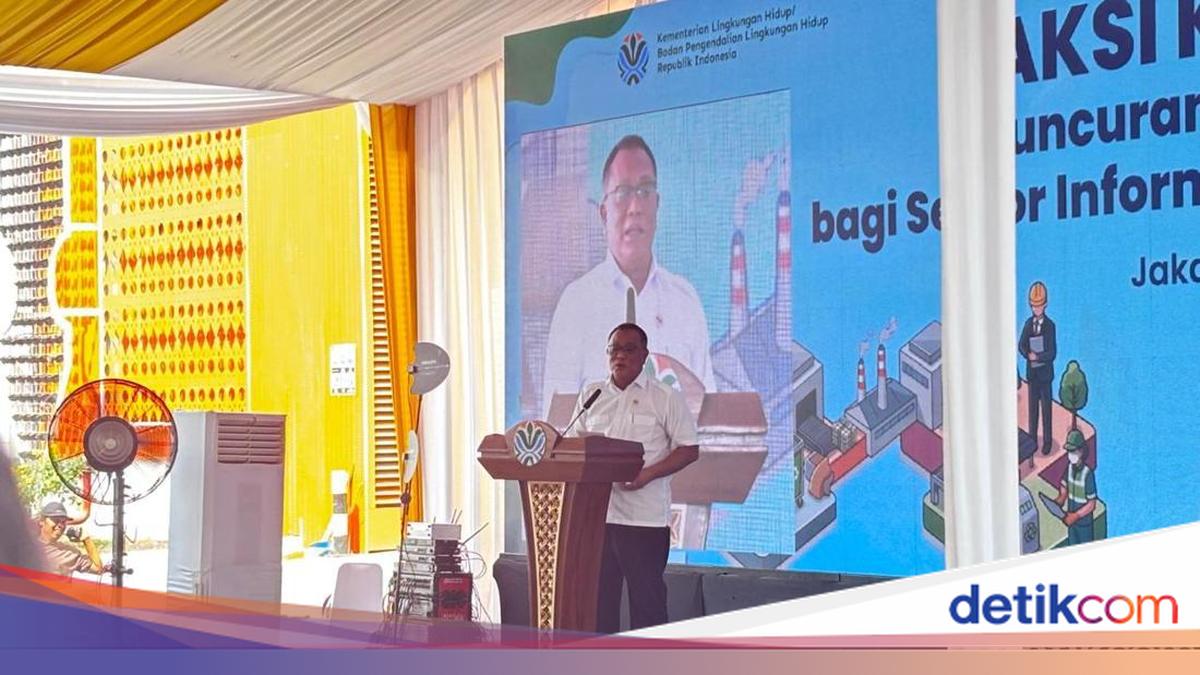
Environment Minister Mohammad Jumhur Hidayat has highlighted the enormous volume of plastic waste from instant noodle packaging, which reaches tens of billions of wrappers each year. Jumhur stated that his ministry is preparing a regulation that will require companies to manage waste from their products, including plastics and used electronics.
Jumhur made the remarks during the launch of social protection for Indonesia’s informal waste sector at the RDF Rorotan facility in North Jakarta on Monday (10/8/2026). He said one of the efforts to address the issue of product waste is through the implementation of extended producer responsibility (EPR).
“Soon, the Ministry of Environment will issue a Ministerial Regulation on EPR, which stands for Extended Producer Responsibility,” Jumhur said.
Jumhur explained that EPR regulates producers’ responsibility for waste from the products they generate. Producers will be asked to ensure that post-consumer waste can be managed properly.
“So all producers that generate waste such as plastics and so on, we ask them to be responsible, so that the waste after use can be managed properly,” he said.
Jumhur cited instant noodle products as an example, which generate a massive amount of plastic waste. He noted that a single instant noodle product can circulate up to 20 billion wrappers annually.
“For example, there is one noodle product, instant noodles. It can reach 20 billion wrappers every year,” he explained.
According to him, that figure is just from one product, whereas a single company may have several other products that also generate waste.
Jumhur said there are approximately 8,600 factories in Indonesia producing various types of waste, including plastics and electronic waste. Through EPR, producers will eventually be required to allocate a certain amount of funds for each product that generates waste.
Jumhur gave an example that if a contribution of Rp 5 were imposed per package, the funds collected from billions of packages could reach a very large amount.
“If we charge, say, Rp 5 per package, that means for the noodle wrapper alone, that’s already 100 billion rupiah, just for one wrapper. So the funds collected could reach trillions,” he said.
However, Jumhur stressed that these funds will not be managed by the government. The funds will be managed by the producers themselves through a special body called a Producer Responsibility Organization (PRO).
“So they manage it themselves, establishing a body called the PRO, Producer Responsibility Organization,” he said.
According to Jumhur, this scheme also has the potential to create new jobs, or green jobs. The funds collected will be used to ensure that waste from these products can be managed properly.
“There will be regulations later on who becomes the PRO, and the employees there are what we call green jobs,” he added.