
Environment Minister Praises Tamangapa Landfill Progress in Ending Open Dumping
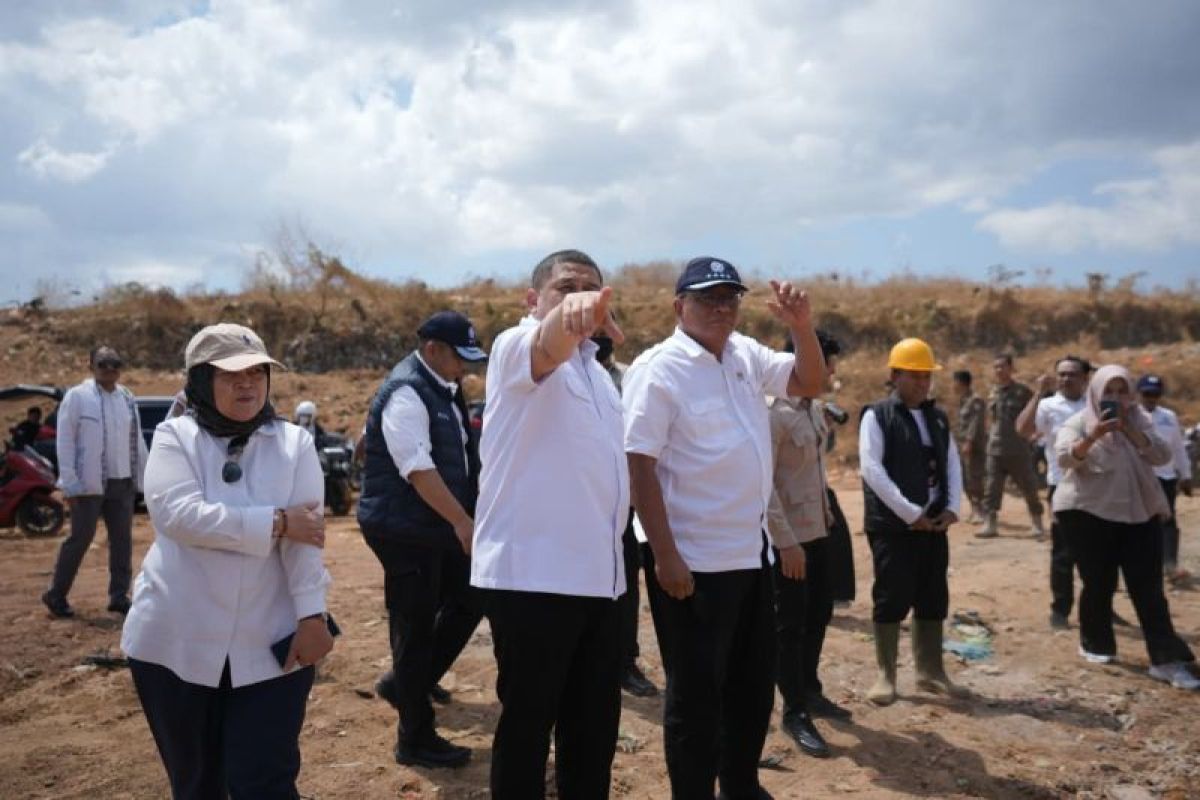
Makassar (ANTARA) - Environment Minister and Head of the Environmental Control Agency, Moh Jumhur Hidayat, has praised the performance of Makassar Mayor Munafri Arifuddin in tackling waste management issues at the Tamangapa Final Processing Site (TPA) in Manggala, which previously operated as an open dumping site.
“The progress in covering the waste piles has now reached approximately 93 per cent. This change has had a tangible impact, particularly in reducing the pungent odour that has long been a complaint of residents living around the TPA,” he said during an inspection of the Antang TPA in Makassar on Wednesday.
Jumhur Hidayat assessed that the Makassar City Government’s swift action in halting open dumping practices and transitioning towards a sanitary landfill system deserves to serve as a model for other cities in Indonesia.
“There is a sanitary landfill, and also a controlled landfill. It is covered with bioplastic or biomembrane, and some areas are covered with soil. What is clear is that the smell from the waste piles has disappeared,” he said.
The handling was carried out through a cover soil method to cap the mountains of rubbish, combined with the use of bioplastic or biomembrane in several areas.
In addition to inspecting the waste pile covering area, the Environment Minister also viewed the construction site of an access road to the TPA, which is currently being prepared through pile driving. He also visited residents’ homes that have utilised methane gas from the waste piles as an energy source and inspected the leachate pond management system.
Jumhur expressed appreciation for the Makassar City Government’s commitment, which he considered capable of moving quickly to follow up on central government directives after the Tamangapa TPA previously received administrative sanctions due to management that did not meet regulations.
According to him, this achievement proves that TPA management issues can be resolved if local governments have strong commitment and the will to carry out gradual improvements.
“This is a good example for other cities. If there is intention, it turns out it can be done,” Jumhur stressed.
Nevertheless, he emphasised the importance of building a blocking system so that leachate water does not spread into the environment during the rainy season and is directly channelled to the prepared treatment facilities.
“Firstly, a kind of blocking is carried out so that when it rains, the leachate water does not spread, but instead goes directly into the management system that has been prepared,” he explained.