
Environment Minister: Carbon Potential Can Benefit Communities
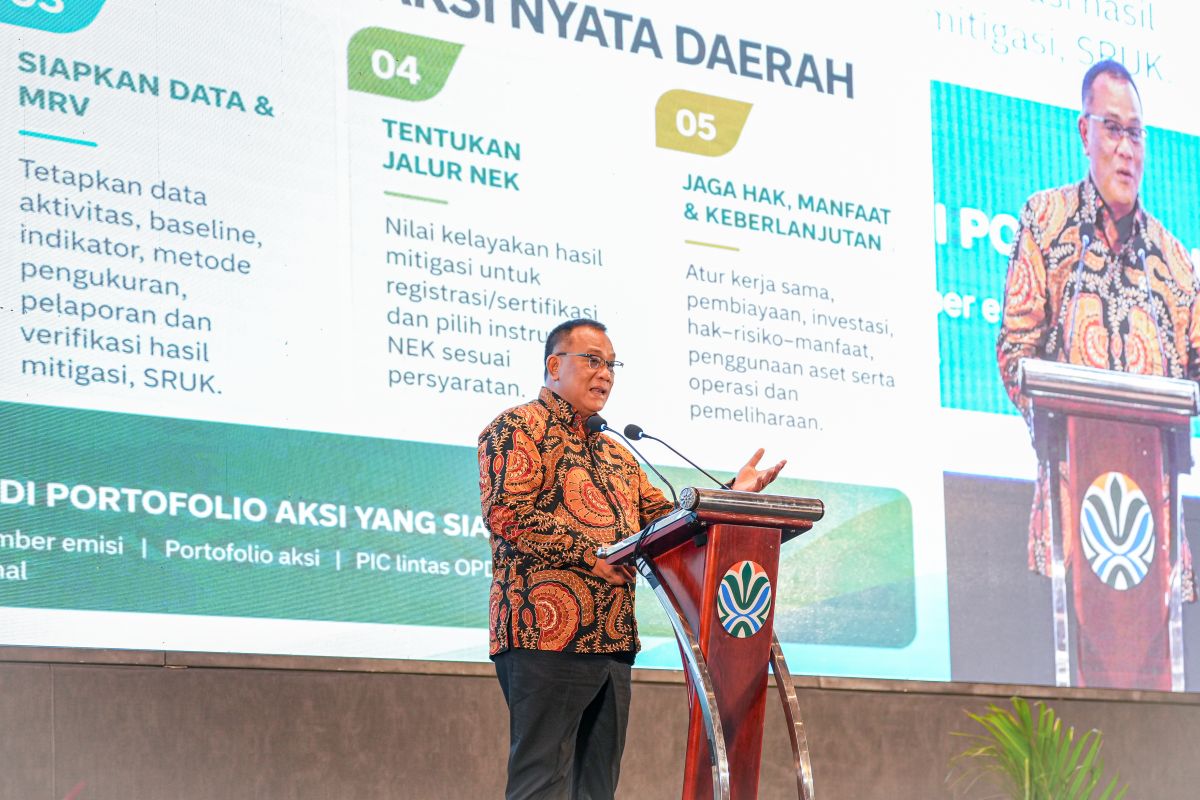
Jakarta (ANTARA) – Environment Minister Moh Jumhur Hidayat supports a shift in the development paradigm from an extractive approach towards a restorative economy, including the use of carbon’s economic value for the benefit of communities.
“With proper governance, the carbon potential of restoration activities can be developed as a source of funding to support the sustainability of environmental recovery while also benefiting local communities,” Environment Minister and Head of the Environmental Control Agency (BPLH) Jumhur said in a statement confirmed in Jakarta on Tuesday.
He made the remarks after meeting senior officials from provincial and district/city governments across Bali and Nusa Tenggara at the 2026 Subnational Carbon Economic Value Governance Workshop in Bali on Monday (19 October).
The forum was held to support the integration of climate change, sustainable development, Nationally Determined Contributions (NDCs), the Zero Waste Zero Emission (ZWZE) policy and carbon registry governance into regional planning.
To this end, the Environment Ministry (KLH) is supporting regional governments in preparing to implement carbon economic value policies in an integrated way, while contributing to credible and transparent national emissions-reduction targets.
KLH/BPLH Principal Secretary Rosa Vivien Ratnawati said on the same occasion that carbon economic value is a strategic instrument connecting emissions-reduction efforts with economic development and resource mobilisation.
“This requires a shared understanding among regional government leaders at provincial, district and city levels of the governance and implementation of carbon economic value,” said Rosa Vivien Ratnawati, Secretary of the Environment Ministry and Principal Secretary of BPLH.
She also stressed that carbon economic value is not an abstract transaction without tangible outcomes, but an instrument that must be tied to concrete action on the ground.
Such efforts include waste management, ending open dumping practices, and maintaining and restoring strategic ecosystems.