
Environment Minister Calls for Ecological Repentance as Foundation for Environmental Recovery
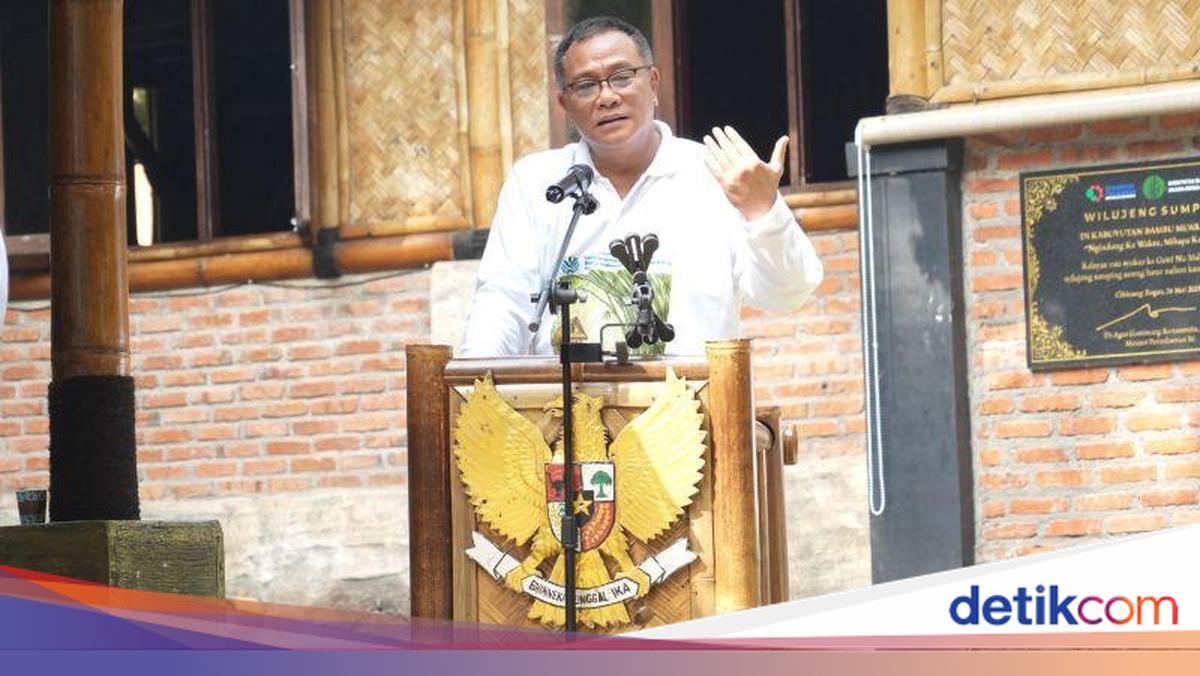
Minister of Environment/Head of the Environmental Control Agency of the Republic of Indonesia (KLH/BPLH) Moh Jumhur Hidayat has stressed that the environmental crisis demands a change in human perspective and behaviour through ecological repentance as the foundation for environmental recovery. Ecological repentance forms the basis of a movement to plant 2 billion trees in Indonesia, with bamboo being strengthened as a nature-based solution. In his directive, Jumhur asserted that various environmental challenges such as climate change, land degradation, pollution, and biodiversity loss can no longer be addressed solely through technical approaches, but require a more fundamental shift in collective consciousness regarding humanity’s relationship with nature. “Ecological repentance is a change in our perspective and behaviour towards nature. It is not enough to merely understand environmental problems; we must become part of the solution through concrete action,” Jumhur said in a written statement on Monday (15/6/2026). He conveyed this during the ‘Symposium on the Bamboo Planting Movement - Save the Earth’ in Bogor, West Java, as part of the commemoration of World Environment Day 2026. Jumhur explained that the programme to plant 2 billion trees is a major national agenda for ecosystem restoration, critical land rehabilitation, and strengthening environmental resilience. In this context, bamboo is a vital vegetation type due to its ecological functions as a water system regulator, erosion controller, and carbon sink, as well as providing social and economic benefits to communities. “The planting of 2 billion trees is part of the ecological repentance movement. One of its implementations is the development of bamboo as a nature-based solution capable of maintaining water systems, reducing erosion, and absorbing carbon,” Jumhur stated. KLH/BPLH is currently intensifying environmental rehabilitation efforts through increasing land cover, restoring watersheds, and strengthening community-based green economy. Jumhur emphasised that the success of the environmental movement is not only measured by the number of trees planted, but by the growth of awareness and community participation in caring for the environment sustainably. “The most important thing is not just planting, but ensuring this movement lives within the community. Bamboo must become a symbol of collaboration and hope that everyone can contribute to protecting the earth,” Jumhur said. The Nusantara Bamboo Planting Movement is expected to become a key driver in supporting this agenda sustainably. “Bamboo is not only a conservation plant, but also part of the nation’s cultural identity that has produced various high-value works, from architecture to the musical art of the angklung. The bamboo planting movement is important for preserving cultural heritage while strengthening the community’s role in environmental conservation sustainably,” said Abah Jatnika, Chairman of the Indonesian Bamboo Craftsmen Foundation. KLH/BPLH invites all elements of government, communities, businesses, academics, and the public to jointly strengthen the 2 billion tree planting movement as part of ecological repentance, to safeguard environmental sustainability and the future of coming generations.