
Environment Minister Applauds Use of Plastic Waste as Raw Material for Prosthetic Limbs
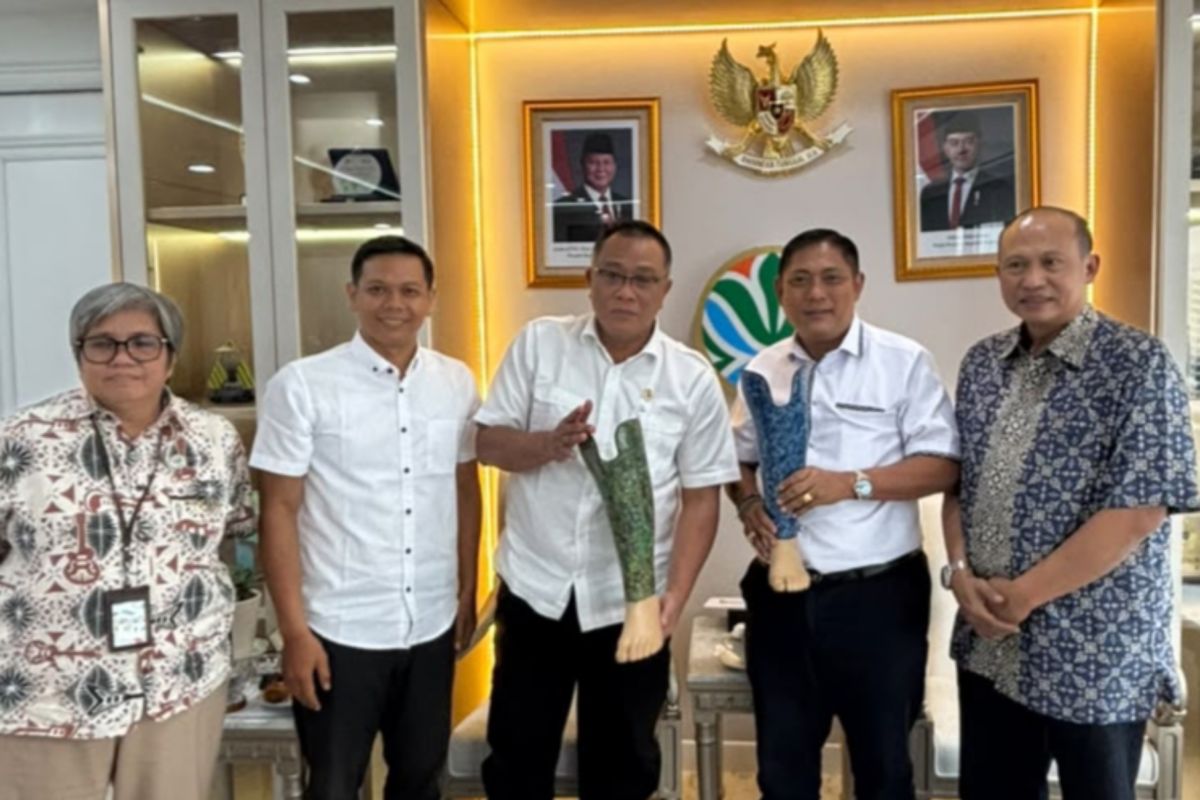
Denpasar (ANTARA) - The Minister of Environment, Jumhur Hidayat, has expressed his appreciation for the innovation of the Yayasan Kaki Kita Se-nusantara (YKKS) Foundation, which utilises plastic waste as raw material for manufacturing prosthetic limbs for people with disabilities.
While receiving an audience with the Chairman of the YKKS Board of Trustees, Putu Ivan Yunatana, and the Chairman of YKKS, Made Aditiasthana, Minister Hidayat emphasised the importance of waste segregation at the source so that inorganic waste can be repurposed into various useful products. “If possible, waste should not just be decomposed; there must be segregation, except for organic waste. In fact, inorganic waste can be transformed into something like this,” he stated in a briefing received in Denleg, Bali Province, on Monday.
During the meeting, YKKS presented two examples of prosthetic limbs made from plastic waste materials, specifically High-Density Polyethylene (HDPE) from bottle caps and a mixture of multilayer plastic (MLP) packaging with HDPE.
The Chairman of the YKKS Board of Trustees, Putu Ivan Yunatana, stated that using plastic waste to create prosthetic limbs demonstrates that materials previously considered environmental problems can be processed into products with social benefits and economic value. “With these two completed prosthetic limb samples, it shows that plastic waste materials can be beneficial and economically valuable, provided the ecosystem is properly regulated and managed,” he said following the audience.
According to him, prosthetic limbs produced by YKKS have been distributed to people with disabilities in Bali and outside Bali, including Palu and Lombok, supported by corporate social responsibility (CSR) programmes from several companies and public donations through YKKS.
In addition to manufacturing prosthetic limbs, YKKS, through its affiliated entities, conducts educational activities, waste collection and transport, as well as the processing of organic and inorganic waste into Refuse Derived Fuel (RDF).
The organisation also aims to introduce the use of multilayer plastic (MLP) packaging, which has long been considered difficult to recycle, into products that benefit the community. “We want to introduce not just HDPE-type plastic waste, but also multilayer plastic (MLP) packaging, which recyclers have traditionally found difficult to process. However, we can process it, for instance, into prosthetic limbs that are prioritised for distribution to underprivileged people with disabilities,” he added.
The Chairman of YKKS, Made Aditiasthana, explained that one prosthetic limb requires approximately five kilograms of plastic waste as raw material. After the processing and shaping stages, the material shrinks to about 2-3 kilograms.
He noted that the use of recycled plastic ensures each prosthetic limb possesses a unique pattern and colour depending on the waste materials used. “The creative pattern comes from the workers. The pattern is formed from the original colour of the waste. For example, white with black flecks, using white and black waste,” he said.
He further mentioned that the colour and pattern of the prosthetic limbs can be customised according to the recipient’s request, ensuring the product possesses both functional and aesthetic value.