
Environment Minister Accelerates Waste-to-Energy Facilities in West Java, Aiming to Turn Waste into Energy
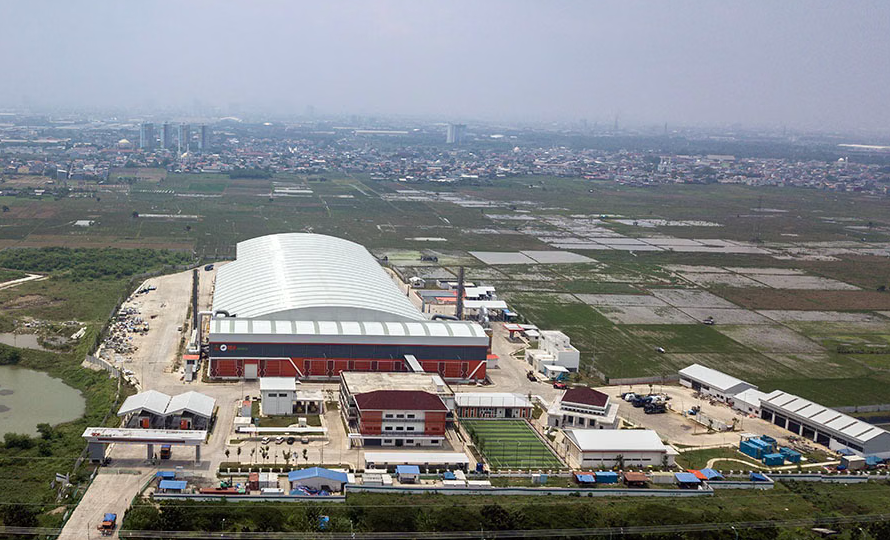
The government faces a policy dilemma with no truly comfortable options. The Ministry of Environment and Forestry/Environmental Control Agency (KLH/BPLH) is accelerating the construction of Waste-to-Energy Electricity Facilities (PSEL) in West Java as a strategic step to tackle the waste emergency while implementing the directives of the President of the Republic of Indonesia through Presidential Regulation No. 109 of 2025. This acceleration is marked by the signing of a joint agreement between the West Java Provincial Government and several district/city governments in the Bandung Raya region as well as Bogor and Depok. The Minister of Environment/Head of BPLH, Hanif Faisol Nurofiq, stated that West Java is facing serious issues in waste management. Of the total daily waste generation of around 25,660 tonnes, only 15% is managed, while the remaining 85% is not handled and partly dumped in final disposal sites (TPA) using open dumping systems or directly into the environment. “This is a condition that cannot be allowed to continue,” he said. For the Bandung Raya region, the government will accelerate the construction of two PSEL units in Legok Nangka and Sarimukti with a total capacity of 3,515 tonnes per day. This capacity comes from the City of Bandung (800 tonnes/day), City of Cimahi (250 tonnes/day), Bandung Regency (1,000 tonnes/day), West Bandung Regency (665 tonnes/day), Cianjur Regency (350 tonnes/day), and Purwakarta Regency (450 tonnes/day). Meanwhile, in the Bogor and Depok region, PSEL construction will be strengthened through facilities in the Kayumanis area, Bogor City, with a capacity of 1,000 tonnes per day, covering 300 tonnes/day from Bogor City and 700 tonnes/day from Depok City. This project complements the previous Bogor Raya PSEL plan in the Galuga area. West Java Governor Dedi Mulyadi views this step as a turning point in resolving the long-standing waste problem. He described the policy as a concrete effort to turn the waste burden into an energy source. “In simple terms, waste disappears, and electricity lights up,” said Dedi. Hanif added that accelerating PSEL construction does not only depend on technology but also on local government commitment, particularly in providing land, guaranteeing waste supply, and a consistent transportation system. In addition, local governments are urged to ensure the quality of waste entering PSEL facilities meets standards, namely free from hazardous and toxic waste (B3), glass, PVC, and aluminium foil, so that the processing runs optimally and safely for the environment.