
Entrepreneurs urge measured government response to US dollar strengthening
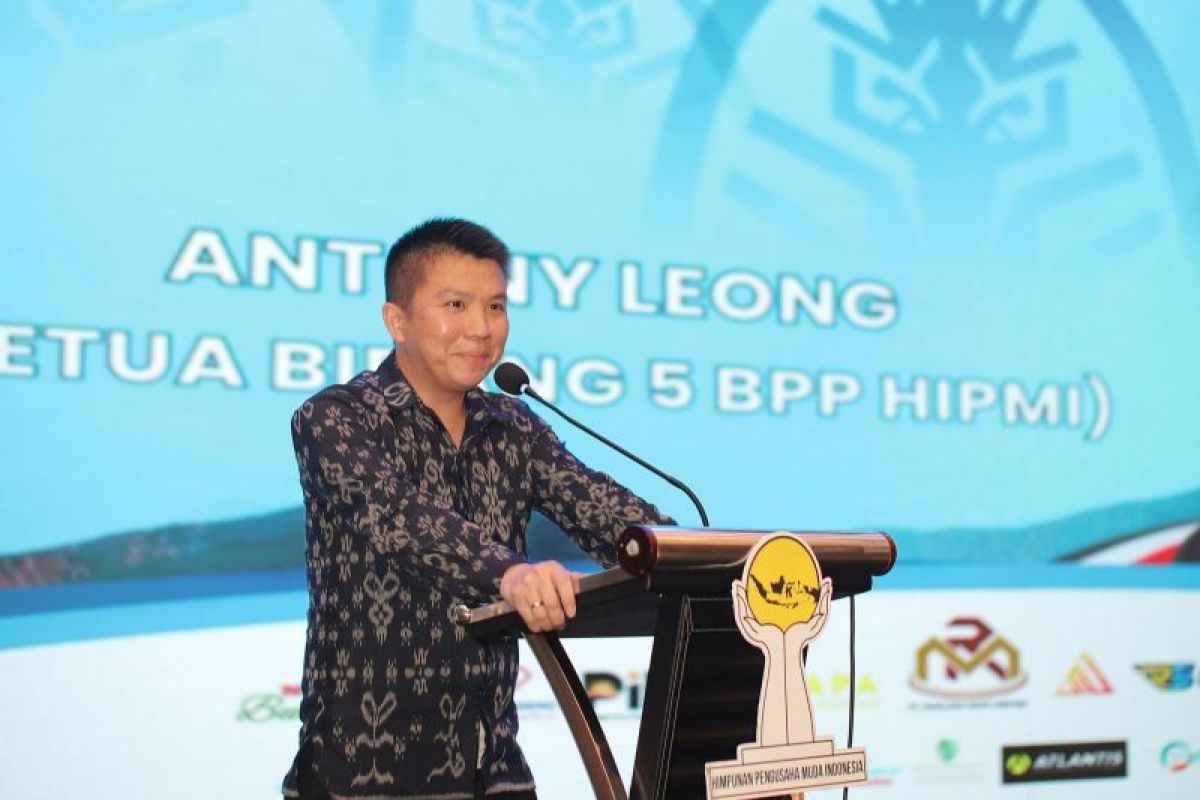
Jakarta (ANTARA) - The Head of Division V of the Central Executive Board of the Indonesian Young Entrepreneurs Association (BPP HIPMI), Anthony Leong, has urged the government to immediately take strategic and measured steps to address the strengthening of the US dollar, which continues to exert pressure on the rupiah.
According to Leong, the exchange rate situation, which is approaching the level of Rp17,900 per US dollar, should not merely be managed through market sentiment maintenance, but must be responded to through concrete policies capable of maintaining business stability and public purchasing power.
“The government needs to provide temporary incentives so that business actors can maintain operations and are not pressured by rising costs due to the strengthening dollar,” Anthony stated in Jakarta on Tuesday.
Anthony assessed that the national business sector, particularly industries still dependent on imported raw materials, is currently facing significant pressure due to increasing production costs. Consequently, the government is deemed to need short-term protection for productive sectors such as food and beverage, textiles, electronics, and MSMEs that rely on imported raw materials.
According to Anthony, this support could take the form of tax reductions, credit interest subsidies, loan payment relaxations, and logistics incentives for sectors directly affected by the weakening rupiah. He warned that many business actors could face margin pressures that could lead to workforce reductions if the government fails to act swiftly.
On the other hand, he believes this condition should serve as a momentum to accelerate import substitution and strengthen the national industrial structure. He noted that Indonesia has relied on imported raw materials for too long, causing exchange rate volatility to directly impact domestic production costs.
Anthony also encouraged the government to accelerate industrialisation, build strong local supply chains, prioritise the use of domestic products, and provide incentives to companies that increase the level of domestic component content (TKDN). “If local raw materials are strong, the pressure from the dollar will not directly shake national production costs. This is a momentum to seriously strengthen national industry,” said Anthony.
Furthermore, he sees the current condition as an opportunity to increase national exports. In this regard, Anthony requested that the government encourage more MSMEs to enter the global market by providing cheaper export financing, digital export training, international certification assistance, and opening access to global marketplaces for local entrepreneurs. He suggested that Indonesian entrepreneurs should be directed to develop dollar-based revenue streams so they are not solely dependent on the domestic market.
Anthony also emphasised the importance of maintaining national energy and food stability. He requested the government to maintain the prices of fuel, electricity, and basic food commodities to prevent inflation from rising further and to ensure public purchasing power remains stable. He reminded that domestic consumption remains the main pillar of the Indonesian economy, so the stability of essential commodity prices must be a government priority amidst global pressures.
Additionally, Anthony warned that rupiah stabilisation policies should not be entirely implemented through overly aggressive interest rate hikes. In his view, high interest rates risk slowing business credit, stalling investment, and weakening public consumption. “What must be maintained is the balance between rupiah stability and the sustainability of the business world. We must not allow the business sector to lose its room to grow due to the pressure of excessive costs and high interest rates,” said Anthony.
Anthony remains optimistic that Indonesia can still face global economic pressures if the government focuses on strengthening national productive sectors, expanding exports, maintaining public purchasing power, and strengthening MSME resilience as the primary foundation of the national economy.