
Entrepreneurs Urge Danantara to Act as Aggregator for Integrated Textile Zones
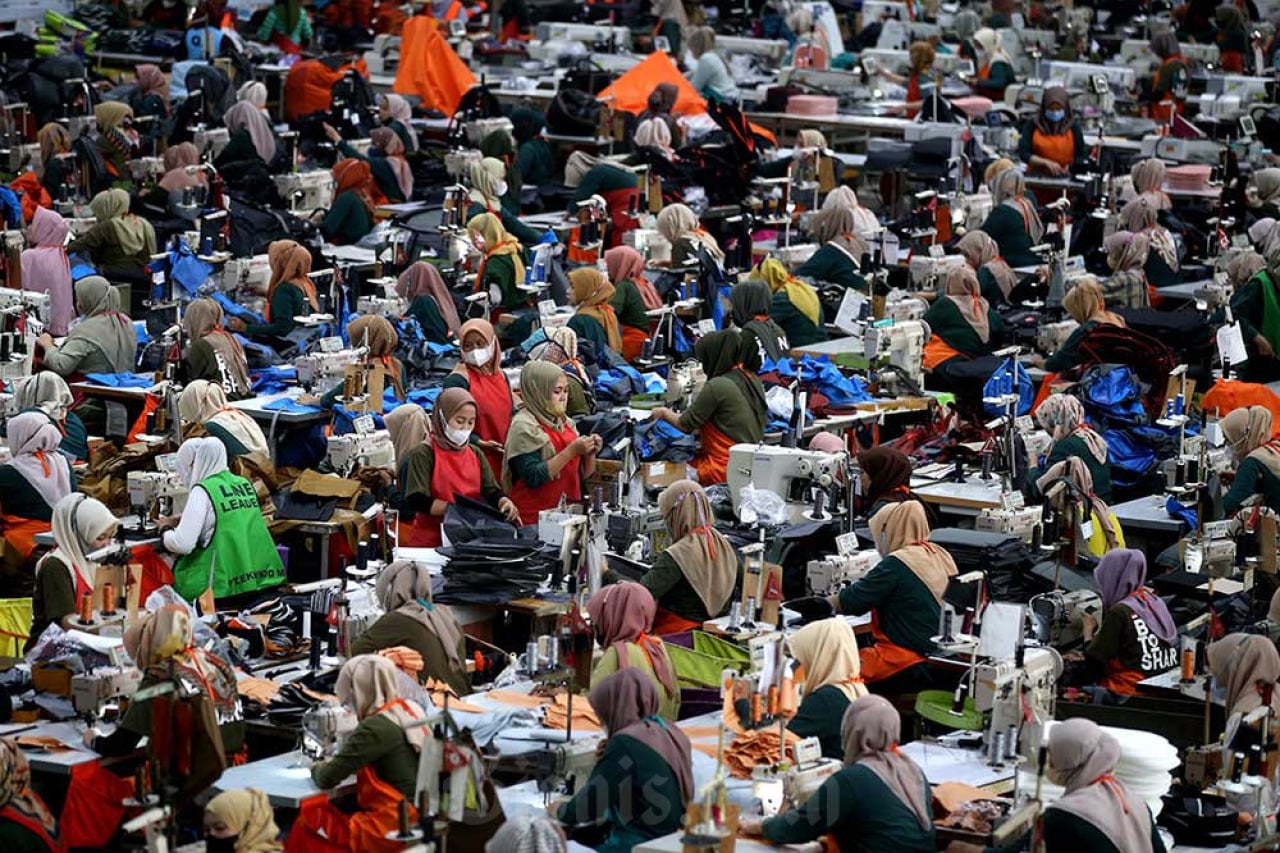
The Indonesian Garment and Textile Association (AGTI) is urging the Daya Anagata Nusantara Investment Management Agency (Danantara) to play a role as an aggregator in the government’s plan to establish integrated textile and textile products (TPT) industrial zones, spanning from upstream to downstream.
AGTI Chairperson Anne Patricia Sutanto stated that the concept of these zones should not be directed towards making State-Owned Enterprises (BUMN) the business operators of the textile industry. In her view, the government’s role is more needed to build and integrate infrastructure and the industrial ecosystem, while business activities should remain managed by private players.
“The players will remain the business community. However, the formation of the infrastructure should come from Danantara,” Anne said when contacted by Bisnis on Wednesday (23/9/2026).
She suggested that these zones could be developed as the centre of a TPT ecosystem that brings together various sub-sectors from upstream to downstream. She likened the concept to a ‘Silicon Valley for textiles’, with the government acting as an aggregator to accelerate industrial growth.
Anne argued that the need for an aggregator arises because the national TPT ecosystem has remained fragmented. The government is seen as needing to unify the interests and needs of the industry to ensure that the development of textile, semi-downstream, and garment sub-sectors can proceed in an integrated manner.
She assessed that this role is also vital for attracting new investment and encouraging the expansion of existing businesses in Indonesia. This is particularly important as Indonesia has established several free trade agreements and Comprehensive Economic Partnership Agreements (CEPA) with various countries.
“Free trade agreements are merely rules, merely frameworks. There needs to be content—what content we trade, what we invite foreigners to invest in, and what causes existing FDI and domestic investment in Indonesia to expand. There needs to be an aggregator,” Anne remarked.
Furthermore, she believes the government could involve several ministries and agencies in this aggregator function, including the Ministry of Investment and Downstreaming/BKPM, the Ministry of Industry, the Ministry of Trade, and the Ministry of Manpower.
Regarding infrastructure needs, Anne emphasised that developing TPT zones requires more than just providing land or industrial estates. Planning must consider the specific needs of each sub-sector to ensure the zones can form a sustainable ecosystem.
For the textile industry, for instance, the need for wastewater treatment infrastructure and energy is a critical component, especially to meet the Environmental, Social, and Governance (ESG) standards required by export markets.
Meanwhile, the garment industry requires significant labour support due to its labour-intensive nature. Therefore, the existence of these zones must also consider social aspects and supporting infrastructure for workers.
“If we want to accelerate national growth from this labour-intensive TPT industry, especially garments, an aggregator is certainly needed to manage this growth speed,” Anne said.
She added that this integration must also ensure connectivity between the textile and garment industries. In her view, increasing the competitiveness of the national garment industry requires a competitive domestic textile supply that meets the qualifications of global buyers.
“An aggregator is indeed needed to integrate not just textiles but also garments. Conversely, garments need textiles; the industry from upstream to semi-downstream must be competitive,” she said.
Anne noted that the development of integrated zones using this approach has been implemented in several countries with large TPT industries. She cited Vietnam as an example, which possesses special economic zones dedicated to the TPT industry where private businesses operate within the zone.
She suggested that a similar pattern could be considered by Indonesia to accelerate the recovery and development of the national TPT industry, which has faced competitiveness pressures in recent years.
AGTI welcomes the government’s direction to reposition the TPT industry as a national strategic sector. Anne believes the industry makes a significant contribution to economic growth due to its focus on production, exports, foreign exchange generation, and employment creation.
“The TPT industry is worth fighting for because it can provide additional national economic growth through production. This is not just consumption. The multiplier effect is substantial,” she concluded.
Source: jawawa.id (https://jawawa.id/newsitem/entrepreneurs-urge-danantara-to-act-as-aggregator-for-integrated-textile-zones-1790254291)
Originally published by ekonomi.bisnis.com (https://ekonomi.bisnis.com/read/20260924/257/2006745/pengusaha-dorong-danantara-jadi-agregator-kawasan-tekstil-terintegrasi), translated from Indonesian