
Entrepreneurs Praise Prabowo: Economic Transformation or the Risk of Excessive Proximity?
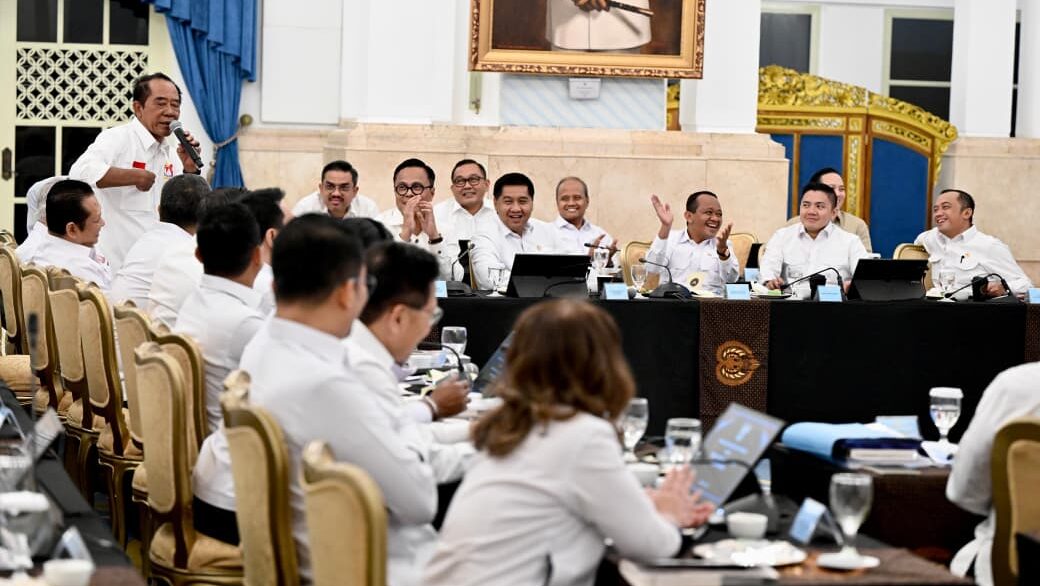
On Friday, 31 July 2026, President Prabowo Subianto met with members of the Indonesian Chamber of Commerce and Industry (Kadin) from both central and regional levels at the State Palace in Jakarta. During the meeting, James Riady, Vice Chairman of the Foreign Affairs Coordinator for Kadin Indonesia, expressed appreciation for the direction of the Prabowo administration’s policies.
Riady assessed Prabowo’s leadership as visionary, strategic, courageous in pursuing breakthroughs, and swift in policy execution. He highlighted several government agendas, including food self-sufficiency, energy security, industrial downstreaming, public housing development, medical education reform, and the establishment of Danantara as an instrument to strengthen synergy between the government, State-Owned Enterprises (SOEs), and the private sector. Riady even described the administration’s approach as an ‘entrepreneur presidency’—a leadership style characterised by an entrepreneurial mindset: decisive, pragmatic, and results-oriented.
Such praise from the business community serves as a positive signal. In economic development, support from business players is vital, as investment, job creation, and economic growth rely heavily on private sector confidence. However, within the framework of economic democracy, the close relationship between the government and entrepreneurs warrants critical scrutiny. Political history suggests that proximity between power and business groups can lead to two outcomes: accelerating development or creating crony capitalism if oversight is weak.
This phenomenon can be analysed using Peter Evans’ theory of ‘Embedded Autonomy’. Evans explains that states successful in building economies typically maintain close ties with the business world, but such relationships must exist within a strong institutional framework. The government needs to be close to business actors to understand economic needs, yet must maintain the independence to regulate and supervise so that public interests are not superseded by specific interest groups.
In the Indonesian context, the business community’s praise for the government can serve as political-economic capital. However, the critical question remains: will this closeness result in productive collaboration or instead strengthen the dominance of certain business groups in policymaking?
Further critique can be drawn from the ‘Political Economy of Development’ theory. This theory posits that development is not merely about economic growth figures, but about the distribution of benefits. Policies such as industrial downstreaming, Danantara, and national strategic projects must be tested: will the benefits truly be felt by the wider public, or will they be concentrated among large corporations and capital groups?
For instance, the success of food self-sufficiency should not only be measured by the state’s ability to maintain supply, but by whether farmers achieve prosperity. Energy security is not just about stable prices, but also about public access and sustainability. Downstreaming is not just about attracting investment, but whether it creates technology transfer and quality jobs for the Indonesian people.
Therefore, the term ‘entrepreneur presidency’ is a double-edged sword. On one hand, Indonesia requires a government that is swift, courageous, and capable of executing programmes. On the other hand, the state is not a corporation. The government does not only pursue efficiency and growth but is also obligated to ensure justice, transparency, and the protection of public interests.
Ultimately, James Riady’s praise for the Prabowo administration is part of the dynamic relationship between the government and the business world. Entrepreneurial support can provide the energy for development, but democracy requires balance: the state must be able to work with business without losing its primary function as a regulator and protector of the people’s interests. Economic transformation will be judged not by how much entrepreneurs trust the government, but by how much the benefits of that development are truly felt by the broader population.