
Entrepreneurs in Jakarta Rob Bank of Rp157 Billion
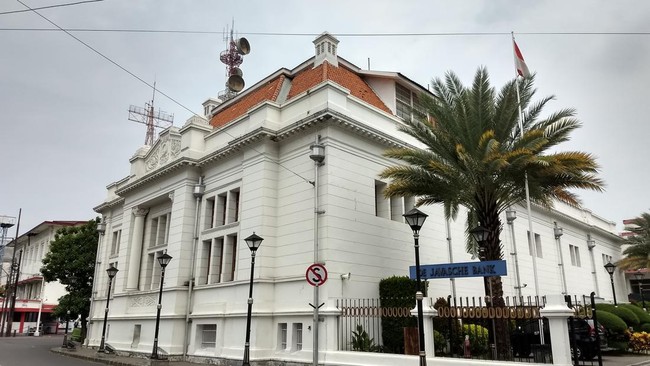
Following the bankruptcy of a property project they had developed, two entrepreneurs in Jakarta resorted to robbing a bank vault. Both men disguised themselves as customers, brandished pistols, and fled with cash valued at Rp107 billion.
The incident occurred on 22 November 1902, in Jakarta (then Batavia) against the central bank, De Javasche Bank (DJB), which is now Bank Indonesia. At the time, the DJB office, located in the Beos railway station area (now the Bank Indonesia Museum), was visited by two Dutch men dressed in the distinctive attire of the wealthy.
Their arrival was initially deemed ordinary, as staff assumed they were there for banking transactions. However, the situation changed abruptly when the two men produced pistols and pointed them at the staff. “The perpetrators immediately pointed pistols at the officers’ heads. The staff fell silent,” reported the newspaper De nieuwe vorstenlanden (1 December 1902).
Under threat, the staff complied with the perpetrators’ demands. The vault was opened, and 100,000 guilders were taken. At that time, the price of 1 gram of gold was 1.65 guilders, meaning 100,000 guilders could purchase 60.5 kg of gold. Converted to modern values, that amount of gold is worth approximately Rp150 billion.
After securing the money, the pair fled immediately. During their escape, an officer who attempted to pursue them was shot and fell. The duo then hijacked a horse-drawn carriage (delman) carrying passengers. A passenger also became a victim of gunfire as the robbers attempted to flee towards the Jembatan Merah area.
In that area, they changed vehicles again. The horse used to continue their flight had apparently been prepared by an accomplice. “This man, appearing in a hurry, climbed into the carriage, then struck the driver’s back several times, urging him to leave immediately,” wrote De nieuwe vorstenlanden.
The two robbers were detected travelling towards Bidara Cina and Cibubur before heading towards Bogor. The pursuit lasted until the early hours of the morning. In the Ciluar area, now part of North Bogor, the carriage used by the robbers stopped to rest.
It was at this point that the police launched an intense pursuit. Finally, around 06:00, the horse became exhausted, and one of the robbers jumped and fled. Meanwhile, the other was successfully apprehended.
Upon investigation, police identified the man as Herman Gentis. His partner, Cornelis Gentis, also attempted to flee towards Bogor City, but Cornelis was eventually intercepted. News of the robbery spread by word of mouth until citizens became aware of his whereabouts. “Cornelis was caught after being intercepted and beaten by residents,” the same newspaper reported.
Herman and Cornelis Gentis were subsequently detained. It was revealed that the two brothers were well-known entrepreneurs in Jakarta.
Driven by Bankruptcy
The newspaper Algemeen Handelsblad (1 December 1902) noted that the Gentis brothers were property developers. In the early 1900s, they built a self-contained township called Gentisville in Pelabuhanratu, Sukabumi.
The area was integrated with several regions and featured expensive housing. Homes were built across the hilly landscape in the form of single and double-storey villas, featuring costly interiors.
Gentisville was equipped with various facilities for villa tenants and buyers, including billiard rooms and other entertainment spaces.
The project was successful due to funding from investors. However, in August 1902, a massive fire destroyed the entire Gentisville area.
The Gentis brothers subsequently faced immense pressure and went bankrupt. They had not yet recovered their capital and were unable to provide returns to their investors. During the investigation into the De Javasche Bank robbery, it was revealed that both had planned the heist using disguises, wigs, and various other equipment.
The court ultimately found Herman and Cornelis Gentis guilty. Herman was sentenced to 15 years in prison, while Cornelis received 10 years. However, neither served their full sentence. In 1904, the Governor-General of the Dutch East Indies granted them a pardon.
“Cornelis and Herman Gentis received a pardon of 7 years for the remainder of their sentences,” reported the newspaper (22 November 1904).