
Entrepreneurs Fear Collapse, Rushing to Implement Automated Robots in Factories
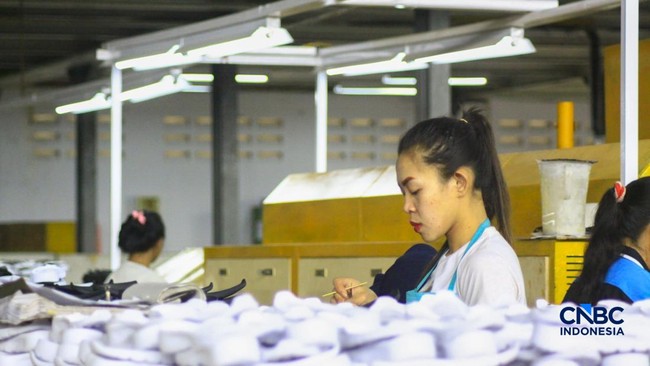
The Indonesian footwear industry is facing increasing cost pressures amidst intense competition in export markets. This situation is driving business owners to rely on efficiency and technology to sustain their operations.
Entrepreneurs are increasingly relying on robotic labour, or automated machinery, to drive production lines in factories. This move aims to suppress various expenses, including labour costs.
The Vice Chairman of the Indonesian Footwear Association (Aprisindo), Harijanto, stated that companies have few options as labour costs continue to rise. Unlike workers, who can voice demands through mass protests, companies must find alternative ways to ensure business continuity.
“One of the weaknesses of entrepreneurs is that we cannot demonstrate. So, how will we automatically survive? By accelerating automation and reducing costs related to labour. Because in the footwear sector, the orientation is entirely towards exports,” said Harijanto at the Apindo office, as reported on Thursday (1/9/26).
These cost pressures are becoming even heavier because the Indonesian footwear industry is highly dependent on global markets. Produced goods must remain competitive in terms of price while simultaneously meeting the productivity demands and standards of international buyers.
“With US$8 billion in exports, 99 per cent of that consists of sports shoes and sneakers. Consequently, our labour cost has now reached approximately 25-30 per cent. If this continues to rise, a collapse is inevitable,” he added.
The room to compensate for rising costs is limited because productivity increases cannot happen instantaneously. Companies must maintain a balance between cost growth and production capacity to prevent business margins from being continuously eroded.
“Productivity can only increase by a maximum of about 2 per cent annually. Meanwhile, adjustments to foreign exchange payments are at a maximum of around 2-3 per cent. Therefore, resilience will certainly be very vulnerable,” he said.
Harijanto also reminded the government not to implement policies that would cause the manufacturing industry to lose further competitiveness. According to him, the impact would be felt not only by companies but also in the creation of jobs for the new workforce.
He noted that current labour market conditions are already showing signs of change. Companies are beginning to accept interns with higher education backgrounds, while job opportunities within the industry are becoming increasingly competitive.
“In my view, the government must realise that it is very dangerous to revert to the provisions of Law 13. That law has proven unable to create economic growth or employment. Over the past 23 years, the contribution of manufacturing to GDP has dropped drastically, from 28 per cent to just 18 per cent,” he stated.
Investment competition is also a major concern, as footwear producers have many countries to choose from when expanding production capacity. Indonesia must maintain its attractiveness as other nations begin to open themselves up to industrial investment.
“Vietnam has reached an optimal point; they can only move to Indonesia. However, if the draft regulations are not accommodative, they will move to other countries. Countries like Laos have already opened their doors. Imagine if we lose to Vietnam, Cambodia, or Laos, despite being a country as large as ours. I believe our regulations are what we need to improve,” Harijanto concluded.
Source: jawawa.id (https://jawawa.id/newsitem/entrepreneurs-fear-collapse-rushing-to-implement-automated-robots-in-factories-1790841152)
Originally published by CNBC Indonesia (https://www.cnbcindonesia.com/news/20261001121815-4-772471/pengusaha-takut-kolaps-buru-buru-pakai-robot-otomatis-di-pabrik), translated from Indonesian