
Entrepreneurs Express Concerns Over EV Industry Regarding Raw Material Imports
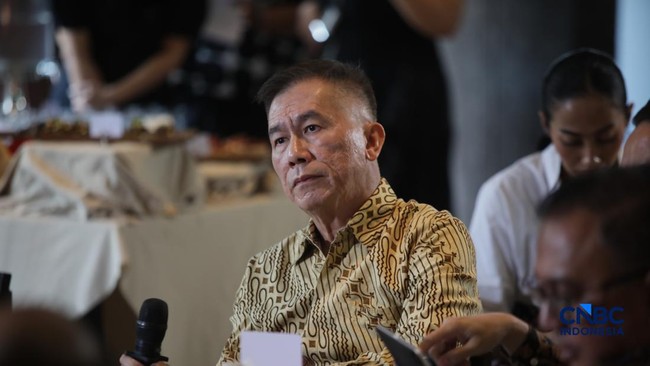
The Deputy President Director of PT Selamat Sempurna Tbk, Ang Andri Pribadi, revealed that global geopolitical conditions are impacting the Electric Vehicle industry, particularly regarding the availability of raw materials that depend on imports. He noted that several key materials for the EV industry, such as steel, filters, and aluminium, are still sourced from countries like South Korea and China.
“Regarding components, it depends on the specific product. Some components benefit while others do not. For items like radiators and condensers, this presents a challenge for us,” he stated during a coffee morning event titled “Building a Resermilient Automotive Ecosystem Beyond EV Amid Global Supply Chain Shift,” organised by CNBC Indonesia and DBS Indonesia on Wednesday.
On the other hand, Andri mentioned that his company has taken anticipatory measures to face these challenges by focusing on heavy equipment. “One way for us was to shift our focus from passenger cars. We have moved towards focusing on heavy equipment and commercial filters, such as those for buses and trucks,” he explained.
“We also have to follow the EV trend, and we have already started producing filters. For EVs, we have around 80 STI in support,” added Andri.
During the same event, the CEO of PT Mobil Anak Bangsa Indonesia, Kelik Irwantono, stated that steel, as a primary component, still faces obstacles to domestic development. “If we look at chassis, that is made of steel. Whether we import it or use steel from Indonesia, the output remains minimal,” he said.
Furthermore, he highlighted the issue of lithium-based batteries, noting that this material is not found in Indonesia. “We hope that in the future, these batteries will be produced locally. As local players, our spirit is the same: we want to continuously improve battery production,” he remarked.
Kelik emphasised that the most crucial factor in strengthening the EV ecosystem supply chain is government regulation. He suggested that the government could implement restrictions on countries that treat Indonesia merely as a market. “The fact on the ground is that Indonesia should not just be a market. We want everyone to compete healthily in Indonesia, but we hope that EVs will be produced in Indonesia,” he concluded.