
Entrepreneurs Cry Out! US-Israel vs Iran War Causes Rp437 Trillion in Losses
The war between the United States (US)-Israel and Iran is reported to have cost companies worldwide at least US$25 billion, or approximately Rp437.5 trillion. Citing an analysis from Reuters on Monday (18/05/202le), this massive loss is expected to continue climbing as the conflict shows no signs of easing.
A review of corporate financial reports listed on US, European, and Asian stock exchanges provides a grim picture of the conflict’s adverse impact. The business world is currently struggling with soaring energy prices, shattered supply chains, and disrupted trade routes due to Iran’s tight control over the Strait of Hormuz. The high number of financially affected companies has forced management to take aggressive emergency measures in the market. Analysis shows that at least 279 companies have cited this war as a trigger for defensive actions to mitigate financial blows, including product price increases and production cuts.
Other companies have been forced to suspend dividends or share buybacks, lay off staff, add additional fuel costs, or seek emergency assistance from local governments. This chaos is the latest in a series of global events that have confused the business world following the Covid-19 pandemic and the Russian invasion of Ukraine. The impact is now beginning to dim hopes for economic growth for the remainder of the year. The economic slowdown caused by the conflict is assessed to have matched, or even exceeded, some previous dark periods of global economic decline.
“The rate of this industrial decline is similar to what we observed during the global financial crisis and even higher than during other recessionary periods,” said Whirlpool CEO Marc Bitzer to analysts after cutting half of the company’s full-year forecast and suspending dividends on Monday. Analysts assess that weakening consumer purchasing power will make it increasingly difficult for companies to absorb fixed costs, thereby threatening profit margins in the second quarter and beyond. Sustained increases in goods prices are likely to trigger inflation, ultimately hitting already fragile consumer confidence. Changes in consumer behaviour are also becoming evident, as global populations increasingly choose to save money. “Consumers are holding back on replacing products and prefer to repair them,” Bitzer added.
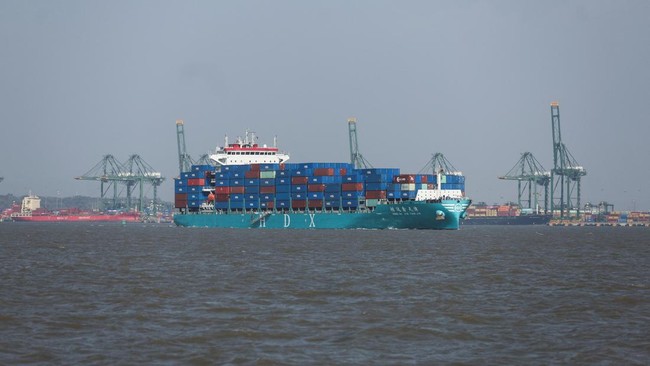
The household appliance manufacturer is not alone, as other corporate giants such as Procter & Gamble (P&G), Malaysian condom manufacturer Karex, and Toyota have warned of massive losses due to the conflict, which has now entered its third month. Iran’s blockade of the Strait of Hormuz has pushed crude oil prices above US$100 per barrel, a surge of more than 50% compared to before the war broke out. The closure of this maritime route automatically drives up shipping costs, tightens raw material supplies, and severs vital trade routes. Supplies of fertiliser, helium, aluminium, polyethylene, and other key inputs are reported to be heavily impacted.
One-fifth of the reviewed companies—ranging from cosmetics, tyre, and detergent manufacturers to cruise operators and airlines—have openly raised red flags due to the financial impact. The majority of these companies are based in the UK and Europe, where energy costs are already high, while nearly one-third are from Asia, reflecting the region’s deep dependence on Middle Eastern oil and fuel products. The aviation sector was recorded as the largest contributor to the total revealed losses, representing nearly US$15 billion (Rp262.5 trillion) due to jet fuel prices nearly doubling. Meanwhile, Japan’s Toyota warned of a hit of US$4.3 billion (Rp75.25 trillion), and P&G estimated a blow to after-tax profits of US$1 billion (Rp17.5 trillion).
Global fast-food giant McDonald’s also stated that they expect higher long-term cost inflation due to ongoing supply chain disruptions. McDonald’s CEO Chris Kempczinski stated on Monday that the surge in fuel prices has hit demand from low-income consumers. “High petrol prices are a major issue we are seeing right enough now,” said Kempczinski.
On the other hand, nearly 40 companies in the manufacturing, chemical, and raw material industries stated they would raise product selling prices due to exposure to Middle Eastern petrochemical supplies. Newell Brands CFO Mark Erceg described how sensitive corporate operating expenses are to current crude oil commodity fluctuations. “Every US$5 increase in oil price per barrel will add approximately US$5 million (Rp87.50 billion) in costs,” said Erceg. This condition is also echoed by leading German tyre manufacturer Continental, which projects a hit of at least 100 million euros or approximately US$117 million (Rp2.04 trillion) starting in the second quarter, as rising oil prices make raw materials much more expensive. Continental executive Roland Welzbacher explained that it would take several months before the domino effect of these rising commodity prices is fully reflected in the company’s financial reports. “This may hit us at the end of the second quarter, and then impact us fully in the second half of this year,” explained Welzbacher. Although the first-quarter profit margins of the S&P 500 and Europe’s STOXX 600 appeared resilient, analysts from Goldman Sachs and UBS expect the true margin pressure to be felt more widely in the second quarter.
Source: jawawa.id (https://jawawa.id/newsitem/entrepreneurs-cry-out-us-israel-vs-iran-war-causes-rp437-trillion-in-losses-1780910762)
Originally published by CNBC Indonesia (https://www.cnbcindonesia.com/news/20260518144242-4-735603/pengusaha-teriak-perang-as-israel-vs-iran-bikin-rugi-rp437-triliun), translated from Indonesian