
Entangled in DJKA and Village Official Extortion Cases, Sudewo Rejects Being Tried Under a Single Indictment
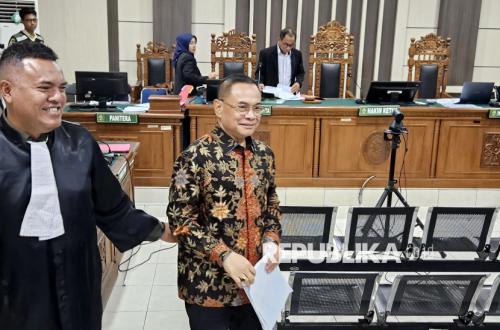
The legal team representing Sudewo, the defendant in an alleged corruption case involving projects within the Directorate General of Railways (DJKA) of the Ministry of Transport and a separate extortion case involving village officials in Pati Regency, submitted an exception during a follow-up hearing at the Semarang Corruption Court on Monday (2 /06 /2026).
In their exception, the lawyers stated that the decision by the Public Prosecutor (JPU) to combine two separate cases into a single indictment is baseless and risks prejudicing their client’s right to a defence. The exception for Sudewo was read alternately by eight members of the legal team: Aviv Dihan Kuntoro, Yupen Hadi, Indra Perbawa, Indra Alisman, Boy Tidarmawan Putra, Rudy Adianto, Justinus Slamet Murdomo, and Fabian Valentino.
In the exception, Sudewo’s legal team did not intend to address the substance or the merits of the case. Instead, they focused on the decision by the Corruption Eradication Commission (KPK) prosecutors to merge two cases involving Sudewo into one indictment.
The defence noted that the merging of two cases into one indictment is regulated under Article 72 of the Criminal Procedure Code (KUHAP). Several conditions must be met to combine cases in a single indictment, including that they involve the same person, the criminal acts are interrelated, and the merger is necessary for the interests of the examination.
According to Sudewo’s legal team, the prosecutor’s decision to merge the two cases does not meet the requirements stipulated in Article 72 of the KUHAP. “Because the DJKA indictment and the village official indictment have different bases of office, scope of authority, tempus delicti (time of crime), locus delicti (place of crime), actors, objects of the case, witnesses, evidence, and directions of examination,” stated a member of the legal team.
“Under these circumstances, the merger of both indictments does not meet the limits of Article 72 of the KUHAP and has the potential to prejudice the defendant’s right to obtain a fair trial,” they added.
The legal team also cited Article 75, paragraph (3) of the KUHAP, which states that an indictment must contain a careful, clear, and complete description. They argued that merging two unrelated cases violates this provision.
“In the case at hand, merging the DJKA indictment and the village official indictment actually creates an obstacle to the interests of the examination. This obstacle arises because the panel of judges must examine two different legal constructions within a single examination framework, while the defendant must face two different areas of defence within the same indictment,” said Sudewo’s counsel.
Sudewo’s legal team further argued that the merger of the two cases also harms their client. “The defendant must not only face substantively different descriptions in the indictment but also face the risk of perceptions from one indictment bleeding into the other. In such a situation, one indictment could colour the perspective of the other, even though each indictment should be tested independently based on its own specific events,” they concluded.