
Ensuring the Presence of the Rupiah in Papua's Remote Regions
Papua remains one of the regions with challenging geographical conditions. Limited access to transport and infrastructure continues to pose obstacles in ensuring the availability and smooth circulation of the rupiah, even in the most remote areas.
These conditions mean that the distribution of clean, circulation-worthy banknotes to the frontier, outermost, and least developed (3T) regions requires cooperation from many parties. The goal is simple: to ensure that the community continues to receive currency exchange services and can use the rupiah in their daily economic activities.
The presence of the state does not always have to be manifested through physical development. When the state ensures that people in remote islands, border areas, and mountainous regions have access to proper rupiah banknotes, it simultaneously ensures they remain connected to the national economic system.
In Papua, these efforts are increasingly vital due to geographical challenges and high logistical costs. One resident who feels the presence of the state through access to the rupiah is Mama Natalia Tabuna, who sells tubers and various vegetables to sustain her family’s livelihood in Wamena, Jayawijaya Regency, Highland Papua.
Before heading to the Wamena Market, she ensures her rupiah is neatly stored in an iron piggy bank. Although the money may no longer look new—some are worn, folded, scribbled on, or even slightly torn—this physical condition does not diminish its value for Mama Natalia. The money remains a vital part of the capital used for her daily trading activities.
“It is quite difficult to see new rupiah notes here. Only when bank officers arrive or when we go to the bank office can exchanges be made,” she said when met at the market. As a trader in the Wamode Market, Natalia is accustomed to receiving money from buyers in various conditions. She accepts and stores it neatly because the rupiah is a legal tender.
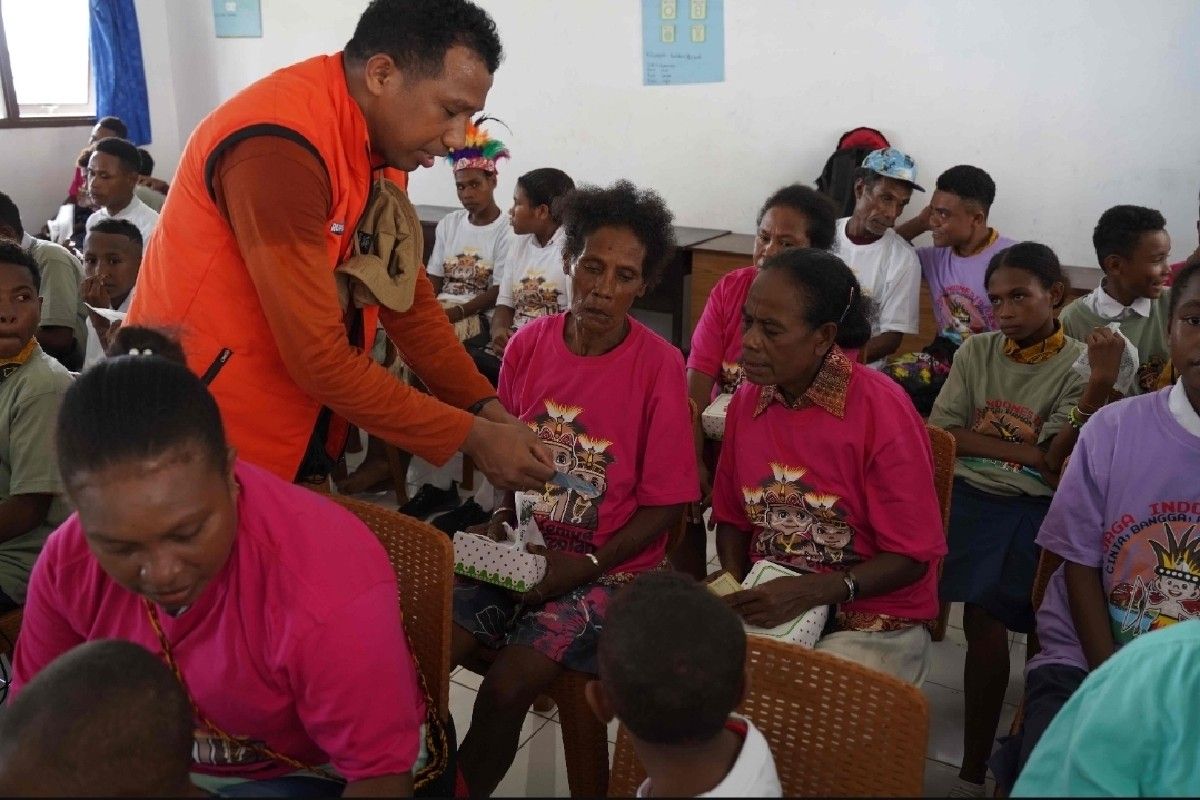
Meanwhile, Morin, a resident of Owi Island, Biak Numfor Regency, Papua, said that the community is pleased when currency exchange activities come directly to their area. This occurred recently when the Sovereign Rupiah Expedition (ERB) team arrived to conduct exchanges, alongside education and socialisation on how to maintain banknotes.
For Morin, having new money is a joy because such conditions are rare in his area. This activity provides benefits to the community, especially school children, as knowledge about the rupiah is not always easily accessible. Through the ERB team, children can learn more about how to care for rupiah banknotes and understand their function.
This simple habit demonstrates that residents in both the mountainous and coastal regions of Papua pay attention to the condition of the rupiah used in daily transactions. Amidst limited access, cash remains an important instrument for the community. Therefore, ensuring the rupiah remains available and in circulation-worthy condition is no simple task.
The Head of the Bank Indonesia Representative Office for Papua Province, Warsono, stated that they are building cooperation with various parties to reach the 3T regions in Papua. For Bank Indonesia (BI), distributing money to remote areas is not viewed merely as a routine distribution task. It is part of the duty to maintain the stability of the payment system and to assert that the rupiah remains a legal tender, a national identity, and a symbol of state sovereignty.
BI views the 3T regions in Papua as still facing limited access to banking and regular transportation. Without a direct presence, the community’s need for circulation-worthy money is difficult to meet equitably. In distributing money, the BI region in Papua faces different challenges compared to other parts of Indonesia due to the challenging transport access and geography.
The working area of Bank Indonesia Papua Province covers Papua Province, South Papua, Central Papua, and Highland Papua. The vast area and extreme geographical conditions make rupiah distribution more than just a logistical issue. The availability of clean banknotes is also a vital part of maintaining the community’s economic activities.
Therefore, through ERB activities and mobile cash services, the institution representing the state’s presence strives to maintain payment system stability and assert that the rupiah remains a valid legal tender. This issue is not always related to the presence or absence of cash, but also concerns the denominations needed by the community for daily transactions.
The most frequent problem is the shortage of small denominations, particularly Rp2,000, Rp5,000, and Rp10,000. Because supply is limited, the available small denominations are continuously used by the community until they become very worn. A shortage of small denominations can disrupt daily transactions, as traders struggle to provide change, sometimes forcing prices to be rounded up.
Throughout March 2024, Bank Indonesia Papua conducted mobile cash services in several areas, including the Senggi District (Keerom Regency), South Supiori District (Supiori Regency), as well as several mountainous areas in Jayawijaya, Paniai, Dogiyai, and Deiyai.
Meanwhile, the implementation of the 2024 ERB targets several island regions, namely Owi Island, Pai, Numfoor, Bepondi, Yapen, and Biak Island. The implementation of ERB is part of the mandate of Law Number 7 of 2011 concerning Currency, which includes ensuring that the rupiah is available throughout the territory of the Republic of Indonesia.
Source: jawawa.id (https://jawawa.id/newsitem/ensuring-the-presence-of-the-rupiah-in-papuas-remote-regions-1788174341)
Originally published by Antara (Indonesian) (https://www.antaranews.com/berita/5718809/menjaga-rupiah-tetap-hadir-di-wilayah-3t-papua), translated from Indonesian