
Ensuring State-Owned Insurers Remain Strong After Consolidation
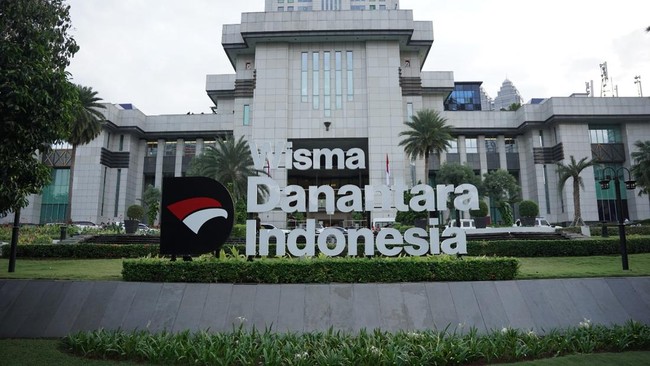
Jakarta, CNBC Indonesia — The consolidation, or streamlining, of state-owned insurance companies under the control of BPI Danantara is expected not only to deliver efficiencies but also to safeguard the business performance of the newly formed entities. Without a well-designed approach, mergers risk creating large companies that could lose premium income, distribution advantages and business specialisation.
Experiences in India, China and Europe show that the success of restructuring is determined not by how many companies remain, but by the quality of the companies created.
Dony Oskaria, head of the State-Owned Enterprises Regulatory Agency and Danantara’s chief operating officer, previously said the programme aims to merge 15 state-owned insurance companies into three main entities: life insurance, general insurance and credit insurance.
The consolidation is expected to strengthen companies’ capacity, improve efficiency and create a more integrated state-owned insurance ecosystem. However, simplifying an organisational structure does not necessarily improve business performance.
Merging several companies can increase asset and equity capacity, as well as risk-bearing capability. But if the merger is not accompanied by improvements to underwriting, distribution strategies and portfolio management, the resulting company may not be more profitable.
Danantara should decide not only which companies will be merged, but also how the consolidated state-owned insurance businesses can compete and grow over the long term.
Research by CNBC Indonesia Research, based on case studies, found that several countries—including India, China and Poland—have undertaken insurance-sector restructuring, with varying outcomes.
Case studies
In India, a planned merger was halted and the focus shifted to strengthening capital and solvency, and achieving profitable growth. In 2018, the Indian government announced plans to merge three state-owned general insurers: National Insurance Company, United India Insurance and Oriental Insurance. Two years later, it halted the merger process and prioritised restoring solvency and pursuing profitable growth.
The lesson from India is that a merger will not automatically resolve underlying problems if the financial health and profitability of each company are inadequate.
China took the opposite approach: restructuring involved reorganising and separating a holding structure into several entities with specialised businesses. In the early 1990s, PICC was the leading player in China’s insurance industry, with a market share of up to 90 per cent. In 1996, PICC was reorganised into three entities under a new holding structure: PICC Life Insurance, PICC Property Insurance and PICC Reinsurance. In 1999, the PICC holding structure was dissolved, and the companies created through the separation became independent entities wholly owned by the state.
The Chinese experience suggests that specialisation by business line and captive markets can give companies within a holding group greater autonomy to focus on expanding their market penetration. Separation was also seen as creating opportunities to raise capital through the stock market.
In Poland, meanwhile, a subsidiary is being merged into its parent company while retaining the merged entity’s market identity and strengths. In other words, the consolidation is being carried out without erasing the commercial identity of the company being absorbed.
PZU, Poland’s largest insurer and majority-owned by the Ministry of Finance, is due to merge with its subsidiary LINK4, which it acquired in 2014. The merger, targeted for completion in the first quarter of 2027, is intended to simplify the structure and improve operational efficiency.
However, although the companies will be legally merged, the LINK4 brand will not be discontinued. It will continue to operate as a separate brand because of its strong, positive reputation among consumers.
The three restructuring experiences in India, China and Poland offer examples of how consolidation models should be shaped around existing conditions and problems. For instance, struggling entities should first be put on a sound footing, while companies with strong captive markets and specialised expertise may be retained.
Commercial ties with the state-owned enterprise ecosystem
Another important factor is the potential impact of the insurance consolidation on commercial relationships within particular state-owned enterprise ecosystems. The separation of insurers from their parent groups warrants attention, as it could eliminate captive business that has contributed substantially to premium income.
For example, in the Pertamina ecosystem, if Tugu Insurance, Pertalife and Tugure are no longer Pertamina subsidiaries, will Pertamina continue to have its business risks covered by its former subsidiaries? The same issue could arise in the ecosystems of PLN, Jasa Raharja and Bank BRI.
Danantara must therefore ensure that commercial relationships within state-owned enterprise ecosystems are not disrupted after consolidation. Losing premium income from these ecosystems could affect the performance of the newly consolidated entities.
More broadly, consolidation must be designed to solve genuine business problems, rather than simply meet a target for the number of entities. For Danantara, successful streamlining should result in companies that are financially healthier, more disciplined in underwriting, more operationally efficient and better able to reach customers. Valuable distribution advantages and specialisations should also be preserved, without eliminating competition in insurance procurement.
The ultimate goal, therefore, is not merely to turn 15 companies into three, but to build state-owned insurers with sound solvency, stronger capacity, more diversified sources of business and the ability to grow sustainably.