
Ensuring Online Loan Consumers Remain Protected
The success of digital transformation should not be measured solely by the speed of service development, but also by the state’s ability to ensure that the public remains protected within it.
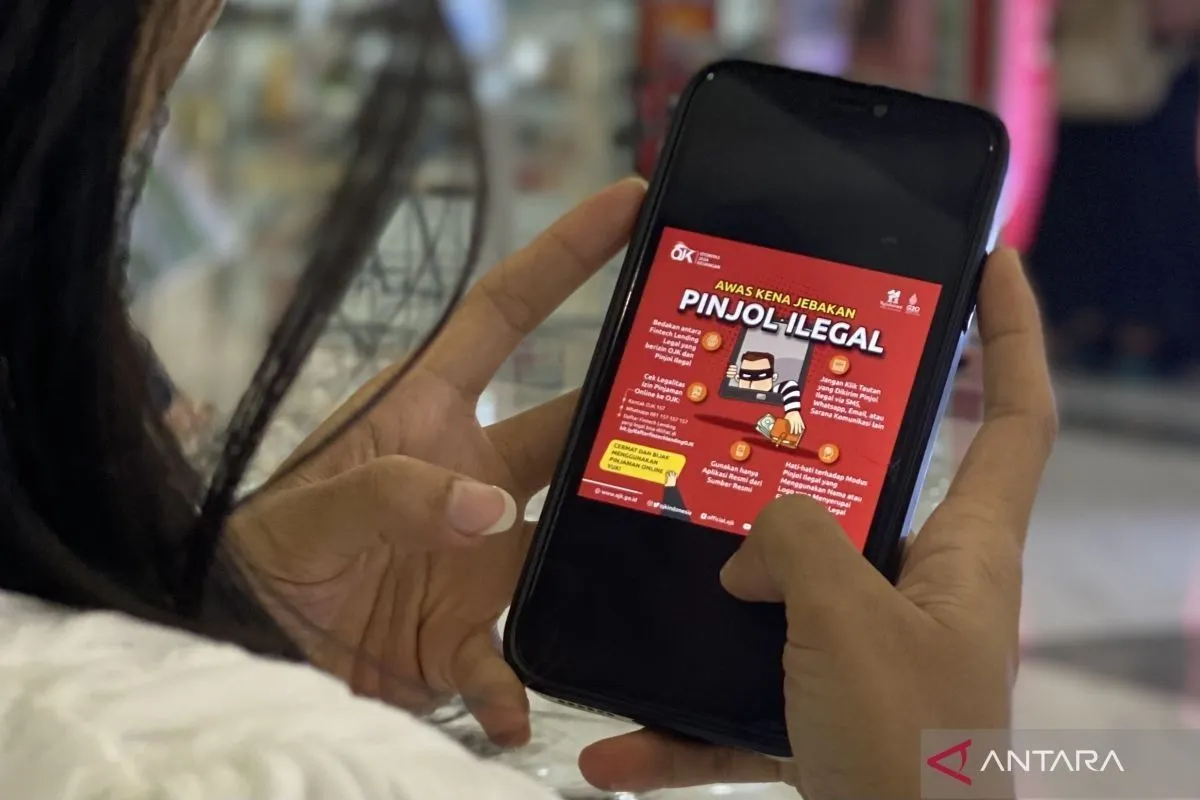
Jakarta (ANTARA) - Online lending (pinjol) initially emerged as a solution to the need for fast and practical financial access. In many situations, these services indeed assist those who find it difficult to reach conventional financial institutions. However, behind this convenience, a more serious problem has emerged: consumers have become the party most vulnerable to harm.
Today, the issue is no longer just about debt. What is occurring is a major shift in the relationship between consumers and digital financial services. With just a few clicks, an individual can obtain a loan within minutes. Yet, at the same time, not all consumers understand the risks regarding interest rates, penalties, personal data access, and the consequences of collection methods that can cause psychological pressure.
Complaint data shows that this situation cannot be taken lightly. Throughout 2025, the Financial Services Authority (OJK) received 26,220 complaints related to illegal financial entities, 21,249 of which were related to illegal online loans. This figure is not merely an administrative statistic, but a loud alarm that digital consumer protection still faces fundamental issues.
Entering 2026, the situation has not changed significantly. Complaints continue to emerge, even with increasingly complex patterns. The public remains a target for illegal lending practices that exploit low financial literacy and a weak understanding of digital security. Many consumers are enticed by the rapid disbursement process without realising the hidden risks involved.
More concerningly, the misuse of illegal online loans does not stop at financial issues. In many cases, consumers’ personal data is used as a tool for intimidation. Access to telephone contacts, private photos, and sensitive information is frequently used to shame victims when they fail to repay. Consequently, the resulting pressure is not only economic but also social and psychological.
At this point, the state has actually taken various enforcement steps. The Task Force for the Eradication of Illegal Financial Activities (Satgas PASTI) noted that by early 2026, more than 951 illegal online lending entities had been shut down. However, facts on the ground show that new entities continue to emerge with different names and patterns. As soon as one application is closed, another appears to replace it.
This condition demonstrates that the primary issue is not just enforcement, but weak prevention. As long as consumer protection remains reactive—acting only after victims have fallen—the same problems will continue to recur.
The fragility of public trust.